
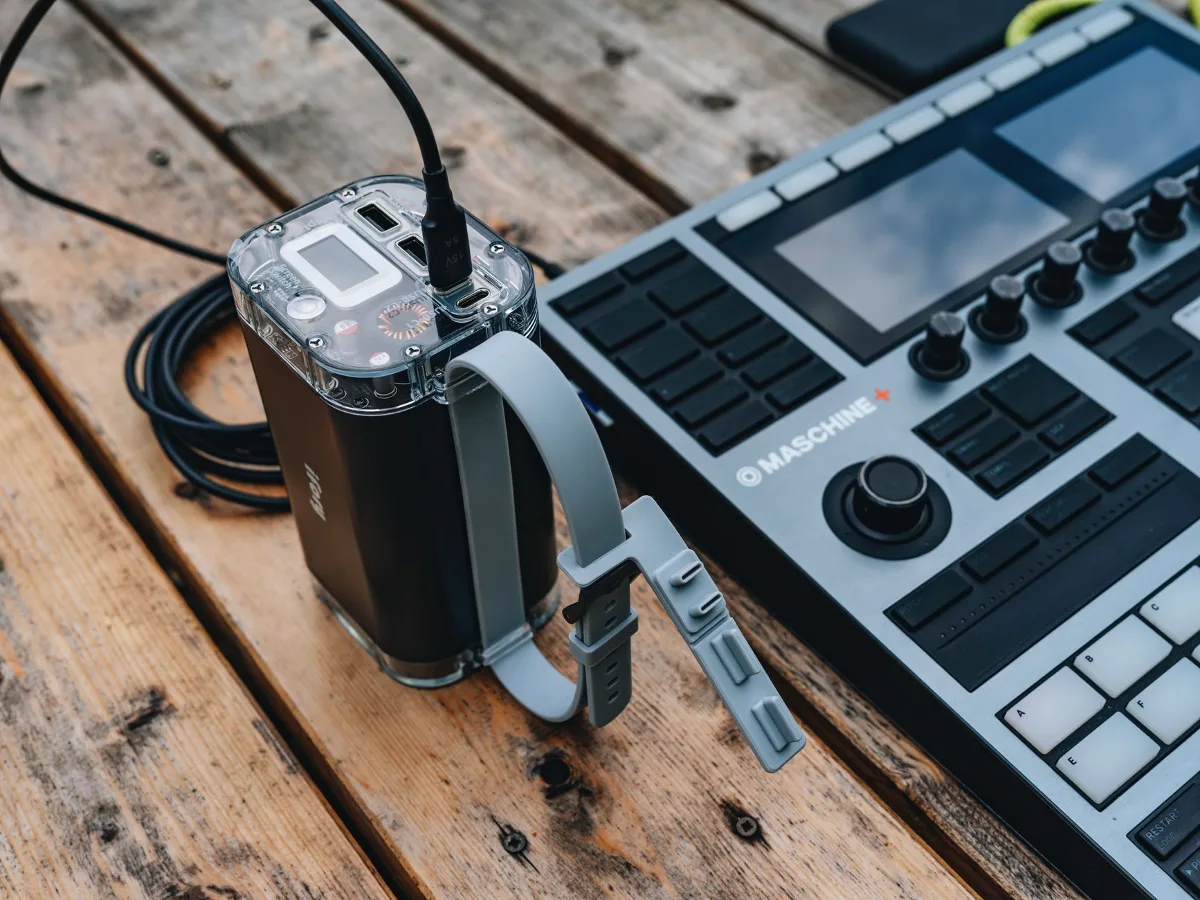
A 500Wh portable power station is best understood as a mid-size battery backup solution: large enough to keep phones, tablets, cameras, routers, lights, and some small appliances running for a while, but still compact enough to move between a home office, campsite, vehicle, or emergency kit. For many buyers, that balance is the appeal. It is not meant to replace a full home backup system, and it is not the same as a small phone bank. It sits in the middle, where convenience and practical runtime meet. 1000w portable power station offers more detail on this point. schumacher portable power station offers more detail on this point.
If you are trying to decide whether a 500Wh unit is the right size, the most useful question is not simply “how much capacity does it have?” It is “what do I need to power, for how long, and through which outlets?” That framing avoids the most common mistake people make with portable power stations: buying by battery size alone and overlooking output limits, charging speed, port mix, and weight. how to compare battery capacity and output offers more detail on this point.
Why a 500Wh portable power station makes sense for many buyers
500Wh is a versatile capacity tier because it covers a broad range of everyday needs without moving into the bulk and cost of larger systems. In practical terms, this class of power station often works well for:
- charging personal electronics during outages
- running LED lights, Wi‑Fi equipment, and small fan loads
- powering cameras, laptops, and other portable work gear
- supplying limited weekend camping or tailgating power
- providing a bridge during short outages rather than a long-term backup
The appeal is flexibility. Smaller units can feel too limited once you try to power more than a phone and a light. Larger units may offer more runtime, but they are often heavier and less convenient to carry. A 500Wh model tends to hit a practical middle ground for people who want something useful without committing to a very large battery system.
What the capacity really means in real use
Battery capacity is usually measured in watt-hours, which tells you how much energy the battery can store. But the stored capacity is only one part of the story. Real-world runtime depends on what you plug in, how efficient the power station is, and whether you are using AC, DC, or USB output.
One common misconception is that a 500Wh label means you can use 500 watts for one hour. In real use, conversion losses and the actual watt draw of your device change the result. AC outlets are especially relevant here because the inverter has to convert battery power into household-style power, which usually adds some loss. USB and DC output are often more efficient.
That is why a 500Wh portable power station can feel surprisingly capable for low-draw devices and less impressive for heat-producing appliances. A phone, LED lamp, or router uses modest power. A coffee maker, heater, or full-size kitchen appliance does not belong in this class of product.
Better fits for 500Wh capacity
- smartphones and tablets
- laptops and monitors with modest power needs
- camera batteries and accessories
- Wi‑Fi routers and modems
- CPAP machines, where supported by the specific setup
- small fans and LED lighting
Usually poor fits for 500Wh capacity
- space heaters
- microwaves
- large kitchen appliances
- high-draw power tools
- induction cooktops
The features that matter most before you buy
Not every 500Wh portable power station is built for the same type of user. Some are aimed at travel and outdoor use. Others are more focused on home emergency backup. A few are designed to support solar charging. The difference is less about the headline capacity and more about the combination of output, port selection, recharge options, and battery chemistry.
1. Output matters as much as capacity
A power station can only be as useful as its output allows. Look at both continuous watt output and surge capability if you plan to run devices with startup loads. Continuous output tells you what it can support steadily. Surge capacity matters when a device briefly demands more power on startup.
For example, electronics usually need little startup power, while some appliances and tools need more. If your use case includes a mini-fridge, CPAP, or small pump, output details become more important than the raw watt-hour rating.
2. Port selection should match your devices
The most practical portable power stations are the ones that reduce adapter clutter. USB-C PD is valuable for modern laptops, tablets, and phones. Standard USB-A still has a place for accessories and older cables. AC outlets remain useful for chargers and equipment that expect wall power. DC car-style outputs can be helpful for certain camping and vehicle accessories.
Buying a unit with the wrong port mix creates frustration later. A well-chosen 500Wh model should reflect your actual gear, not just a generic idea of “backup power.”
3. Charging speed changes how convenient it feels
A 500Wh station is easier to live with when it recharges in a reasonable amount of time. Fast AC charging is helpful at home, while solar input matters for travel or grid-down use. Car charging can be useful as a fallback, though it is usually slower and more situational.
If you want a station for emergencies, recharge flexibility matters more than it first appears. During an outage, the ability to replenish the battery from solar or a vehicle can make a small unit much more practical than its capacity number suggests.
4. Battery chemistry affects long-term value
Portable power stations commonly use lithium-based battery systems, but not all are the same. Battery chemistry affects cycle life, weight, and cost structure. A buyer should not assume every 500Wh unit will age the same way or suit the same usage pattern.
If you plan to use the station often, long-term value becomes more important than the initial purchase decision. For occasional emergency use, the needs are different. The right choice depends on how often you expect to recharge and discharge it.
5. Weight and portability can be the deciding factor
One overlooked consideration is that a power station can be technically “portable” and still be awkward to move. A 500Wh unit may be manageable for car camping or home use, but it is still a battery pack with real weight. If you plan to carry it any distance, check the overall form factor, handle design, and whether it fits your storage space.
Portability is not a minor detail. The best feature set in the world matters less if the unit is annoying to move, store, or load into a vehicle.
How to match a 500Wh unit to your actual use case
The right purchase depends on how you expect to use the station most often. Different buyers should prioritize different traits.
For home backup during short outages
If your goal is to keep a few essentials running, focus on AC outlet count, router-friendly output, and a clear picture of what you will power first. Many people overestimate what they need for home backup, then underprepare for what truly matters: communication, lighting, and device charging.
For this use case, a 500Wh power station is often a good fit if you want to stay connected and comfortable for a limited period. It is less suitable if your aim is to keep a refrigerator or multiple household appliances active for long stretches.
For camping and travel
Camping buyers usually care more about portability, quiet operation, solar compatibility, and enough output for electronics and small comfort devices. A 500Wh station can be a strong choice for weekend trips, especially if the gear list is modest. It can handle the kinds of loads that make outdoor trips easier without introducing fuel, noise, or complicated setup.
The limitation is simple: if your campsite setup starts involving higher draw appliances, you will want to move up in capacity or rethink the load list.
For remote work or content creation
Laptops, tablets, cameras, and network gear are often well suited to this capacity class. The key is output compatibility. USB-C PD can reduce the need for dedicated chargers, while AC outlets support equipment that still depends on wall-style adapters. For mobile work, a 500Wh station can provide a useful buffer during power interruptions or while working in a vehicle or outdoor location.
For emergency preparedness
Emergency buyers should think in layers. A 500Wh portable power station is one layer, not the whole plan. It can support communications, basic lighting, and selective device charging. Pairing it with charging flexibility and a realistic load list makes it far more useful than focusing only on battery size.
The practical question is whether you need a short-term bridge or a multi-day solution. A 500Wh unit is usually the former.
Common mistakes people make with this size
Most poor buying decisions come from misunderstanding the trade-offs. These are the mistakes that come up most often with mid-size portable power stations.
- Assuming more capacity automatically means better fit. A larger battery can be less convenient than a smaller one if portability matters.
- Ignoring output limits. A strong capacity rating does not guarantee support for all appliances.
- Choosing by port count alone. The type of ports matters more than the number of ports.
- Overlooking recharge options. A unit that is hard to recharge is less useful during outages or travel.
- Expecting appliance-level backup. A 500Wh system is not a substitute for a generator or whole-home battery system.
There is also a subtler mistake: buying for rare edge cases instead of everyday needs. If your normal use is charging phones and running a router, don’t overbuild the purchase around one unlikely scenario. Likewise, if you actually need to run heavier gear, don’t let the term “portable” keep you from choosing a more capable solution.
Practical alternatives if 500Wh is not the right fit
Sometimes the best decision is not a 500Wh unit at all. A smaller power bank or a compact power station may be enough if you only need to top up phones and tablets. On the other hand, if you want to power larger equipment or extend runtime significantly, a higher-capacity station may be more appropriate.
It can help to think in three broad tiers:
- Smaller portable power banks: best for personal electronics and travel light use
- 500Wh portable power stations: best for balanced everyday backup, camping, and mobile work
- Larger power stations or generator-based systems: better for extended backup and heavier loads
Solar compatibility is another alternative angle. If your use case involves outdoor travel or grid-down resilience, a solar-ready unit can extend usefulness well beyond the battery’s base capacity. Just remember that solar charging depends on panel quality, sunlight conditions, and the station’s input limits.
A simple way to decide
If you are stuck between options, use this decision filter:
- List the exact devices you want to power.
- Check the watt draw of each device, not just its battery size or brand.
- Decide whether you need AC outlets, USB-C PD, DC output, or all three.
- Consider whether you will recharge from wall power, a vehicle, solar, or all of them.
- Think about how often you will carry the unit and where it will be stored.
If your list is mostly phones, laptops, lights, a router, and a few small accessories, a 500Wh portable power station is often a sensible buy. If your list includes heavy appliances or long-duration backup, step up in capacity or look at a different power strategy altogether.
What a good 500Wh purchase usually gets right
The strongest models in this category are usually the ones that feel easy to use in ordinary life. They have clearly labeled outputs, sensible port placement, useful charging options, and enough inverter capacity for the devices they are meant to support. They do not try to be everything at once.
That restraint is a good sign. A practical 500Wh portable power station should be a dependable utility item, not a gadget that looks versatile on paper but becomes awkward in use. For many households and travelers, that is exactly the right balance.
If you are choosing one for the first time, focus less on hype and more on fit. The right 500Wh unit is the one that matches your devices, your charging habits, and your tolerance for weight and setup. That is what turns a portable battery into something genuinely useful.
