
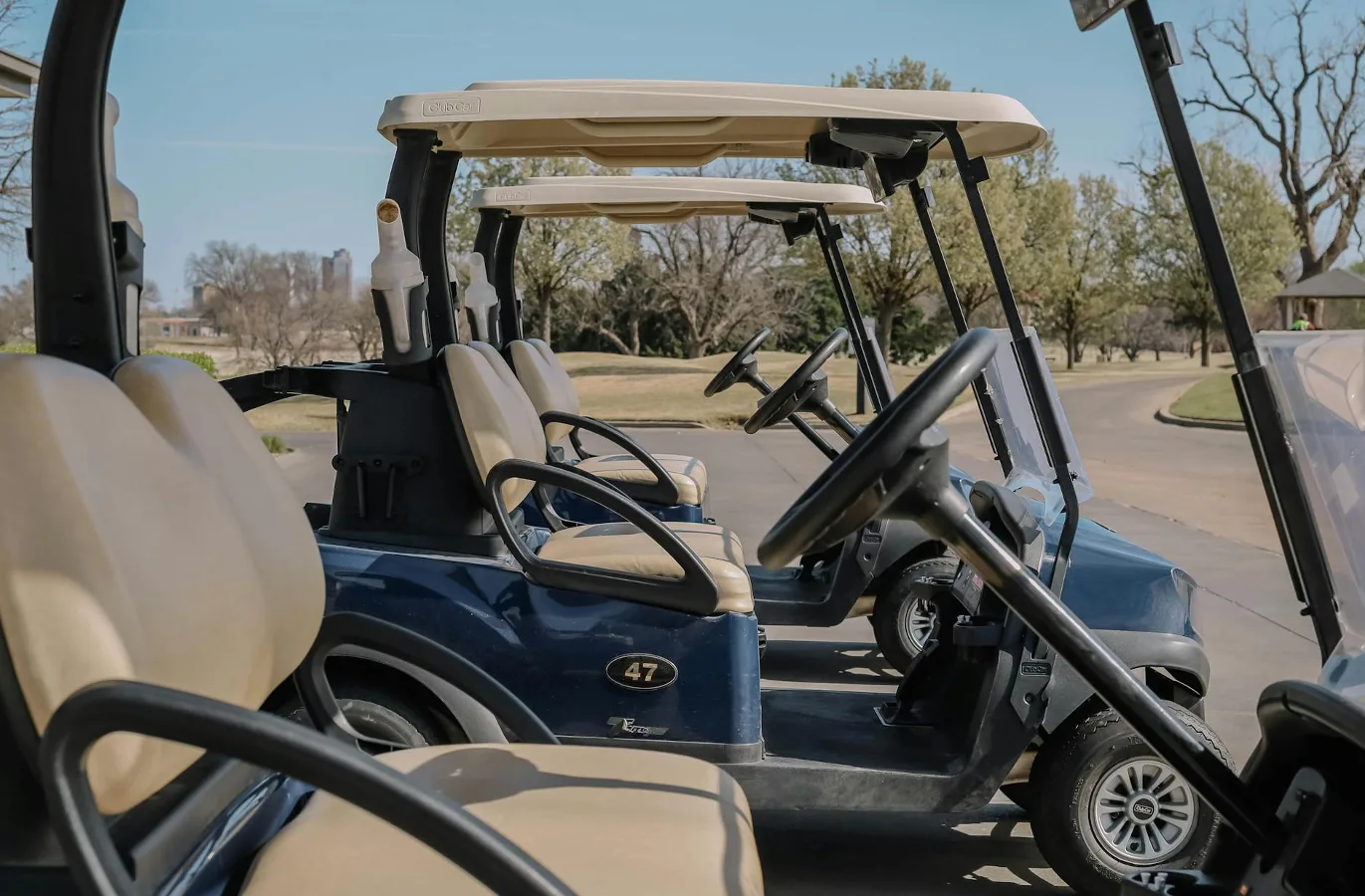
What a Club Car golf cart battery charger needs to do
If you are looking for a Club Car golf cart battery charger, the main job is simple: it has to match the cart’s battery voltage, charging system, and connector style well enough to charge safely and fully. The best choice is not always the most powerful or the cheapest. It is the charger that fits your exact setup. Club Car battery voltage basics offers more detail on this point.
For Club Car owners, the real question is often not just “which charger works?” but “which charger works with my cart, my batteries, and my charging habits?” That is where most buying mistakes happen. A charger can look right and still be wrong if the voltage, plug, or battery chemistry does not line up. Club Car Battery Charger Buying Guide offers more detail on this point.
This guide focuses on the practical side: how to identify the right charger, what features matter, where the trade-offs are, and which details are easy to overlook until the cart stops charging the way it should.
Start with the buyer scenario
The right charger depends on why you need one.
- You are replacing a failed charger: You usually want the closest match to the original Club Car setup, especially if your cart is still using the factory charging system.
- You bought a used cart without a charger: Compatibility matters more than brand name. You need to confirm voltage, plug type, and battery chemistry before buying.
- You are upgrading batteries: This is where many people get caught off guard. A charger that was fine for lead-acid batteries may not be the right choice for lithium batteries.
- You want a faster or smarter charger: Charging speed can matter, but only if the charger is still appropriate for the battery pack and does not create heat or shorten battery life.
Club Car has used different charging approaches across models and years, so the model name alone is not enough. DS and Precedent carts can share some broad power concepts, but that does not automatically make every charger interchangeable.
Compatibility comes before features
Most people start by comparing charger features. In practice, the better approach is to verify compatibility first.
1. Match the battery voltage
Club Car electric carts commonly use either 36V or 48V systems, depending on the model and battery configuration. The charger must be intended for the same system voltage. A mismatch can prevent charging, trigger error behavior, or lead to poor battery care.
2. Confirm the battery chemistry
Lead-acid and lithium batteries do not charge the same way. A charger designed for one chemistry may not be suitable for the other. This is especially important if a cart has been converted from lead-acid to lithium. Do not assume the old charger will still be correct after the swap. lead-acid vs lithium golf cart power systems offers more detail on this point.
3. Check the connector style
Club Car chargers often rely on specific plug or receptacle designs. Some are proprietary, while others may be more adaptable with the right adapter or replacement harness. Connector fit is not a minor detail; it is part of the compatibility chain.
4. Verify onboard versus offboard charging
Some carts use an onboard charger, while others use an external unit. The distinction affects convenience, storage, and repair options. Onboard systems are integrated into the cart, while offboard chargers are easier to replace individually in many cases.
The practical trade-offs that matter most
Buying a charger is not just a technical decision. There are real trade-offs between convenience, simplicity, and flexibility.
Smart charging versus basic charging
A smart charger typically monitors the battery state and adjusts charging behavior automatically. That can reduce overcharging risk and improve everyday usability. A simpler charger may be easier to understand and sometimes less expensive, but it may not offer the same level of control.
The trade-off is that more automation does not excuse poor compatibility. A “smart” unit still needs to be the right voltage and chemistry for your cart.
Charging speed versus battery care
A higher-output charger can reduce waiting time, but speed is not the only goal. Batteries need appropriate charging behavior, not just faster power delivery. For carts used daily, a charger that balances speed with safe charging characteristics is usually a better long-term choice than one chosen only for faster recovery.
Original-equipment style versus aftermarket flexibility
OEM-style chargers are attractive because they tend to match the cart’s original setup more closely. Aftermarket chargers can offer more options, but quality and compatibility vary more widely. The right choice depends on whether you want the least complicated replacement or a charger with broader feature control.
Material and spec factors to review before buying
Charger shopping can look hardware-heavy, but a few technical and construction details make a bigger difference than brand slogans.
Charger housing and build quality
The enclosure should be sturdy enough for typical garage or shop storage. If the charger will be moved often, the housing, handle, cord strain relief, and plug quality matter more than they first appear to. A charger is not usually exposed to rough treatment, but weak construction can still shorten its useful life.
Cord length and connector condition
Longer cords can be convenient, but they also need to be handled carefully and stored without damage. Check the cable gauge and the plug area for signs of sturdiness. A loose or worn connector can create intermittent charging problems that look like battery failure when the real issue is contact quality.
Indicator lights and fault behavior
Clear status lights are helpful, especially if you are trying to tell the difference between a charging cycle, a completed charge, and a fault. If a charger has vague or hard-to-read indicators, troubleshooting becomes more frustrating.
Ventilation and heat management
Charging creates heat, and a charger should be used in a location that allows airflow. This is not just a battery concern. The charger itself needs space to operate properly, especially during longer charging cycles.
Amperage and everyday use
Amperage affects how the charger behaves, but the right level depends on the battery pack and how the cart is used. More amperage is not automatically better. The key is choosing a charger that fits the battery system without creating unnecessary stress.
A common misconception about Club Car chargers
One of the biggest mistakes is assuming that any charger with a matching plug will work. Plug shape alone does not guarantee compatibility. Voltage, chemistry, and charging profile still need to align.
Another overlooked issue is battery condition. If a charger seems to stop early or behave inconsistently, the batteries themselves may be weak, sulfated, or unevenly charged. Replacing the charger without checking the battery pack can lead to the same problem returning.
There is also a tendency to blame the charger when the real issue is the cable, receptacle, fuse, or wiring in the cart. A careful inspection often saves time and money.
How to narrow down the right replacement
If you are choosing a Club Car golf cart battery charger, use this order of checks:
- Identify the cart model and year if possible. This helps narrow the electrical system and plug style.
- Confirm whether the cart is 36V or 48V. Do not guess.
- Determine the battery type. Lead-acid and lithium require different charging approaches.
- Inspect the charging port and connector. Look for wear, corrosion, or damage.
- Decide whether you want onboard or offboard charging. This affects convenience and replacement options.
- Consider how the cart is used. Daily use, seasonal storage, and occasional recreation all point to slightly different priorities.
If you are unsure, compare the charger against the cart’s existing electrical setup instead of relying on a generic compatibility claim.
Maintenance habits that help the charger last
A good charger will still fail early if it is stored poorly or used carelessly. A few habits make a noticeable difference:
- Keep plugs clean and free of corrosion.
- Store the charger where it will not be crushed, bent, or exposed to moisture.
- Unplug and inspect cords periodically for damage.
- Do not use the charger if the connector feels loose or hot.
- Make sure battery terminals and cables are in good condition, since charging problems are not always caused by the charger itself.
For carts that sit unused for stretches, battery maintenance becomes just as important as the charger. A charger that supports proper maintenance charging can be useful, but only if the batteries are also kept in healthy condition.
When a different option may make more sense
A replacement charger is not always the only answer.
If the cart has been converted to lithium
Use a charger designed for that battery system. This is one of the clearest cases where the old charger may no longer be appropriate.
If the charger problem turns out to be the receptacle
Sometimes the issue is the cart-side socket, wiring, or a damaged connection rather than the charger unit itself. Replacing the whole charger without checking the cart can waste money.
If you store the cart away from power for long periods
Portability and cord management may matter more than onboard convenience. An offboard charger can be easier to store and service if the cart is not charged in a fixed location.
If you use the cart seasonally
Consistency and battery maintenance matter more than charge speed. A charger that supports steady, reliable charging may be the better long-term choice.
What to do next before you buy
Before ordering a Club Car golf cart battery charger, confirm three things: the cart’s voltage, the battery chemistry, and the connector type. Those three details eliminate most bad purchases.
After that, decide what matters most for your use case. If you want a straightforward replacement, stay close to the original system. If you are upgrading batteries or changing how the cart is stored and used, compare smart features, cable design, and onboard versus offboard convenience.
That approach keeps the decision grounded in how the cart actually works, not just how the charger is marketed.
FAQ
How do I know which Club Car battery charger I need?
Start with the cart’s voltage, then confirm battery chemistry and connector style. Those three details determine whether the charger is actually compatible.
Can I use the same charger for lead-acid and lithium batteries?
Not necessarily. Lead-acid and lithium batteries charge differently, so the charger must be designed for the battery type in the cart.
Why does my charger plug fit but still not charge?
A matching plug does not guarantee full compatibility. The voltage, battery condition, charging profile, or cart-side receptacle may be the real issue.
Is a smart charger better for a Club Car golf cart?
Often, yes, especially if you want more automatic control during charging. But it still has to match the cart’s electrical setup.
Should I replace the charger or inspect the cart first?
If charging problems appear suddenly, inspect the plug, receptacle, cables, and battery condition before replacing the charger. The problem is not always the charger itself.
