
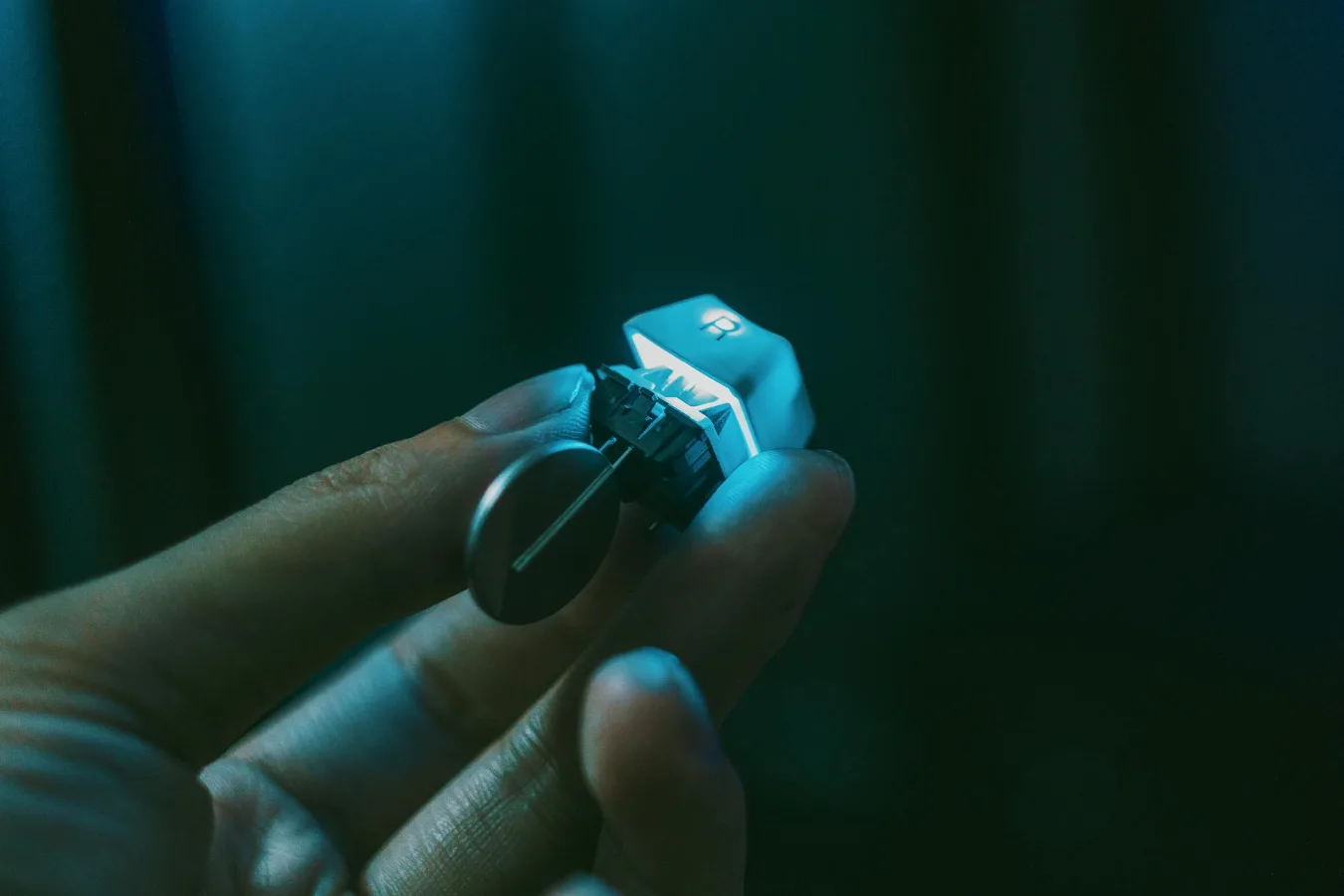
Tactile mechanical keyboard switches are the middle ground many people actually want: a clear bump you can feel, without the sharp click of a clicky switch. For typing, they can make keypresses feel more deliberate and controlled. For gaming, they can still work well if you prefer feedback over a completely smooth press. related advice on ambidextrous gaming mouse offers more detail on this point. how mechanical keyboard switches differ offers more detail on this point.
The best choice depends less on hype and more on feel, sound, compatibility, and how you use your keyboard day to day. Tactile switches are not a single experience; some are light and subtle, others are sharp and pronounced, and some are tuned for quiet office use while others are built for enthusiast boards with a louder, more textured response.
How tactile switches feel compared with other options
A tactile switch includes a point in the keypress where resistance changes noticeably. That bump is the feedback. You do not need to bottom out the key to know it has actuated, which is why many people like tactile switches for typing accuracy.
Compared with linear switches, tactiles add feedback and can help reduce the sensation of “mushing” through a long press. Compared with clicky switches, tactiles give feedback without the dedicated click mechanism, so they are often easier to live with in shared spaces. That said, “quiet” does not automatically mean silent. The sound of the switch housing, keycap material, stabilizers, desk surface, and your typing style all shape the final result.
Where tactile switches usually make the most sense
- Typing-heavy work: The bump can make long writing sessions feel more controlled.
- Mixed use: They suit users who switch between typing, navigation, and light gaming.
- Preference for feedback: Some people simply type better when they can feel each actuation.
- Custom keyboard builds: Tactiles are a popular choice in enthusiast setups because there are many feel profiles to compare.
What to compare before you buy
The most useful way to shop for tactile switches is to focus on how the switch behaves rather than on a brand name alone. Two tactile switches can feel completely different even if both are described with the same broad label.
Bump character
This is the main reason people choose tactiles. Some bumps are subtle and early in the press. Others are sharper and more pronounced. A soft, rounded bump may feel comfortable for long typing sessions, while a stronger bump can give more distinct confirmation but may feel fatiguing to some users.
Actuation feel and reset behavior
The actuation point is where the key registers. Reset behavior matters too, especially if you type quickly or game. A switch that resets cleanly can feel easier to use repeatedly, while one with a less distinct reset can feel less predictable. This is one of the overlooked details shoppers often miss because product descriptions tend to emphasize the bump and ignore the release.
Spring weight
Spring weight influences how much force is needed to press the key. A lighter spring may feel fast and relaxed, but some users find it easier to press keys accidentally. A heavier spring can feel more controlled, though it may take more effort during long sessions. For tactile switches, spring weight also changes how the bump is perceived; a stronger spring can make the press feel more stable, while a lighter spring can make the bump feel more obvious.
Sound profile
Tactile switches are often chosen for feel first, but sound is still part of the decision. A switch can sound muted, crisp, or slightly hollow depending on its construction and the rest of the board. If you work near others, sound matters nearly as much as feel. If you are building a keyboard for home use, you may care more about a fuller, more satisfying sound.
Compatibility
Most buyers should confirm basic compatibility before focusing on the fine details. Check whether the switch is MX-style, whether your keyboard is hot-swappable, and whether the switch stem works with your keycaps. If your board has north-facing LEDs, some keycap and switch combinations can create interference issues with certain profiles or housing shapes. That is not a universal problem, but it is worth checking before purchase.
Lubrication and factory finish
Some tactile switches are designed to be used stock, while others benefit from careful tuning. A lightly lubricated tactile can feel smoother and reduce scratchiness, but too much lube can soften the bump in a way some people dislike. This is a real trade-off: smoother does not always mean better if you specifically want a crisp tactile response.
| Factor | Why it matters | What to think about |
|---|---|---|
| Bump strength | Determines how distinct the feedback feels | Subtle for comfort, stronger for clear confirmation |
| Spring weight | Affects typing effort and control | Lighter for ease, heavier for steadiness |
| Sound | Impacts office friendliness and overall satisfaction | Consider desk noise, keycap profile, and stabilizers |
| Compatibility | Prevents fitment and interference problems | Check switch mount, keyboard type, and keycaps |
| Lubrication | Changes smoothness and tactile feel | Great for tuning, but over-lubing can soften the bump |
Comparison: choosing the right tactile switch for your use case
If you are trying to narrow the field, the best approach is to match the switch to the job rather than chasing the most popular option. Tactile switches are often marketed as a universal upgrade, but the right fit depends on what you value most.
For writing and office work
A medium or gently tactile switch is often the most comfortable place to start. It offers feedback without turning every sentence into a noisy event. If you write for long stretches, an aggressive bump can feel tiring, especially if the spring is heavy.
For gaming
Gamers who prefer tactile feedback usually want a switch that feels responsive without getting in the way of rapid key repeats. A lighter or moderate tactile can strike a useful balance. That said, some players prefer linears because they eliminate the bump entirely. This is less about a universal “best” and more about whether you want clear actuation feedback during fast input.
For quieter shared spaces
If noise is a concern, tactiles are often a better compromise than clicky switches, but they still are not the quietest option available. Pairing them with dampening measures, a softer desk mat, or keycaps that suit the sound profile can help. If maximum quiet is the priority, a silent switch may be a better fit than a standard tactile.
For enthusiast customization
Custom keyboard users often choose tactile switches because they offer so many shades of feedback. The real advantage here is tuning potential. You can adjust the switch feel through lubing, spring changes, films where appropriate, keycap profile, plate material, and case acoustics. The downside is that customization can easily become a rabbit hole. If you do not know what you want yet, start with a stock tactile that is known for balanced feel rather than building around assumptions.
Mistakes to avoid with tactile mechanical keyboard switches
Most dissatisfaction comes from mismatched expectations, not from the switches themselves. A tactile switch that feels excellent for one person can feel distracting to another.
Choosing based on popularity alone
A switch can be widely recommended and still be the wrong fit for your typing style. Some tactiles are beloved because they are crisp and energetic. Others are praised because they are smoother and more restrained. Neither quality is automatically better.
Ignoring the rest of the keyboard
Switch feel does not exist in isolation. Plate material, PCB, stabilizers, case design, and keycap profile all influence the experience. A switch that sounds and feels great in one board can feel very different in another.
Assuming all tactiles are loud or all tactiles are office-safe
That is a common misconception. Sound varies widely. Some tactile switches are restrained enough for a shared space; others are emphatic enough to be distracting. The keyboard as a whole matters more than the label on the switch pack.
Over-lubing the switch
Lubrication can improve smoothness and reduce scratchiness, but too much can blur the tactile event. If you bought tactiles specifically for the bump, heavy lubing may take away the very thing you wanted.
Overlooking typing ergonomics
A very strong bump can encourage a more forceful typing style. That may feel satisfying at first, but it can become tiring over time. If you type for work, comfort should matter at least as much as novelty.
Practical buying guidance for U.S. shoppers
For shoppers in the United States, the biggest practical questions are usually compatibility, availability, and return flexibility. If you are buying prebuilt, make sure the board supports the switch type you want. If you are buying switches separately, confirm whether the keyboard is hot-swappable and whether you need a specific mount style. Prebuilt Mechanical Keyboard Buying Guide offers more detail on this point.
If you are unsure about your preferences, a safer path is to start with a tactile switch that is known for being balanced rather than highly specialized. That gives you a baseline for future comparisons. Once you know whether you want a stronger bump, a lighter press, or a quieter profile, it becomes much easier to choose a more refined option.
For many buyers, the smartest decision is not trying to find the one perfect tactile switch on the first try. It is choosing a sensible starting point that matches the way you actually use a keyboard. That approach tends to save time, money, and frustration.
Alternatives worth considering if tactile is not quite right
Tactile switches are a strong middle ground, but they are not the only sensible option. If you want a smoother keypress with less resistance variation, linear switches may suit you better. If you want the strongest audible and physical confirmation, clicky switches may be more satisfying, though they are usually less appropriate for shared environments.
There is also a quieter category worth attention: silent tactiles. These are designed to reduce noise while preserving some tactile feedback. They can be a good compromise for apartment living, hybrid offices, or anyone who likes the idea of tactility without the sharper acoustic signature.
Another overlooked alternative is simply changing the board setup rather than the switch type. A different keycap profile, sound dampening, or more stable stabilizers can change the experience enough that you may not need to switch categories at all.
What tactile switches are really best for
If you want clear feedback, balanced versatility, and a typing feel that can be easier to trust than a smooth linear press, tactile mechanical keyboard switches are a strong choice. They are especially appealing for people who spend a lot of time writing, editing, coding, or navigating text-heavy workflows.
The best results come from matching the bump, spring weight, and sound profile to your environment. A good tactile switch is not simply the one with the biggest bump or the most enthusiastic fan base. It is the one that makes daily use feel natural enough that you stop thinking about the keyboard and start thinking about the work.
