
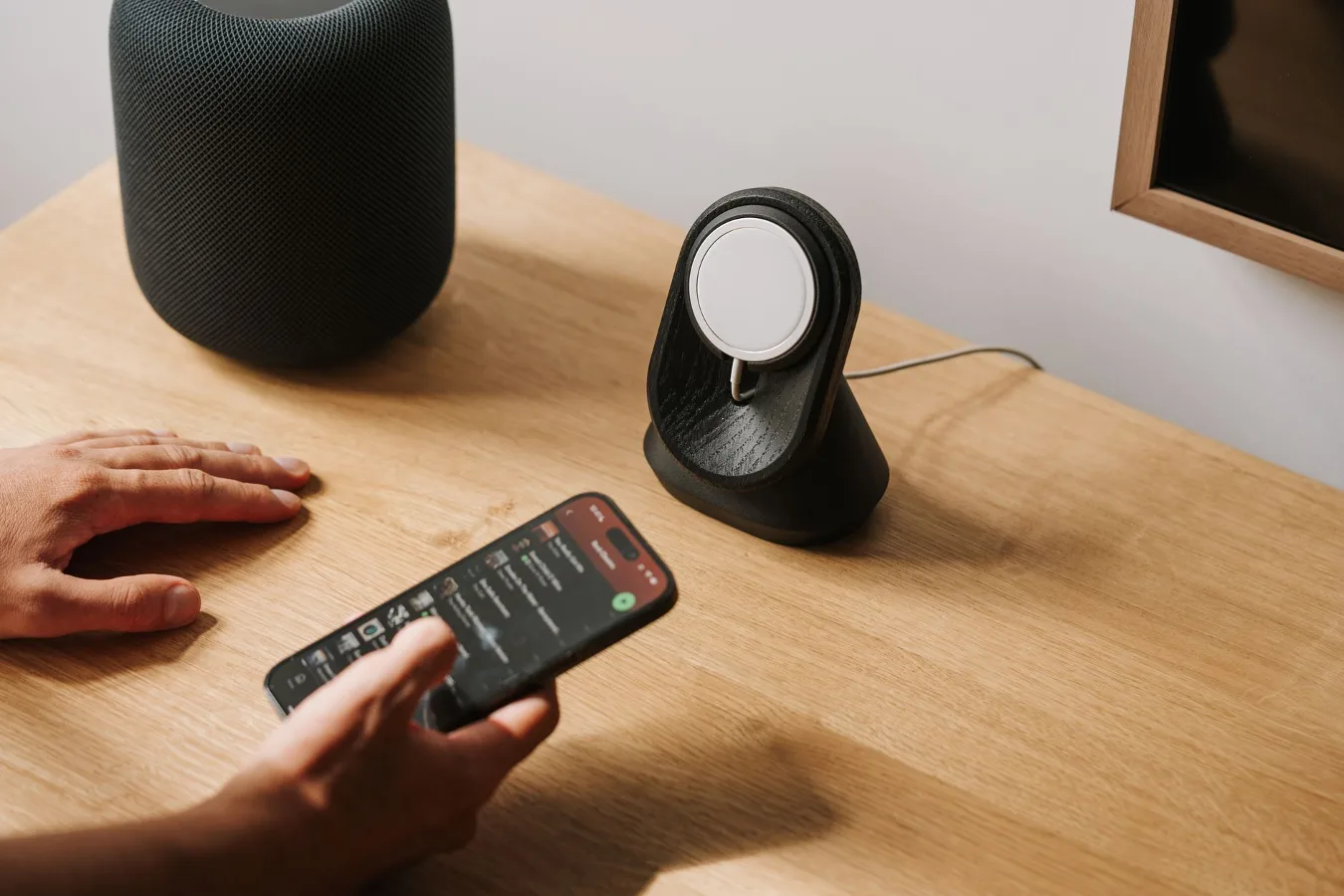
A magnetic phone mount and wireless charging setup is worth considering if you want your phone held securely and charged without plugging in a cable every time. The appeal is straightforward: easier placement, cleaner cable management, and a setup that can be especially useful for navigation, commuting, and hands-free use. Best Wireless Charging Mounts for Cars offers more detail on this point. best phone cases for magnetic mounts offers more detail on this point.
The catch is that not every magnetic mount works equally well with every phone, case, or charging standard. The best setup depends on how the mount attaches, whether your phone supports magnetic alignment, how much power the charger can deliver, and where you plan to place it in the vehicle or on a desk.
When this setup makes sense
This combination is most useful for people who want frequent access to their screen while keeping the battery topped up. It fits drivers who use maps often, commuters who rely on hands-free calls, and anyone who prefers dropping a phone into place rather than fiddling with a charging cable.
It also makes sense in spaces where cable clutter is a problem. A magnetic mount can keep a phone easy to see without the mess of a dangling cord. In some setups, wireless charging also reduces wear on the charging port because you are not repeatedly plugging and unplugging a cable.
That said, it is not always the best choice. If you need the fastest possible charging, use a thick case, or move the phone around often between portrait and landscape modes, a cable-based charger may still be more practical.
How the pieces work together
For a magnetic mount to work well with wireless charging, three things need to line up: secure attachment, correct charging alignment, and a compatible power source. A magnetic holder keeps the phone in position, while the wireless charger sends power through the back of the device once it is properly centered.
Many people assume the magnet itself is what provides charging. It does not. The magnet only positions the phone. Charging depends on the wireless charging coil, the phone’s support for that charging standard, and the power delivered through the charger and adapter.
This distinction matters because a mount can feel strong and still charge poorly if the phone is slightly misaligned, the case is too thick, or the charger is not designed with the phone’s magnetic layout in mind.
Step-by-step criteria for choosing one
1. Confirm your phone’s charging support
Start with the phone itself. If your phone supports magnetic alignment or wireless charging, you are already closer to a reliable setup. If it does not, you may need an adapter, a case with built-in magnets, or a different kind of mount entirely.
For iPhone users, magnetic alignment is often the easiest path because many accessories are designed around that ecosystem. For Android phones, compatibility can vary more widely, so it is worth checking whether your case, ring, or charging solution is built for your exact device.
2. Check the case before buying the mount
A phone case is one of the most overlooked parts of the equation. A case that is too thick, poorly aligned, or not compatible with the magnetic layout can weaken the hold and make charging less reliable.
Look for a case that supports the mount type you want. Some cases are designed specifically for magnetic accessories, while others may interfere with the connection. If you switch cases often, choose a mount system with enough tolerance to handle those changes without constant readjustment.
3. Decide where the mount will live
Dash, windshield, and vent mounting each have trade-offs. A dash mount often feels more stable and can be easier to position for a clear sightline. A vent mount is convenient and usually simple to install, but it may not suit every vehicle vent design. Windshield mounts can offer flexibility, though placement and visibility rules may be a concern depending on your driving habits and local regulations.
The location also affects charging comfort. A good mount keeps the phone visible without putting it in a spot where heat builds up or where the cable has to stretch awkwardly from the power source.
4. Think about the charging standard and power input
Wireless charging performance depends on the charger and the adapter feeding it. If the power input is weak or inconsistent, the charger may work slowly or stop and start more often than expected. A magnetic mount alone does not solve that problem.
It helps to look for a charger that clearly supports your phone’s charging standard and to pair it with a suitable power adapter. If you are buying a car setup, the vehicle’s available power ports and cable routing should also be part of the decision.
5. Pay attention to heat and airflow
Heat is one of the most practical limitations of wireless charging. All wireless charging generates some heat, and a mounted phone in direct sun can warm up even faster. Heat can slow charging and may make the phone less comfortable to touch during long drives.
This is one reason vent-mounted setups can be a mixed bag. They are compact, but they may block airflow or expose the phone to hot air from the cabin, depending on season and vent position. A dash mount with better ambient airflow may be a better fit in some vehicles.
Examples of common setups
Magnetic dashboard mount with wireless charger
This is often the cleanest option for drivers who want a permanent-feeling setup. The phone stays visible, the charging cable can be tucked away, and the mount usually feels stable when installed properly. The main drawback is that adhesive-based dash mounts can be harder to reposition if you change vehicles or dashboard layouts.
Vent-mounted magnetic charger
This option is compact and often easy to install, which makes it appealing for leased cars or drivers who want minimal setup. The trade-off is that vent quality varies a lot by vehicle. Some vents are too fragile, too narrow, or positioned in a way that makes the phone block airflow or wobble on rough roads.
Desk stand with magnetic wireless charging
At a desk, the appeal is less about navigation and more about convenience. You can glance at notifications, keep the phone upright, and charge without aligning a cable every time. For home or office use, stability and angle adjustment often matter more than absolute portability.
What to watch out for
Weak magnetic hold is a real problem. A mount that slips on bumps or during sharp turns is more than an annoyance. It can make the phone hard to read, interrupt charging alignment, and create distraction.
Charging speed may be lower than expected. Wireless charging is convenient, but it is often less efficient than a direct cable. If you rely on your phone heavily throughout the day, this convenience trade-off matters.
Thick cases can cause alignment issues. A rugged case may improve drop protection but reduce magnetic grip or charging reliability. This is a common reason people blame the mount when the case is actually the problem.
Not every magnetic accessory is interchangeable. Some systems are designed around specific phone families or mounting ecosystems. A mount that looks similar on the surface may behave very differently once paired with your device.
Practical benefits
- Cleaner cable management in cars, offices, or bedside setups
- Quick one-handed phone placement
- Better visibility for navigation and calls
- Less wear on the charging port over time
- More organized and minimalist setup than a loose cable
Practical limitations
- Wireless charging can be slower than wired charging
- Heat buildup may affect comfort and efficiency
- Compatibility depends on the phone and case
- Mount stability varies by surface and vehicle design
- Some setups require a power adapter and cable you still have to manage
A simple checklist before you buy
- Does your phone support wireless charging or magnetic alignment?
- Is your current case compatible, or will you need a different one?
- Will the mount go on the dash, vent, windshield, or desk?
- Does the charger include a power path that matches your phone’s needs?
- Will the mount keep the phone stable on rough roads or uneven surfaces?
- Is the angle adjustable enough for your daily use?
- Will heat or sunlight be an issue where you plan to place it?
Common mistakes people make
One common mistake is choosing the mount first and thinking about charging later. In reality, the mount and charger need to work as a system. A strong holder with weak charging support is still frustrating.
Another mistake is assuming all magnetic cases are the same. Some are designed for alignment and stability, while others just add a magnetic ring with little attention to fit. That difference affects both security and charging reliability.
A third mistake is ignoring the vehicle or workspace. A mount that looks ideal online may be awkward in a car with shallow vents, textured dashboards, or limited cable routing. The best option is the one that fits the environment, not just the phone. choosing the right car phone mount offers more detail on this point.
Alternatives if this setup is not the right fit
If you want the simplest charging experience, a wired car charger or desktop charger may be a better option. Wired charging is often more forgiving with cases and typically avoids alignment issues.
If you want magnetic placement but do not need charging, a basic magnetic mount may be enough. That can be a good compromise if you mainly care about hands-free visibility and prefer charging separately.
If you move between multiple devices, a universal cradle-style mount may be more flexible than a magnetic system. It is less elegant, but it can handle a wider range of phones and cases.
Concise FAQ
Does a magnetic phone mount interfere with wireless charging?
Not necessarily. The magnet itself does not block charging, but poor alignment, a thick case, or the wrong charger can reduce charging performance.
Can I use a wireless charging mount with any phone case?
No. Some cases work well with magnetic mounting and wireless charging, while others are too thick or not designed for the magnetic layout. Compatibility is worth checking before you buy.
Is a magnetic wireless charger good for long drives?
It can be, especially if you want easy access to maps and calls. Just keep an eye on heat, charging speed, and mount stability in your vehicle.
What is the biggest trade-off with this kind of setup?
Convenience is the main benefit, but it usually comes with some compromise in charging speed and compatibility compared with a direct cable.
Should I choose a vent mount or a dash mount?
Choose based on your vehicle and viewing angle. Dash mounts often feel more stable, while vent mounts can be easier to install and remove.
Bottom line for shoppers
A magnetic phone mount and wireless charging can be a smart, low-friction setup if your phone, case, and mounting location all work together. The best choice is not just the one that looks neat; it is the one that stays secure, charges reliably, and fits the way you actually use your phone every day.
If you focus on compatibility, mount location, heat management, and charging input, you will avoid most of the frustrations people run into with this category. That makes the setup far more useful than a generic holder or a charger chosen on appearance alone.
