
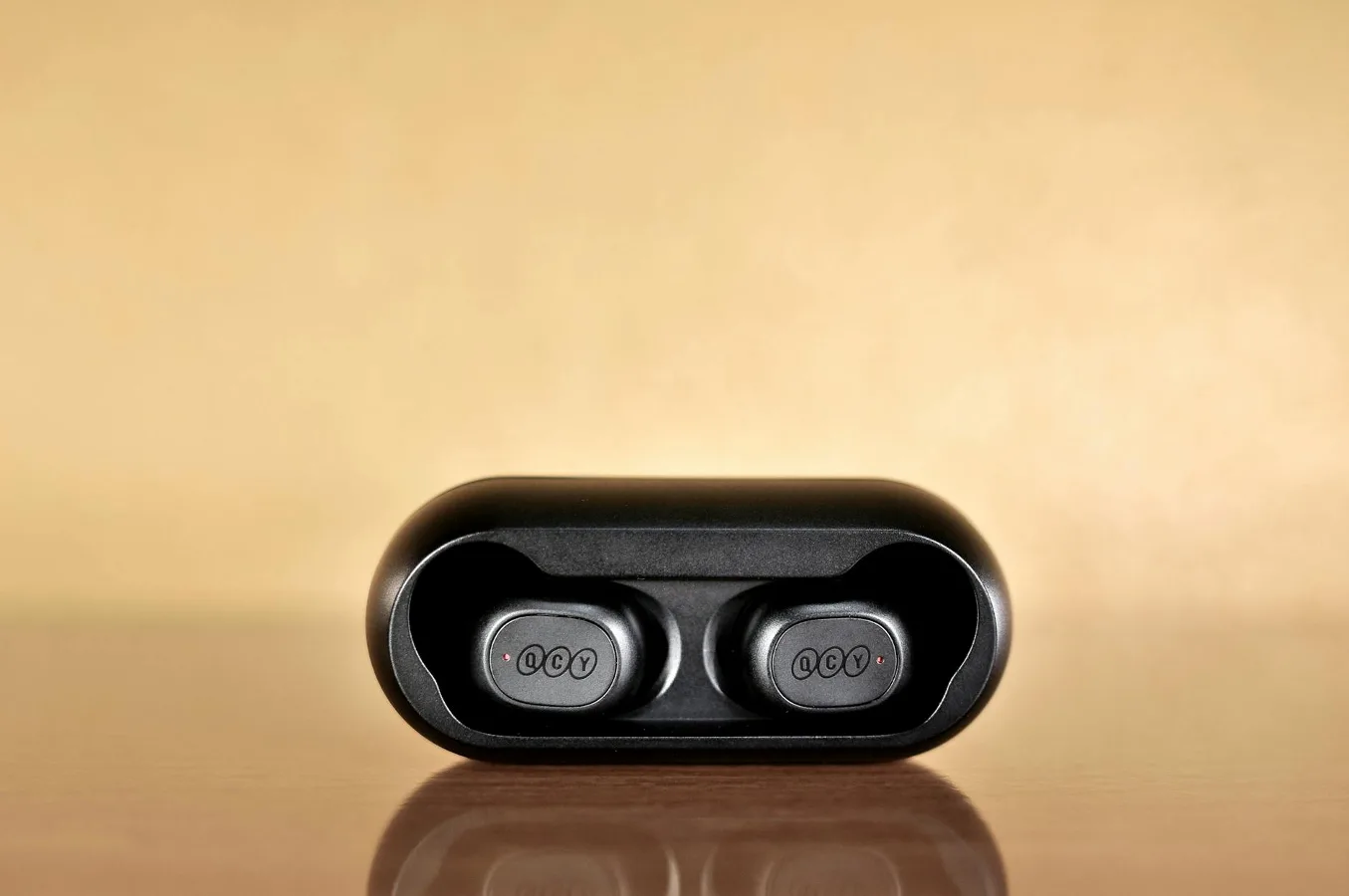
The Leemc S12 wireless earbuds sit in the crowded budget true-wireless category, where the main question is usually not whether they are premium, but whether they cover the basics well enough for everyday listening. If you are comparing them, the real decision is about fit, reliability, battery convenience, and whether the feature set matches your routine. Bluetooth audio basics offers more detail on this point. helix wireless earbuds offers more detail on this point. best budget wireless earbuds offers more detail on this point.
That is the right lens for this product. With affordable earbuds, the most useful comparison is rarely a long spec sheet. It is whether the earbuds are practical for commuting, casual music, calls, workouts, or all-day use without constant frustration.
Quick answer: who the Leemc S12 wireless earbuds are for
The Leemc S12 wireless earbuds are best approached as a value-focused option for listeners who want a simple, cordless audio setup without moving into a higher price tier. They make the most sense if you want earbuds for everyday use and care more about convenience and basic functionality than about advanced audio tuning or premium extras.
That also means they are not the best fit for buyers who expect top-tier noise cancellation, audiophile-grade sound, or the kind of long-term refinement usually found in more expensive models. In this part of the market, trade-offs are normal. The key is knowing which ones matter to you.
How to judge the Leemc S12 against similar earbuds
Because product listings in this category can emphasize different features depending on the seller, it helps to compare the Leemc S12 wireless earbuds using practical criteria instead of marketing language. The most important factors are the ones that affect daily use.
1. Fit and comfort
For any true wireless earbud, fit is the first thing that determines whether the product feels like a good purchase. Even a pair with decent sound can become annoying if the shells press into the ear, shift during movement, or create a poor seal. Since ear shape varies widely, comfort is always personal.
Look for whether the earbuds seem designed for passive stability, whether replacement ear tips are included, and whether the shape appears suitable for long listening sessions. A comfortable fit also improves perceived sound, since a better seal usually helps low-end response and reduces outside noise.
One overlooked point: comfort is not just about softness. It is also about how often you plan to wear them. A model that feels fine for short sessions may become tiring during a long commute or a workday filled with calls.
2. Bluetooth pairing and day-to-day reliability
In the budget segment, reliability often matters more than headline features. Buyers usually want earbuds that connect quickly, reconnect predictably, and do not require repeated troubleshooting. That makes pairing stability a major decision factor for the Leemc S12 wireless earbuds or any similar model.
For Android and iPhone users alike, the useful questions are straightforward: does the connection process seem uncomplicated, does the product support the phone you use most, and will it be easy to switch between listening sessions without a lot of delay? Those details are more important than glossy product copy.
Common frustration in this category comes from assuming all Bluetooth earbuds behave the same. They do not. A model can technically connect and still feel awkward in normal use if the reconnection process is inconsistent or the controls are difficult to learn.
3. Battery convenience
Battery life is one of the most visible buying criteria, but it should be treated as a convenience factor rather than a number to chase blindly. For everyday use, what matters is whether the earbuds and charging case fit your routine.
If you mostly listen during a commute, short workouts, or casual errands, moderate battery performance may be enough. If you wear earbuds through work shifts, long study sessions, or travel days, battery convenience becomes more important. The most practical question is not simply how long the earbuds last, but how disruptive charging will be in your schedule.
It is also worth paying attention to charging-case size and portability. A larger case can be less convenient in a pocket, while a smaller one may be easier to carry but not ideal for users who want a bit more reserve power between charges.
4. Sound profile and use-case suitability
With budget wireless earbuds, sound quality should be evaluated by use case rather than abstract expectations. Some listeners want strong bass for casual music. Others want clearer mids for podcasts, voice notes, and calls. A model like the Leemc S12 can only be judged fairly by how well it fits the kind of audio you actually consume.
If you listen mostly to spoken content, clean voice reproduction and stable volume matter more than deep bass extension. If you listen to energetic playlists, you may prioritize fullness and impact. Neither approach is wrong, but it changes what counts as a good result.
A common misconception is that all earbuds marketed for music should sound similar. In practice, even low-cost models can feel quite different depending on their tuning, seal, and fit. That is why reading product details carefully matters more than relying on general assumptions.
5. Call quality and microphone expectations
If you plan to use the Leemc S12 wireless earbuds for calls, meeting audio, or voice chats, microphone performance becomes a real consideration. In this category, call quality is often acceptable for casual use but not always ideal in noisy environments.
That distinction matters. A product may be fine for home or office calls and still struggle outdoors, near traffic, or in a busy café. If most of your use happens in quieter places, the threshold for acceptable mic quality is lower. If you expect to use them on the street or during travel, you should be more selective.
The practical question is whether you need earbuds mainly for listening, or whether two-way communication is a major part of the purchase. Those are not the same buying decision.
Where the Leemc S12 makes sense
The Leemc S12 wireless earbuds fit best into simple, low-friction listening scenarios. They are most appealing if you want a straightforward pair of earbuds for daily errands, casual listening, short commutes, or backup use alongside a primary audio device.
- Commuting: useful if you want compact wireless audio for trains, buses, or short walks.
- Work from home: practical for light calls, background music, and switching between devices.
- Gym or movement: suitable if the fit feels secure enough for your ears and the environment is not too noisy.
- Backup pair: helpful as a spare set for travel, a desk drawer, or a secondary bag.
They make less sense if you are seeking a feature-rich listening tool with advanced ANC, multi-device switching, or premium app controls. In other words, these earbuds are best judged as a practical purchase, not a lifestyle statement.
Comparison lens: what matters more than brand hype
If you are deciding whether to buy the Leemc S12 wireless earbuds, compare them against alternatives using these categories rather than broad claims.
| Decision factor | Why it matters | What to think about |
|---|---|---|
| Fit | Comfort and stability affect both usability and sound | Ear shape, included tips, and whether they stay secure during movement |
| Battery convenience | Determines how often you need to recharge | Your commute length, work habits, and whether the case is easy to carry |
| Bluetooth reliability | Connection issues quickly become frustrating | How often you need a simple reconnect experience |
| Sound balance | Different listeners need different tuning | Music, podcasts, calls, or mixed use |
| Call performance | Important if you take regular calls | Quiet indoor use versus noisy outdoor environments |
| Controls | Good controls reduce friction | How easy it is to pause, skip, or answer calls without confusion |
That comparison framework is more useful than trying to judge the earbuds on one feature alone. A budget pair can be perfectly reasonable if it delivers the basics consistently, even if it does not excel in every category.
Common mistakes buyers make with budget wireless earbuds
Buying mistakes are especially common in this segment because the products often sound similar on paper. A careful buyer avoids a lot of disappointment by checking the following points first.
Expecting premium performance from an entry-level product
The most frequent mistake is treating a budget earbud like a premium model in disguise. That leads to unrealistic expectations around sound separation, active noise cancellation, microphone quality, or app features that may not be a priority for the product line.
It is more productive to ask whether the Leemc S12 wireless earbuds are good enough for your actual use case than whether they compete with a much more expensive tier.
Ignoring fit because the specs look acceptable
People often focus on battery claims or wireless range and ignore comfort until after the purchase. That usually backfires. An earbud that does not fit properly can feel less secure, sound worse, and become irritating much faster than expected.
Fit is not an accessory detail. It is part of the product itself.
Overlooking call use
Many buyers assume all wireless earbuds are equally fine for calls. They are not. If phone calls matter to you, especially in semi-noisy places, put microphone behavior near the top of your checklist.
Assuming all cheap earbuds are interchangeable
Another common misconception is that budget earbuds differ only in name. In reality, small design choices affect comfort, seal, touch controls, and connection stability. Those details shape the experience more than many shoppers expect.
Practical alternatives if the S12 is not the right fit
If the Leemc S12 wireless earbuds do not seem like the best match, the right alternative depends on what you value most.
- For better noise control: consider earbuds with active noise cancellation, if your budget allows it.
- For stronger call focus: look for models that emphasize microphone quality and voice pickup.
- For longer sessions: prioritize comfort, battery convenience, and a lighter fit.
- For workouts: focus on secure fit and water resistance rather than extra features you may not use.
- For travel: a more established model with stronger connection reliability may be worth the extra spend.
The right alternative is not always the most expensive one. It is the one that removes the most friction from your routine.
How to narrow the choice before you buy
If you are on the fence, a simple decision process helps.
- Start with your main use case. Are these for music, podcasts, calls, workouts, or backup listening?
- Check comfort expectations. Make sure the shape and fit approach seem reasonable for your ears.
- Match battery needs to your schedule. Short daily sessions and long travel days are not the same requirement.
- Decide how much call quality matters. If it is important, do not treat it as a side note.
- Compare the trade-offs honestly. A lower-cost model can be a smart buy if you accept where it is likely to be modest.
This is the most realistic way to evaluate the Leemc S12 wireless earbuds. It avoids overpaying for features you will not use, while also helping you avoid a bargain that creates more inconvenience than value.
Who should probably keep looking
These earbuds are not the best starting point for everyone. If you want a more polished sound signature, stronger environmental isolation, advanced controls, or broader ecosystem features, you may be happier with a more established midrange option.
They are also a weaker choice for buyers who depend on earbuds for long work calls in busy environments. In that situation, the microphone and noise-handling side of the experience matters enough that a more specialized pair is often worth it.
For the right buyer, though, the Leemc S12 wireless earbuds can still make sense as a straightforward, affordable way to get into wireless listening without overcomplicating the purchase.
The smartest approach is to treat them as a practical tool. If the priorities are comfort, easy wireless convenience, and everyday usability, they deserve a serious look. If the priorities are premium sound, advanced software, or top-end call performance, the search should continue.
