
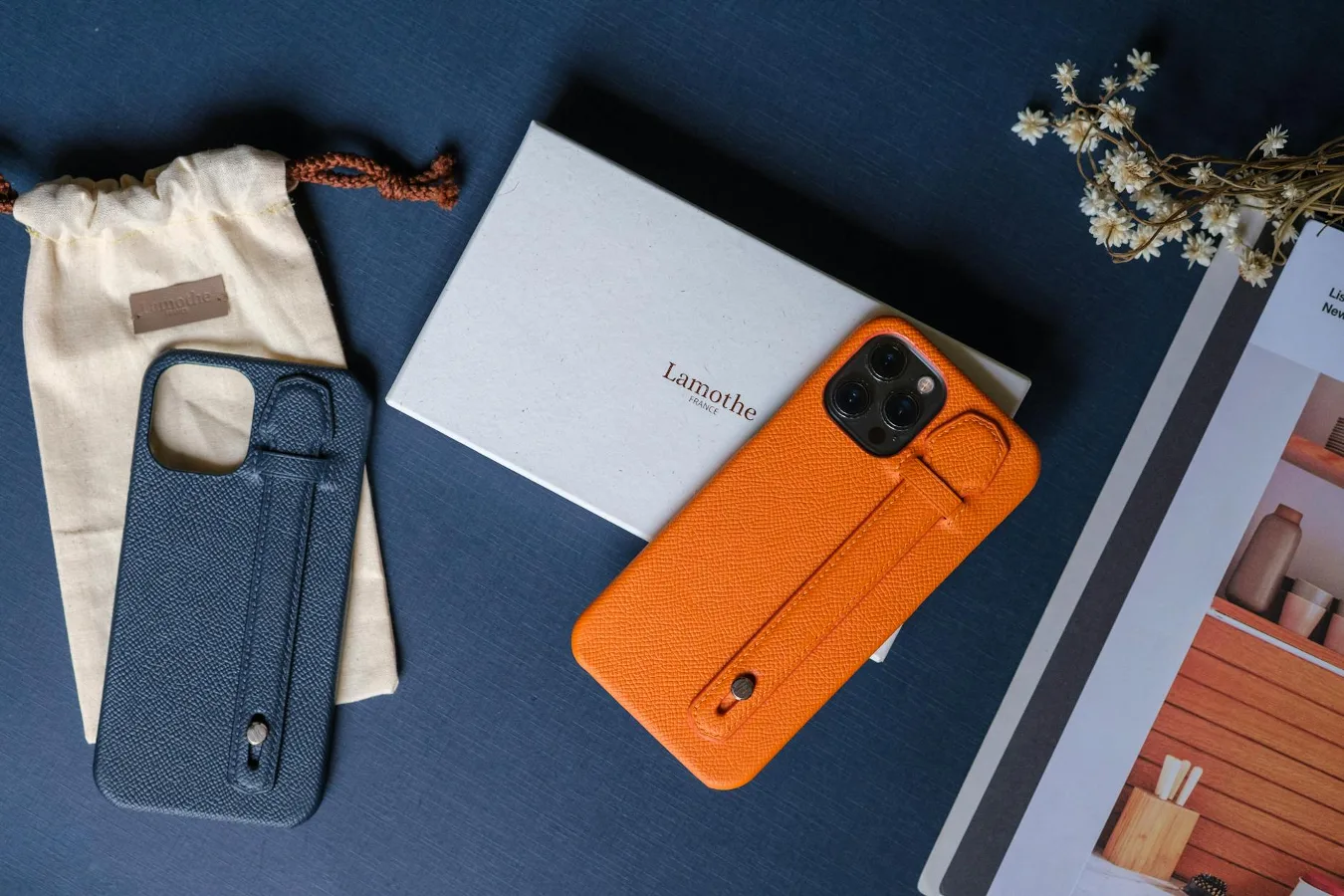
A phone case with loop is a case designed with some kind of built-in loop, strap, finger loop, or handhold that makes the phone easier to carry and less likely to slip. For many people, that extra grip is the main reason to choose one. It can improve confidence during one-handed use, help in crowded places, and make a large phone feel a little more manageable. best phone case styles for everyday carry offers more detail on this point. leopard print phone case offers more detail on this point.
The best version depends on how you use your phone. Some loops are made for a finger only. Others act more like a small strap or lanyard point. A few cases combine a loop with a stand or wallet-style back. The right choice is less about the trend and more about fit, comfort, protection, and whether the loop actually helps in daily use.
Quick answer: who a phone case with loop is best for
A phone case with loop makes the most sense if you often use your phone one-handed, carry it while walking, or want a more secure grip without adding a bulky accessory. It is also worth considering if you have a larger phone, use your device while commuting, or simply dislike the feeling of a smooth case slipping in your hand.
That said, a loop case is not automatically better than a standard protective case. A loop can add convenience, but it may also change how the phone feels in a pocket, on a wireless charger, or when mounted in a car. The real question is whether the loop matches your routine.
What a loop actually changes
The loop is not just a design detail. It changes how you interact with the phone in a few practical ways.
- Grip: A loop can reduce the chance of a phone sliding out of your hand.
- Carry comfort: It can make it easier to hold the phone for longer periods without tightening your grip.
- One-handed control: It may help with texting, scrolling, or taking quick photos on larger devices.
- Security: In busy settings, the loop can act as a backup hold if your grip loosens.
The limitation is that not every loop is equally useful. Some are too small for larger fingers. Others sit awkwardly on the back of the case and interfere with flat placement on a table. A well-designed loop should feel like part of the case, not an afterthought attached to it.
Types of phone cases with loops
“Loop” can mean several different things, and the differences matter more than many shoppers realize.
Finger loop cases
These cases usually have a loop on the back that one or two fingers can slip through. They are popular for quick grip support and one-handed handling. A finger loop can be especially useful on larger phones, but it may feel restrictive if you prefer to keep the back of the phone completely flat.
Strap or lanyard-style cases
Some cases include a wrist strap, crossbody strap, or attachment point for a strap. These are more about carry security than finger support. They can be useful for travel, events, or situations where you want to keep the phone close without holding it constantly.
Ring-style cases
Ring grips are often treated as loop alternatives, but they solve a similar problem: improving grip. A ring can rotate and may double as a stand. Compared with a soft loop, it can feel more structured, though some users find it less comfortable over long periods. phone grips and straps compared offers more detail on this point.
Hybrid cases
Some cases combine a loop with a kickstand, wallet pocket, or detachable grip. These can be attractive if you want more than one function in a single accessory. The trade-off is added bulk and more parts that can wear out over time.
How to compare your options
If you are shopping for a phone case with loop, the most useful comparison points are not style alone. A practical choice usually depends on fit, comfort, durability, and how the loop affects everyday use.
| What to check | Why it matters | What to look for |
|---|---|---|
| Loop placement | Affects comfort and reach | A position that feels natural in your hand |
| Case fit | Protects the phone properly | Precise cutouts and secure button coverage |
| Grip material | Changes how secure the phone feels | Textured or slightly tacky surfaces |
| Bulk | Impacts pocketability and handling | A profile you can live with daily |
| Charging compatibility | May affect wireless charging or mounts | A case that works with your chargers and accessories |
| Loop durability | Loops can wear differently than the case body | Reinforced stitching, strong attachment points, or a sturdy built-in design |
One overlooked detail is how the loop behaves when you are not holding the phone. If the loop sticks out too far, it can create wobble on a table or make the phone harder to slide into a pocket. If it lies too flat, it may be less helpful as a grip. Balance matters.
Benefits that are easy to overlook
Most people think of loop cases as a grip upgrade, but they can also influence the way you use the phone throughout the day.
- Less hand fatigue: A loop can reduce the need to squeeze the phone tightly.
- More confident camera use: It can help steady the phone for quick photos and videos.
- Better usability on large screens: Bigger phones often benefit more from added hand support.
- Added convenience in crowded spaces: A stronger hold can feel reassuring on transit, sidewalks, or at events.
These benefits are real, but they are also situational. If you mostly use your phone at a desk, in a stand, or with both hands, the loop may matter less than a slim profile or stronger drop protection.
Trade-offs to think about before buying
A phone case with loop solves one problem while sometimes creating another. That is normal. The goal is to choose the trade-off you can live with.
More grip usually means more bulk. Even a small loop can make the case feel thicker or less smooth in a pocket. If you prefer a sleek case, this may be the biggest downside.
Some loops interfere with accessories. Depending on the case design, the loop may make wireless charging less convenient, sit awkwardly on car mounts, or get in the way of magnetic accessories. Compatibility is worth checking before you buy.
Not every loop is equally durable. Fabric straps, elastic loops, and swiveling rings all wear differently. A loop can loosen, stretch, or become uncomfortable over time if the design is too flimsy.
Protection levels vary. A loop does not automatically mean better drop protection. Some loop cases are built mainly for grip, not impact resistance. If protection is a priority, look at the full case structure, not just the loop.
Mistakes to avoid
- Choosing the loop before the fit: A good loop is not helpful if the case does not fit the phone model correctly.
- Assuming all loops do the same job: Finger loops, wrist straps, and ring grips serve different use cases.
- Ignoring wireless charging needs: Some thicker loop designs can make charging less convenient.
- Overlooking pocket comfort: A case that feels great in the hand may still be awkward in jeans or small bags.
- Buying for looks only: A loop should be comfortable to hold and secure in daily use, not just visually appealing.
- Forgetting about hand size: A loop that works well for one person may feel too tight or too loose for another.
One common misconception is that a loop case is mainly for clumsy users. In practice, many people choose them simply because modern phones are large and smooth. The loop is often a practical response to device size, not a sign of carelessness.
Who should consider an alternative
A loop case is useful, but it is not the only way to improve grip or carry comfort. If you are unsure, consider whether another accessory would solve the problem more cleanly.
A slim case with a textured back may be better if you want better grip without extra hardware. This is often the right choice for people who keep their phone in a pocket and dislike added bulk.
A separate phone grip or strap accessory can be a better option if you want flexibility. You can change or remove it without replacing the entire case.
A rugged protective case may make more sense if drop resistance matters more than one-handed comfort. Many rugged cases are bulkier, but they may better suit outdoor use or work environments.
A wallet case can be practical if you also want to carry cards, though it brings its own compromises in thickness and usability.
How to choose the right one for your routine
The best phone case with loop is the one that fits how you actually use your phone, not how you imagine using it.
If you spend a lot of time commuting or walking, prioritize security and comfort. A strap or stable loop may be more useful than a decorative ring. If you use your phone mostly for messaging and quick checks, a finger loop on a slim case may be enough. If you switch frequently between pockets, bags, and wireless charging, a lower-profile design may be the better compromise.
For users with larger phones, the loop often feels more valuable because it offsets the difficulty of reaching across the screen. For users with smaller phones, the added grip may be nice, but not always necessary. That is why size and hand comfort should guide the decision.
If you are buying for a specific device, make sure the case supports the exact model and camera layout. A good loop cannot make up for poor fit, weak button access, or awkward cutouts.
Maintenance and care
Loop cases do not usually require special care, but they can collect dirt faster than smooth cases because of seams, fabric, or moving parts. A quick regular wipe helps keep the grip comfortable and the case looking clean.
- Check the loop for fraying, looseness, or stretching if it is fabric-based.
- Clean textured areas so oils do not make the case slippery.
- Make sure the attachment point stays secure if the loop is detachable.
- Replace the case if the loop becomes loose enough to feel unreliable.
This is another reason to avoid choosing a loop case purely for convenience. If the loop is the feature that makes the case useful, it should remain dependable over time.
FAQ
Are phone cases with loops good for drop protection?
They can help you hold the phone more securely, which may reduce drops from the hand. But loop cases vary a lot, and the loop itself does not guarantee strong impact protection. Check the overall case design.
Do loop cases work with wireless charging?
Sometimes. It depends on the thickness of the case and where the loop sits. If wireless charging matters to you, look for a design that keeps the back as flat and unobstructed as possible.
What is better: a loop, ring, or strap?
It depends on how you carry your phone. A loop is often best for quick finger support, a ring can be useful for stable holding or standing the phone up, and a strap is better for carry security.
Can a phone case with loop feel uncomfortable?
Yes. If the loop is too small, poorly placed, or too stiff, it can be awkward during long use. Comfort depends heavily on the shape of the loop and the size of your hand.
Is a loop case worth it for a small phone?
Sometimes, but the benefit is smaller than it is with larger phones. If your phone already feels easy to hold, a textured slim case may be enough.
A phone case with loop is most useful when it solves a real handling problem. If you want safer one-handed use, easier carrying, or a more confident grip, it can be a smart choice. If you care more about thinness, pocket comfort, or broad accessory compatibility, a standard case or separate grip accessory may work better.
