
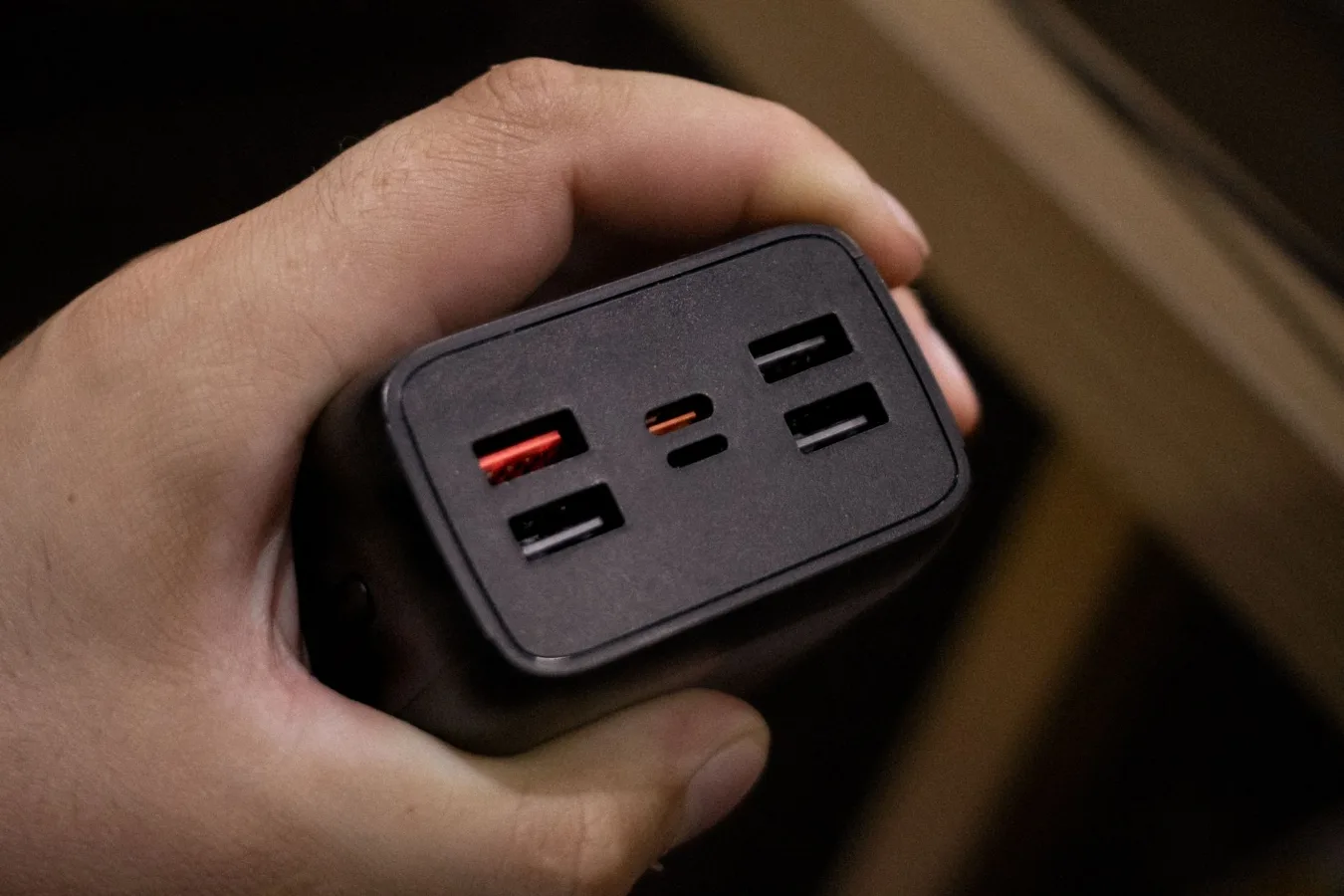
If you need a portable charger that can do more than top up a phone, a 65W power bank is worth a close look. It is usually chosen by people who want faster charging, broader USB-C device support, and enough output to handle some tablets and many USB-C laptops in a pinch.
The catch is that wattage alone does not tell the full story. Capacity, port mix, cable quality, recharge speed, and size all affect whether a 65W model is genuinely useful or just overbuilt for your needs.
What a 65W power bank is best for
A 65W power bank is a portable battery with an output level that can deliver up to 65 watts through one of its ports, usually USB-C. In practical terms, that makes it more versatile than a basic phone battery pack. It can be a good fit if you carry a smartphone plus earbuds and a tablet, or if you want one charger that can also support a USB-C laptop when you are away from an outlet.
For phone-only use, 65W is often more power than you strictly need. That does not make it a bad choice, but it does mean you should think about whether you are paying for extra capability you may never use. The best choice depends on your device mix and how often you travel, work remotely, or spend long stretches away from charging points. best phone chargers for travel offers more detail on this point.
What to compare before buying
The most useful comparison for a 65W power bank is not just output. It is how the whole unit fits your actual charging habits.
1. Capacity versus portability
Capacity is usually the first thing people notice, but bigger is not automatically better. A larger battery can charge devices more times, yet it also tends to be heavier and bulkier. If you want something for a daily commute or a jacket pocket, a smaller pack may be easier to live with even if it holds less energy.
For travel, capacity matters more. A mid- to high-capacity model may make more sense if you expect to recharge a phone, wireless earbuds, and perhaps a tablet during a long day. The trade-off is that airline rules, carry-on convenience, and overall weight become more relevant as capacity rises.
2. USB-C Power Delivery support
For most modern phones and USB-C devices, USB-C Power Delivery is one of the most important features to look for. It helps the power bank and device negotiate a charging profile that matches the device’s needs. A 65W rating is only useful if the port and cable support the right standard. how USB-C power delivery works offers more detail on this point.
This is one of the most common misconceptions: people assume 65W means every connected device will charge at 65W. That is not how charging works. The device decides how much power to draw, and the cable and port both matter.
3. Number and type of ports
Some 65W power banks offer one high-output USB-C port plus one or more extra ports for smaller devices. That can be helpful if you want to charge a phone and wireless earbuds at the same time. Just remember that total output is often shared across ports, so charging several devices at once can reduce speed on each one.
If you mainly charge one device at a time, a simpler design may be easier to use. If you often share power with a phone, tablet, and accessory, a multi-port layout can be more practical than a single-port model.
4. Recharge speed of the power bank itself
A fast-output power bank is only half the equation. You also want to know how quickly the battery pack recharges from a wall charger. Some models can take a long time to refill if paired with a weak adapter, which defeats part of the convenience of a premium portable charger.
This matters especially for travelers and remote workers. If you routinely forget to charge accessories overnight, a power bank that recharges efficiently can be much easier to keep ready.
5. Size, weight, and everyday carry comfort
A 65W unit is often chosen for performance, but physical comfort still matters. If the power bank is too heavy or awkward to carry, you may leave it at home. For many people, the right choice is the one they are actually willing to bring every day, not the one with the highest spec sheet.
That is the overlooked trade-off in this category: higher output can come with a more travel-focused form factor. If your main goal is quick phone top-ups, a lighter lower-wattage model may be more convenient.
When a 65W power bank makes sense for phone users
Not every phone owner needs 65W, but there are clear cases where it is a smart buy.
- You use a USB-C phone and also carry a tablet or laptop. A higher-output power bank reduces the number of chargers you need to pack.
- You travel often. One reliable battery pack can be more useful than several smaller ones scattered in bags and drawers.
- You want future-proofing. If you plan to upgrade to a USB-C laptop or a more demanding device, a 65W model may stay useful longer.
- You share power with others. Extra output and extra ports can help when more than one device needs attention.
For someone who only needs occasional phone backup, though, a smaller pack may be the better value. In that case, the practical gain from 65W is limited unless you care about faster recharging of the bank itself or want headroom for future devices.
Where a 65W model can be overkill
A power bank in this category is not always the most efficient choice for a phone-first setup. If your daily devices are limited to a smartphone and earbuds, the advantages of 65W may not change your charging routine very much. You may be better served by a more compact pack with enough capacity to cover a full day.
There is also a common assumption that more wattage automatically means better charging. In reality, a phone can only draw what its charging system supports. If your device tops out well below 65W, the extra rating does not make the battery charge faster than its own limits allow.
Common mistakes to avoid
Buying a 65W power bank can be straightforward, but a few mistakes come up often. Podoru Power Bank: Buying Guide offers more detail on this point.
- Ignoring cable quality. A weak or incompatible USB-C cable can limit charging performance even if the power bank is capable.
- Choosing capacity without considering carry weight. A larger battery sounds attractive until you have to carry it all day.
- Assuming all ports perform the same. The fastest output is often reserved for one port, usually USB-C.
- Forgetting about shared output. Multiple devices may charge more slowly when connected together.
- Overlooking recharge time. A power bank that charges slowly can become inconvenient fast.
- Buying for wattage alone. Port layout, safety features, and real-world usability matter just as much.
How to match the power bank to your phone setup
Start with your primary device. If you use an iPhone or Android phone with USB-C charging, a 65W power bank can still be useful even if the phone itself does not draw anywhere near 65W. The real benefit is flexibility. You can charge the phone efficiently and still have enough output for a tablet, handheld console, or laptop when needed.
If your phone is the only device you care about, look for a balance of portability and capacity rather than focusing only on the highest wattage available. If you carry a mixed-device setup, prioritize USB-C PD, enough capacity for your longest days, and a form factor you will actually pack.
Alternatives to consider
A 65W power bank is not the only good option in the Phone cluster. Depending on your habits, another category may fit better.
- Smaller phone-focused power banks are better if you want something light and simple for emergency top-ups.
- Magnetic wireless power banks can be convenient for certain phones, though they are usually less efficient than wired charging.
- Higher-capacity laptop power banks may be preferable if your notebook is the main device you need to keep alive.
- Wall chargers with high-wattage USB-C output are a better everyday solution when outlets are available.
The right choice depends on whether you need portability, versatility, or pure convenience. A 65W model sits in the middle: powerful enough for more than phones, but still portable enough for bags and travel.
Practical buying checklist
If you want a quick way to judge a 65W power bank, use this checklist before you buy:
- Does it support USB-C Power Delivery?
- Does the port layout match the devices you actually carry?
- Is the capacity enough for your day-to-day use?
- Is it small and light enough to bring regularly?
- Can it recharge itself at a reasonable speed?
- Does it include safety protections and clear compatibility information?
- Will your existing cables support the power you expect to use?
That last point is easy to miss. A power bank can only perform as well as the weakest part of the charging chain, and cable compatibility is often the hidden bottleneck.
Who should buy one
A 65W power bank is a strong choice for users who want one portable charger that can cover phones plus a broader range of USB-C devices. It is especially sensible if you value flexibility, travel frequently, or want a battery pack that remains useful as your device lineup changes.
If you only need a backup charger for a smartphone, you do not necessarily need to shop at the 65W level. But if you want a portable charger that can handle more demanding use cases without becoming obsolete too quickly, this category offers a practical middle ground.
Best fit: phone users who also carry tablets, laptops, or multiple USB-C accessories.
Less ideal: users who want the smallest possible charger for occasional phone top-ups only.
Choose based on how you charge, not just on the wattage printed on the box. That is what separates a useful power bank from one that looks impressive but spends most of its life in a drawer.
