
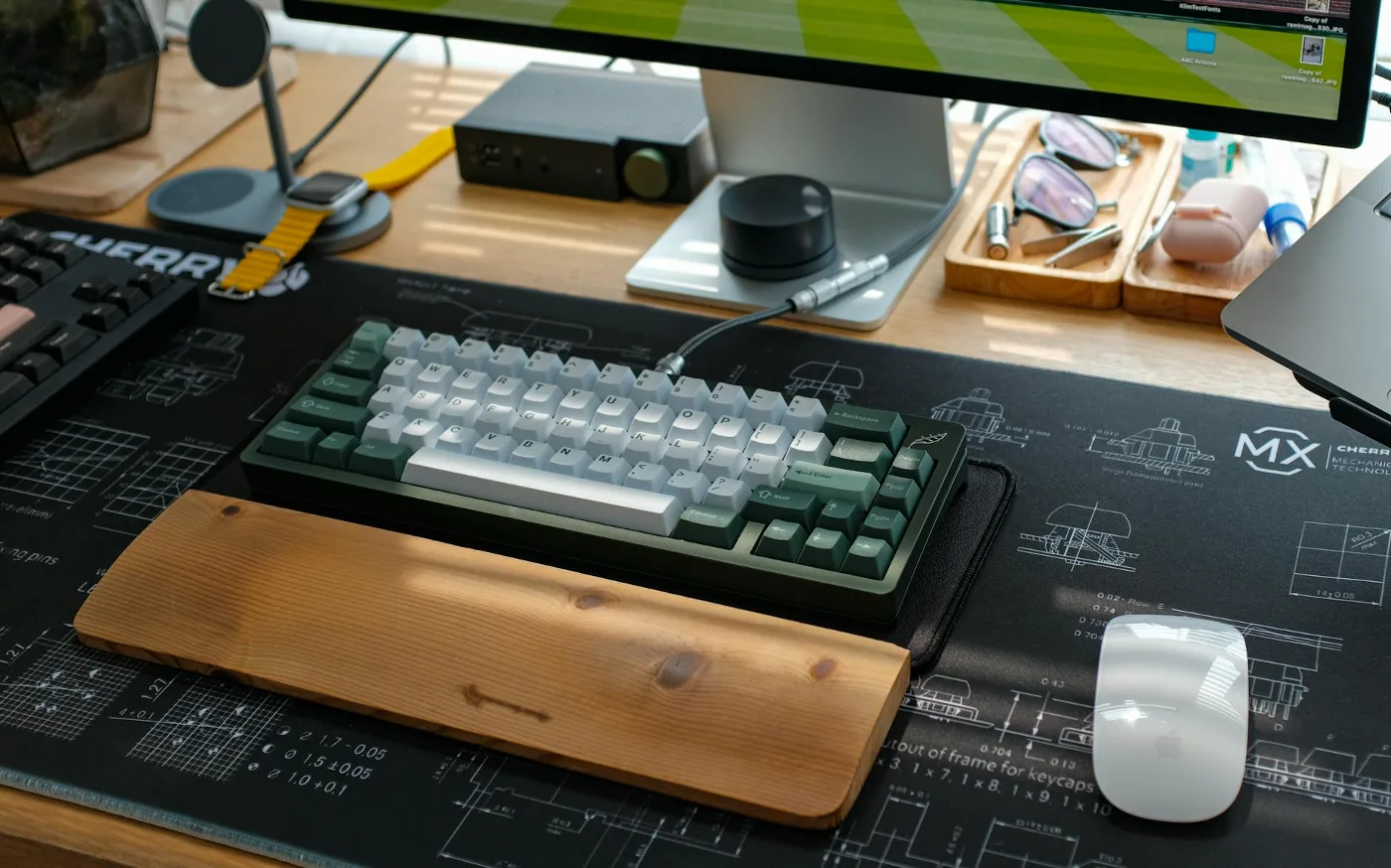
Quick answer: what a wooden mechanical keyboard is for
A wooden mechanical keyboard is a keyboard that uses a wood-based case, frame, or accent panel instead of the more common plastic, aluminum, or mixed-material housing. People usually choose one for two reasons: the look and the feel. Visually, wood brings warmth to a desk setup that can otherwise feel very industrial. Practically, the material choice can also influence weight, acoustics, and the overall character of the board. mechanical keyboard terminology guide offers more detail on this point. aluminum mechanical keyboard offers more detail on this point.
If you are considering one, the most important point is this: wood is usually about presentation, sound character, and personal preference rather than raw typing performance. The switches, stabilizers, layout, and build quality still matter more than the wood itself. A beautiful case cannot make up for a poor switch selection or awkward layout.
That is why the best wooden mechanical keyboard is not simply the prettiest one. It is the one that fits your typing habits, desk space, and tolerance for maintenance.
Why people choose wooden mechanical keyboards
The appeal is broader than aesthetics. Wood creates a different relationship between the keyboard and the rest of the workspace. For some setups, especially those built around natural materials, muted colors, or an understated editorial style, it can feel more cohesive than RGB-heavy or fully metallic designs.
There is also a practical side to the appeal:
- Visual warmth: wood tends to soften the look of a desk and can help a setup feel less sterile.
- Distinctive identity: many wood keyboards stand out from mass-market models, which matters if you want a more personalized workstation.
- Potential acoustic character: different case materials can change how a keyboard sounds, though the exact result depends on the full build, not wood alone.
- Desk presence: a wooden board often reads as a design object as much as an input device.
That said, wood is not automatically better. In some keyboards, the wood is a partial outer shell or top plate rather than the full structural body. In others, it is part of a custom build where the case material is one piece of a larger tuning process. Knowing which type you are looking at helps avoid disappointment.
Wooden mechanical keyboard vs. traditional materials
If you are comparing a wooden mechanical keyboard with plastic or aluminum alternatives, the decision usually comes down to priorities.
| Factor | Wooden case | Plastic case | Aluminum case |
|---|---|---|---|
| Look and feel | Warm, natural, distinctive | Varies, often utilitarian | Sleek, modern, premium |
| Weight | Depends on construction, often substantial | Usually lighter | Often heavy and stable |
| Acoustics | Can sound softer or more rounded, depending on build | Can sound hollow in lower-end designs | Can sound firm or sharper depending on tuning |
| Maintenance | May require more care due to finish and moisture sensitivity | Usually easiest to maintain | Low daily maintenance, but can show fingerprints |
| Customization | Common in boutique and custom builds | Widely available | Popular in enthusiast and premium boards |
The biggest misconception is that wood automatically improves sound. A keyboard’s sound profile depends on the plate, switches, stabilizers, foam, mounting style, and even keycaps. Wood can influence the character of the build, but it is not a shortcut to a specific sound signature.
What to compare before buying
For a commercial search like this, the right approach is to compare the features that affect real use, not just the finish. A wooden case is only one part of the keyboard. These are the dimensions that deserve attention.
1. Layout and desk fit
Layout should come first. A wooden full-size keyboard may look impressive, but it takes up more space than many people want. If your desk is compact, a tenkeyless, 75%, or 65% layout may be a better fit. If you work with spreadsheets or enter numbers often, a numpad may still be worth the footprint.
Think about whether you need dedicated function keys, arrow keys, media controls, or a number pad. The right layout is the one that supports your daily tasks without making the board feel crowded or oversized.
2. Switch compatibility
Many buyers focus on the case and overlook the switches. That is a mistake. The switch type has a larger effect on typing feel and sound than the wood alone. If you like a crisp tactile response, a tactile switch may suit you. If you prefer a smooth linear stroke, a linear switch may be better. If you need a quieter board for shared spaces, quieter switch options may be a better starting point than obsessing over the case material.
If the board is hot-swappable, you can change switches later without soldering. That makes experimentation easier and reduces the risk of getting stuck with a switch that does not suit you.
3. Keycap and stabilizer compatibility
Compatibility matters because not every keyboard uses the same layout standards. Confirm that the board supports the keycap set you want, especially if you like uncommon layouts or specialty keycaps. Stabilizers also matter for larger keys such as the space bar, enter, shift, and backspace. Poorly tuned stabilizers can create rattling that no amount of case beauty will hide.
If the product page is vague, look for explicit mention of standard switch stems, ANSI or ISO layout, and keycap profile compatibility. These details are often more useful than marketing language about craftsmanship.
4. Wood type, finish, and construction
Not all wooden keyboards are built the same way. Some use solid wood, while others use wood veneer over another material. Some boards are designed as artisan-style display pieces, while others are made for daily typing. The finish also matters. A sealed finish may help protect the surface from moisture and daily handling, while a more natural finish may feel pleasing but require more care.
You do not need to be a wood expert to make a good decision, but you should know whether the keyboard is intended as a durable everyday tool or a more delicate statement piece.
5. Weight and portability
Wooden keyboards can be heavier than they look, especially if they are built with thick materials or a dense internal structure. That can be a benefit on the desk because a heavier keyboard usually moves less during typing. But it can be a drawback if you carry your board between home and office or like to rearrange your workspace often.
If portability matters, check the overall design carefully. A wooden board that looks compact may still be awkward to transport compared with a slim plastic model.
6. Maintenance expectations
Wood requires more thoughtful care than many people expect. Dust, spills, humidity, and direct sunlight can all matter depending on the finish and construction. This does not mean wooden keyboards are fragile by default, but they are less forgiving than some synthetic alternatives.
If you want a low-maintenance accessory that you can wipe down quickly and forget, a wooden mechanical keyboard may not be the easiest choice. If you enjoy keeping a desktop setup in good condition and do not mind occasional care, that trade-off may be acceptable.
Where wooden mechanical keyboards make the most sense
These keyboards tend to fit certain use cases better than others.
- Design-focused desks: ideal if the keyboard is part of the visual identity of the space.
- Home offices: useful when you want a more considered, furniture-like accessory rather than a purely technical one.
- Gift purchases: a wood keyboard can feel more special than a standard mass-market board, provided the recipient likes the style and layout.
- Enthusiast setups: custom keyboard builders often use wood to create a distinctive case or accent piece.
They are less ideal if you need something extremely durable for constant travel, fast replacement, or a shared environment where accidental spills and rough handling are common.
Common mistakes to avoid
Many buyers get drawn in by the material and then discover that the rest of the keyboard does not match their needs. The most common mistakes are predictable, but they are easy to avoid.
Choosing wood before choosing layout
People sometimes decide they want a wooden keyboard and only afterward realize the layout is awkward for their work. A beautiful board that slows down your daily tasks is not a good buy. Start with layout, then narrow by material and style.
Assuming all wooden boards are custom-quality
Wood can suggest craftsmanship, but it is not a guarantee. Some wooden keyboards are well-made; others are mostly decorative. Review the mounting style, switch compatibility, stabilizers, and finish rather than assuming the material tells the whole story.
Ignoring the sound profile
A wood case may sound pleasant with one switch set and less appealing with another. If you strongly care about typing sound, pay attention to the full build. The case, plate, foam, and keycaps interact in ways that are easy to overlook.
Overlooking care requirements
Some buyers treat wood like plastic and clean it with whatever is nearby. That can be a problem if the finish is sensitive. Use gentle cleaning habits and avoid exposing the board to unnecessary moisture or heat.
Buying for aesthetics alone
This is the biggest trap. A wooden mechanical keyboard can be a great purchase, but only if it fits the way you actually use a keyboard. If it is going to sit on your desk all day, comfort and compatibility should outrank appearance.
Alternatives worth considering
If you like the idea of a wood-accented keyboard but are not sure about committing to a full wooden case, there are good alternatives.
- Wood accent panels: these offer the visual character of wood without making the entire keyboard dependent on it.
- Wood wrist rests: a practical way to bring a natural material into your setup without changing the keyboard itself.
- Aluminum keyboards with wood details: a balanced option if you want premium construction plus a softer visual style.
- Custom keycap sets with natural tones: useful if your main goal is aesthetic harmony rather than a wood case specifically.
These options can be smarter if you want easier maintenance, broader compatibility, or a more mainstream typing feel.
Who should buy one, and who should skip it
A wooden mechanical keyboard makes the most sense for users who care about desktop design, enjoy mechanical keyboard customization, and are comfortable evaluating more than just a product photo. It is a strong choice if you want a board that feels distinctive and you are willing to pay attention to build details. Most Quiet Mechanical Keyboard Switches offers more detail on this point.
You may want to skip it if your top priorities are ultra-simple maintenance, travel convenience, or the lowest possible risk of compatibility issues. In those cases, a standard plastic or aluminum mechanical keyboard may be the more practical purchase.
For many buyers, the real question is not whether wood is “better.” It is whether the material supports the kind of workspace you want to build. If your desktop leans warm, curated, and understated, a wooden keyboard can fit beautifully. If your setup is all about rugged utility, it may feel like unnecessary styling.
Either way, the smartest approach is to treat the wood as one decision among several. Layout, switches, keycap support, finish, and maintenance matter just as much. That is the difference between buying a decorative object and choosing a keyboard you will actually enjoy using day after day.
