
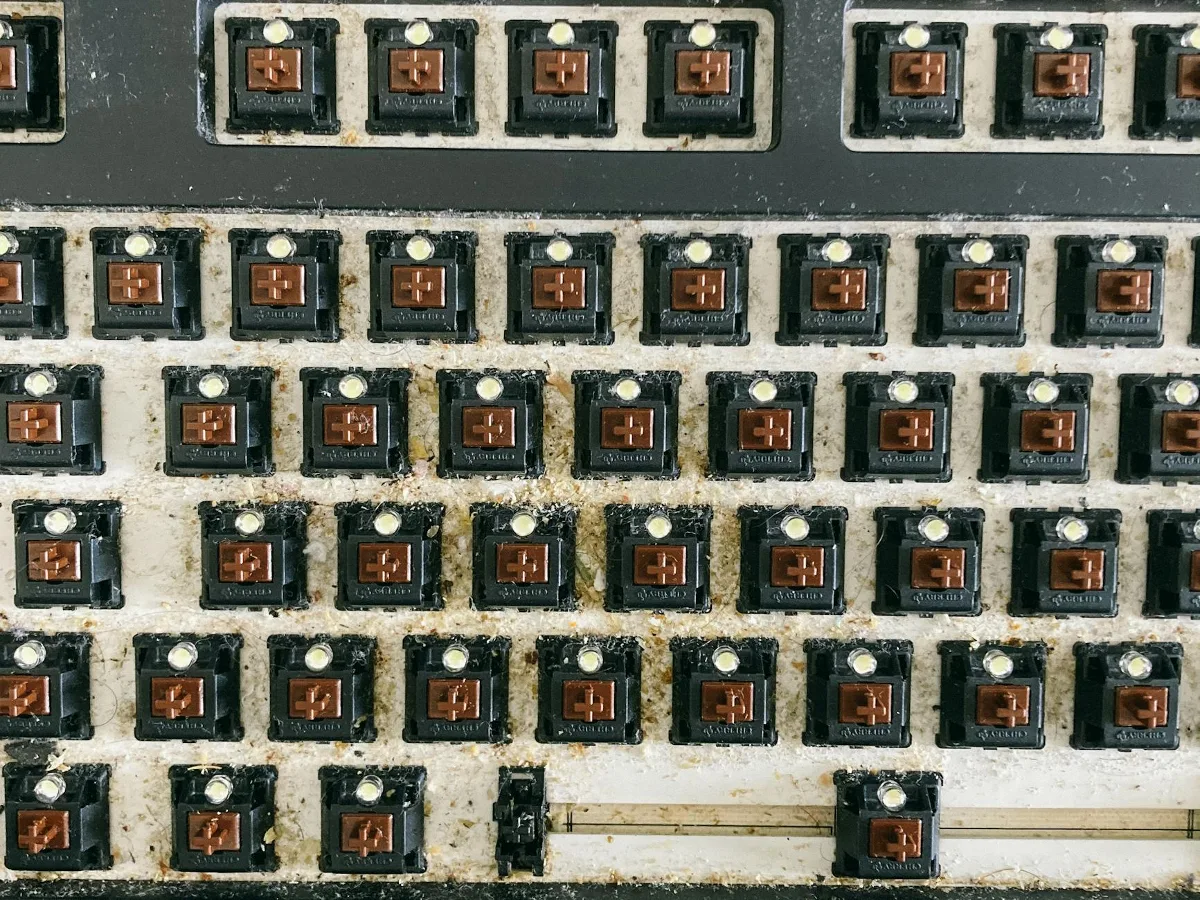
Mechanical keyboard vs regular: the real difference
If you are deciding between a mechanical keyboard vs regular keyboard, the short answer is this: mechanical keyboards usually offer a more distinct typing feel, better customization, and often stronger long-term durability, while regular keyboards are typically quieter, lighter, and more affordable. The right choice depends less on labels and more on how you type, where you use the keyboard, and what trade-offs you can live with. choosing the right keyboard switch type offers more detail on this point.
For many people, the decision comes down to comfort and context. A mechanical keyboard can make long typing sessions feel more precise and satisfying, but that same design can be louder and less convenient in shared spaces. A regular keyboard may feel softer and more familiar, especially in laptops and budget office setups, but it often gives you fewer options for tuning the experience.
What “mechanical” and “regular” usually mean
Mechanical keyboards use individual switches under each key. Each keypress is handled by its own switch mechanism, which is why mechanical boards tend to feel more defined and may last longer under heavy use. The switch type can vary, which changes the feel, sound, and resistance of the keys.
Regular keyboards usually refer to membrane, rubber dome, or scissor-switch designs. These are common on laptops, thin desktop keyboards, and many low-cost office keyboards. They generally rely on a flexible layer or scissor mechanism rather than a separate switch for each key.
A common misconception is that “regular” automatically means inferior. That is not true. A regular keyboard can be the better practical choice if you want low noise, a slim profile, or a simple setup that does not require much adjustment.
Key factors that matter most
Typing feel
Typing feel is usually the first thing people notice. Mechanical keyboards tend to give each keypress a clearer response, which can make typing feel more controlled. Some people prefer a tactile bump, while others like a smooth linear press. That variety is one of the main reasons mechanical boards have such a strong following.
Regular keyboards often feel softer and less pronounced. For some users, that softness is a benefit because it reduces finger fatigue during casual use. For others, it can feel vague or mushy, especially if they type quickly and want more feedback from each key.
Noise
Noise is one of the biggest practical differences. Mechanical keyboards can be noticeably louder depending on the switch type, keycaps, and typing style. Even a quieter mechanical switch may still produce more sound than a typical membrane keyboard because the keystroke itself is more defined. mechanical vs membrane keyboard comparison offers more detail on this point.
Regular keyboards are usually the safer option for shared offices, libraries, late-night work, and anyone who shares a room with other people. If sound sensitivity matters, noise should be near the top of your decision list.
Durability and longevity
Mechanical keyboards are often chosen for durability because individual switches are built for repeated use and can outlast cheaper alternatives. That does not mean every mechanical keyboard is durable, but the design itself tends to support longer service life.
Regular keyboards vary widely. Some are perfectly adequate for years of casual use, while others start to feel inconsistent or worn after extended typing. The real limitation is that when a membrane or scissor-based board wears out, repair is usually less practical than replacing it.
Comfort over long sessions
Comfort depends on more than switch type. Key travel, actuation force, layout, wrist position, and case height all influence how a keyboard feels after hours of use. A mechanical keyboard can be more comfortable for one person and less comfortable for another.
People who prefer a clear endpoint to each keystroke often like mechanical boards for long typing sessions. People who want a lighter touch may find a regular keyboard easier on the fingers. The best choice is the one that matches your natural typing pressure rather than forcing you to adapt to a style that feels unnatural.
Customization
Mechanical keyboards usually win on customization. Users can often choose switch types, keycaps, layouts, stabilizers, and sometimes even the case or firmware behavior. This matters if you want to fine-tune typing feel or build a keyboard around a specific use case.
Regular keyboards tend to be more fixed. That simplicity is not always a downside. If you want something you can plug in and use without thinking about modifications, a standard keyboard may be the more practical option.
Price and value
Mechanical keyboards often cost more up front, especially once you move beyond the most basic models. That higher price can make sense if you type heavily, care about switch feel, or want a board that stays satisfying for years.
Regular keyboards usually cost less and are easier to replace. For many users, that lower initial cost is the better value because the keyboard is only one part of the overall computer setup. If you do not type all day, paying extra for mechanical features may not bring enough benefit.
Which keyboard fits which kind of user?
Choose a mechanical keyboard if you:
- type for long stretches and want more precise key feedback
- prefer a keyboard that can be customized over time
- care about switch feel and typing experience
- want a setup that may hold up well under heavy use
- do not mind extra sound or can choose a quieter switch style
Choose a regular keyboard if you:
- want a quieter keyboard for shared spaces
- prefer a thinner, simpler, or more portable design
- use your keyboard casually rather than for heavy typing
- want to keep costs down
- do not plan to customize key feel or layout
A subtle but important nuance: the best keyboard for a work laptop user is often not the same as the best keyboard for someone building a desktop gaming setup. The “best” option depends heavily on environment and usage pattern, not just personal taste. gaming keyboard buying considerations offers more detail on this point.
Gaming, writing, and office work are not the same decision
For gaming, some people prefer mechanical keyboards because the feedback can make repeated inputs feel more immediate. Others are perfectly happy with a regular keyboard, especially if the board is low-profile and comfortable. Gaming performance is not determined by keyboard type alone.
For writing, coding, and other heavy typing work, mechanical keyboards are often attractive because they can reduce ambiguity in keypress feel. That does not automatically make them better for everyone. If you type lightly, you may actually prefer a softer regular keyboard that requires less force.
For office work, noise and comfort often matter more than enthusiast features. A regular keyboard can be the smarter choice in an open-plan space. A quieter mechanical keyboard may still work, but the specific switch type becomes more important than the category itself.
Common limitations of each option
Mechanical keyboard drawbacks
- often louder than regular keyboards
- can cost more
- may feel too stiff or too tactile for some users
- can encourage overthinking if you start chasing switch upgrades instead of solving a real need
- bulkier models may be less portable
Regular keyboard drawbacks
- less key-by-key feedback
- fewer customization options
- may wear out sooner in heavy use
- can feel less satisfying for fast typists
- replacement is often easier than repair, which may be fine but less sustainable for some users
One overlooked consideration is typing consistency. If you already have a strong habit pattern, changing keyboard type can temporarily slow you down or make your fingers feel less accurate. That adjustment period is normal, and it matters if you need immediate productivity.
Practical ways to decide without overcomplicating it
Start with where the keyboard will be used. If you work around other people, noise and desk space may matter more than switch preference. If you mostly type at a dedicated desk, feel and durability may be the bigger factors.
Next, think about how hard you press keys. Light typists often adapt easily to either type, while heavy typists may prefer the firmer, more deliberate feedback of a mechanical board. If you often bottom out keys with a lot of force, the sound and fatigue of a keyboard may become more noticeable over time.
Also consider your tolerance for maintenance and tweaking. Mechanical keyboards can invite more experimentation, from switch changes to keycap swaps. That is appealing for some users, but unnecessary for others. A regular keyboard usually asks less of you.
If possible, test a few keyboards before buying. Even short hands-on time can reveal whether you prefer a softer membrane feel, a crisp mechanical click, or something in between. This is one area where reading specs only gets you part of the way.
Alternatives that sit between the two
If you are not fully sold on either option, there are middle-ground choices. Some low-profile mechanical keyboards reduce height and travel distance while keeping mechanical switches. Some scissor-switch keyboards feel more refined than basic membrane boards without becoming loud or bulky.
Quiet mechanical switches, compact layouts, and low-profile boards can also narrow the gap between mechanical and regular keyboards. That matters if your main concern is comfort, but you do not want the full size or sound profile of a traditional mechanical board.
The practical takeaway is that the market is not a strict binary. You are really choosing among feel, sound, size, cost, and customization rather than two fixed categories.
How to avoid a disappointing purchase
- Do not choose purely by appearance; switch feel matters more than RGB lighting or case design.
- Do not assume all mechanical keyboards are loud or all regular keyboards are soft; the specific model matters.
- Do not ignore keyboard height if you type for hours; posture and wrist angle can affect comfort.
- Do not pay extra for customization features you are unlikely to use.
- Do not overlook your workspace; a great keyboard can still be a poor fit in a quiet shared room.
If you want a simple rule of thumb, pick mechanical if typing experience is a priority and you value long-term customization. Pick regular if you want simplicity, lower noise, and a lower entry cost. Either can be the right tool when matched to the right user.
Final comparison
The mechanical keyboard vs regular debate is less about which is universally better and more about which trade-offs fit your daily routine. Mechanical keyboards tend to reward users who care about feedback, consistency, and customization. Regular keyboards tend to suit users who want quiet operation, straightforward use, and a lower-cost setup.
If you type heavily, spend long hours at your desk, or enjoy tuning your gear, mechanical keyboards deserve a close look. If you mainly need a dependable keyboard for everyday tasks, a regular keyboard may be the more practical and comfortable choice. The smartest purchase is the one that fits your environment, your typing style, and your patience for maintenance.
