
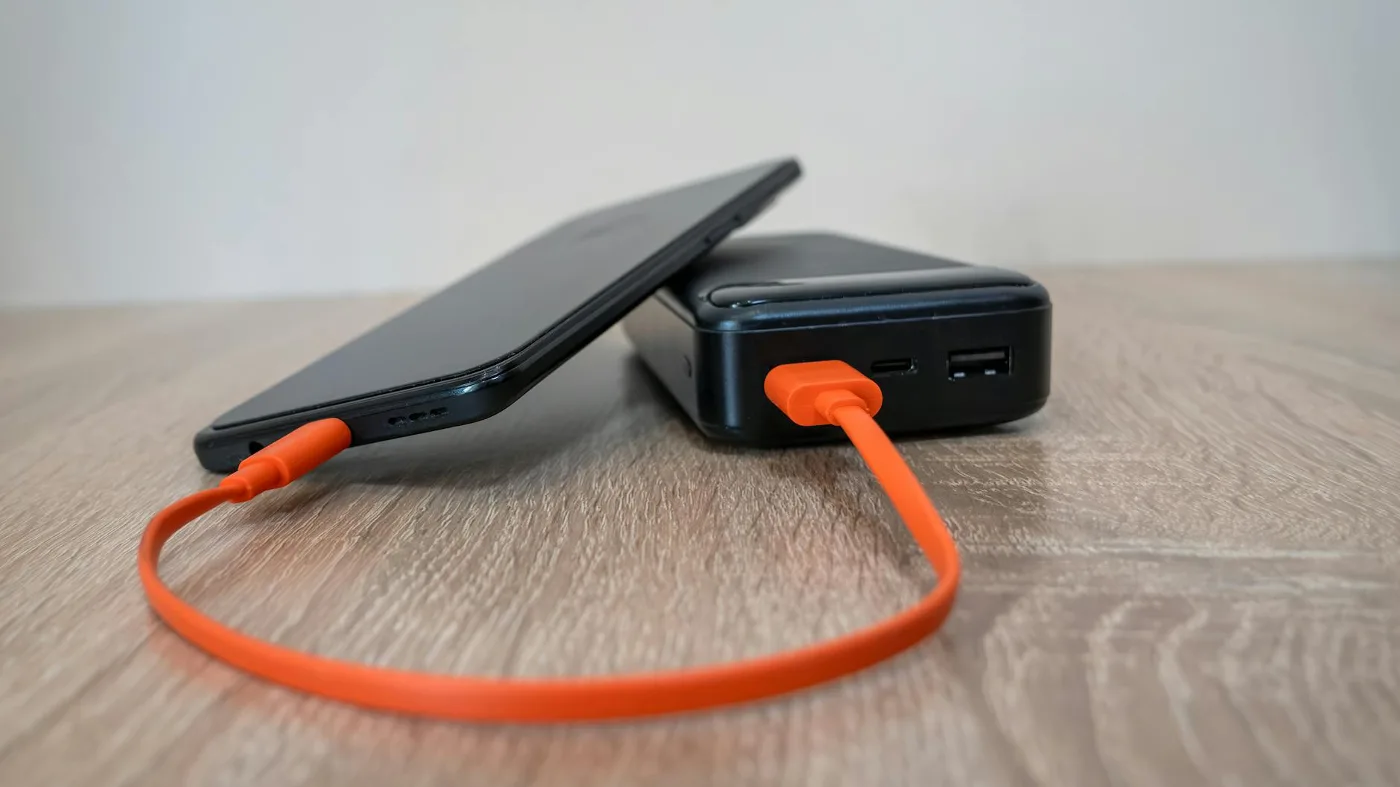
Quick answer: what an S50 power bank is best for
If you’re searching for an S50 power bank, the practical question is usually whether it fits your charging needs, travel habits, and phone compatibility. In buyer-guide terms, an S50 power bank is most often treated as a portable backup charger for keeping a phone, earbuds, or other small devices running when a wall outlet is not available. how to match a charger to your phone offers more detail on this point. a-tech folding travel wireless charger offers more detail on this point.
The best choice depends less on the name on the package and more on the basics: battery capacity, output ports, charging speed, size, and whether it supports the devices you actually carry. If you want something for daily commuting or short trips, a compact model may be enough. If you need repeated top-ups or want to charge more than one device, you should prioritize a higher-capacity unit with the right ports.
For shoppers in the United States, the biggest mistake is assuming every power bank works the same. A good S50 power bank should be evaluated the same way you would compare any phone accessory: by use case, compatibility, and real convenience rather than by a model name alone.
How to compare an S50 power bank before buying
Because this keyword is often used as a product search, the best way to shop is to compare the features that affect day-to-day use. A power bank that looks similar on a listing can behave very differently once you start charging a phone, tablet, or wireless accessory.
Capacity and how much backup you really need
Capacity is the first filter most buyers should use. A power bank with a larger capacity can usually provide more phone charges, but it also tends to take up more space and may weigh more. That trade-off matters if you plan to carry it in a pocket, purse, or work bag every day.
Rather than chasing the largest number available, think about your routine. If you mainly want emergency backup for one phone, a smaller unit may be easier to live with. If you often spend long days away from outlets, a larger power bank may make more sense even if it is less pocket-friendly.
Charging speed and port layout
Charging speed depends on more than the battery size. The output power, the cable you use, and the phone’s own charging support all affect how quickly you get usable battery back. A power bank with faster output can be a real convenience, but only if your phone and cable can take advantage of it. how to compare fast charging options offers more detail on this point.
Port layout also matters. Some buyers need a single USB-C port and nothing else. Others want multiple outputs so they can charge a phone and earbuds at the same time. If you use several devices, look for a layout that matches how you charge rather than one that sounds impressive on paper.
Size, weight, and everyday carry comfort
Portable charging is supposed to reduce friction, not add it. If a power bank is too bulky, many people stop carrying it after the first week. That is why size and weight are not minor details; they determine whether the device becomes a regular part of your bag or stays in a drawer.
For commuters and students, compactness often beats raw capacity. For travelers and remote workers, a slightly larger pack may be worth the added weight because it reduces the chance of running out of battery during the day.
Compatibility with iPhone, Android, and accessories
Compatibility is easy to overlook because many power banks seem universal. In practice, the right cable, connector type, and charging standard still matter. A USB-C power bank may be the most flexible option for modern phones, but users with older devices or mixed-device households should check what cables are needed before buying.
If you use an iPhone, Android phone, wireless earbuds, smartwatch, or tablet, think about the whole charging setup. A power bank that works well for a phone may still be inconvenient if it does not match your existing cables or does not charge the accessories you carry most often.
Safety and long-term reliability
Good charging accessories should protect both your device and the battery inside the power bank itself. Buyers should look for basic safety features such as overcharge protection, short-circuit protection, and temperature management. These are especially relevant if you plan to keep the power bank in a backpack, office drawer, or travel kit for long periods.
Another overlooked factor is storage behavior. A portable charger that sits unused for months may not be at its best when you finally need it. That makes periodic recharging and sensible storage part of ownership, not just the purchase decision.
Choosing the right S50 power bank for your use case
There is no single best power bank for everyone. The right choice depends on how often you leave the house, what you charge, and how much bulk you are willing to carry.
| Use case | What matters most | What to avoid |
|---|---|---|
| Everyday commuting | Compact size, easy portability, reliable phone top-ups | Oversized models that are annoying to carry |
| Travel and long days out | Higher capacity, multiple ports, convenient recharging | Low-capacity units that barely cover one charge |
| Mixed-device households | USB-C support, cable flexibility, multiple output options | Single-purpose designs that limit compatibility |
| Minimalist carry | Light weight, simple controls, fast access | Feature-heavy models that add unnecessary bulk |
If you mainly need a backup for emergencies, you can prioritize portability over everything else. If your power bank is meant to replace wall charging during the workday, choose one that balances capacity and speed more carefully. That balance is where many buyers make the wrong choice: they buy the biggest model they can find, then stop carrying it because it feels inconvenient.
Common mistakes buyers make with power banks
One common misconception is that more capacity automatically means a better product. Bigger batteries can be useful, but if the unit is too heavy or awkward, it may not solve the real problem. A power bank that stays at home is less useful than a smaller one you actually bring with you.
Another mistake is ignoring cable quality. If the cable is outdated, damaged, or mismatched to the device, charging can be slower than expected. People often blame the power bank when the real issue is the cable or the phone’s charging limit.
Buyers also tend to overlook the importance of ports. A simple-looking model may only suit one device at a time, while a slightly more flexible option can handle phone and accessory charging more efficiently. If you regularly carry earbuds or a smartwatch, that difference becomes important quickly.
Finally, many shoppers focus only on the listing headline and skip the practical details. For a product like an S50 power bank, the useful questions are simple: How will I carry it? What will I charge with it? How often will I use it? If those answers are unclear, the purchase is usually a poor fit.
When an S50 power bank is not the best choice
Sometimes the right decision is to choose a different type of charger. If you need to keep multiple devices powered for long stretches, a larger-capacity power bank may be more practical. If you rarely leave home without access to outlets, a compact wall charger or fast charging brick may be the better everyday tool.
Wireless charging power banks can also be appealing, but they often involve trade-offs in speed, heat, and positioning. For users who want maximum efficiency, a wired power bank is usually simpler and more dependable. For users who value convenience over absolute efficiency, wireless may still be worth considering.
Think of the S50 power bank as one option in a larger phone accessory category. It may be ideal for simple backup charging, but it is not automatically the best answer for every routine.
How to maintain a power bank so it lasts longer
Power banks are easy to forget about until you need them, which makes basic maintenance important. Keep it charged periodically rather than leaving it empty for long stretches. Store it in a cool, dry place and avoid tossing it loosely into a bag where the ports can collect lint or damage from keys and other items.
Use the correct cable for recharging the power bank itself. If a model supports USB-C input, that can make daily upkeep simpler, but the key is consistency: use the recommended charging method, keep the ports clean, and avoid treating the device like a disposable accessory.
If the power bank starts behaving unpredictably, such as losing charge quickly or failing to power devices reliably, it may be time to replace it. A backup battery is only useful when it is ready on demand.
FAQ
What should I check before buying an S50 power bank?
Start with capacity, output ports, charging speed, size, and compatibility with your phone or accessories. The best option is the one that fits your daily routine, not just the one with the biggest battery.
Is a compact power bank better than a larger one?
It depends on how you use it. Compact models are easier to carry, while larger ones are better for longer days, travel, or charging more than one device. Convenience and capacity usually trade off against each other.
Can one power bank work for both iPhone and Android?
Yes, if it supports the right cable and charging standard for each device. Compatibility is usually about the connector and cable, not just the battery pack itself.
Why does charging speed vary so much?
Charging speed depends on the power bank’s output, the cable, and the phone’s own charging support. If any one of those is limited, the total charging experience will be slower.
How do I know if a power bank is travel-friendly?
A travel-friendly model is usually compact enough to carry comfortably, has enough capacity for the trip, and includes the ports or cables you already use. If it is too bulky, you may stop bringing it.
