
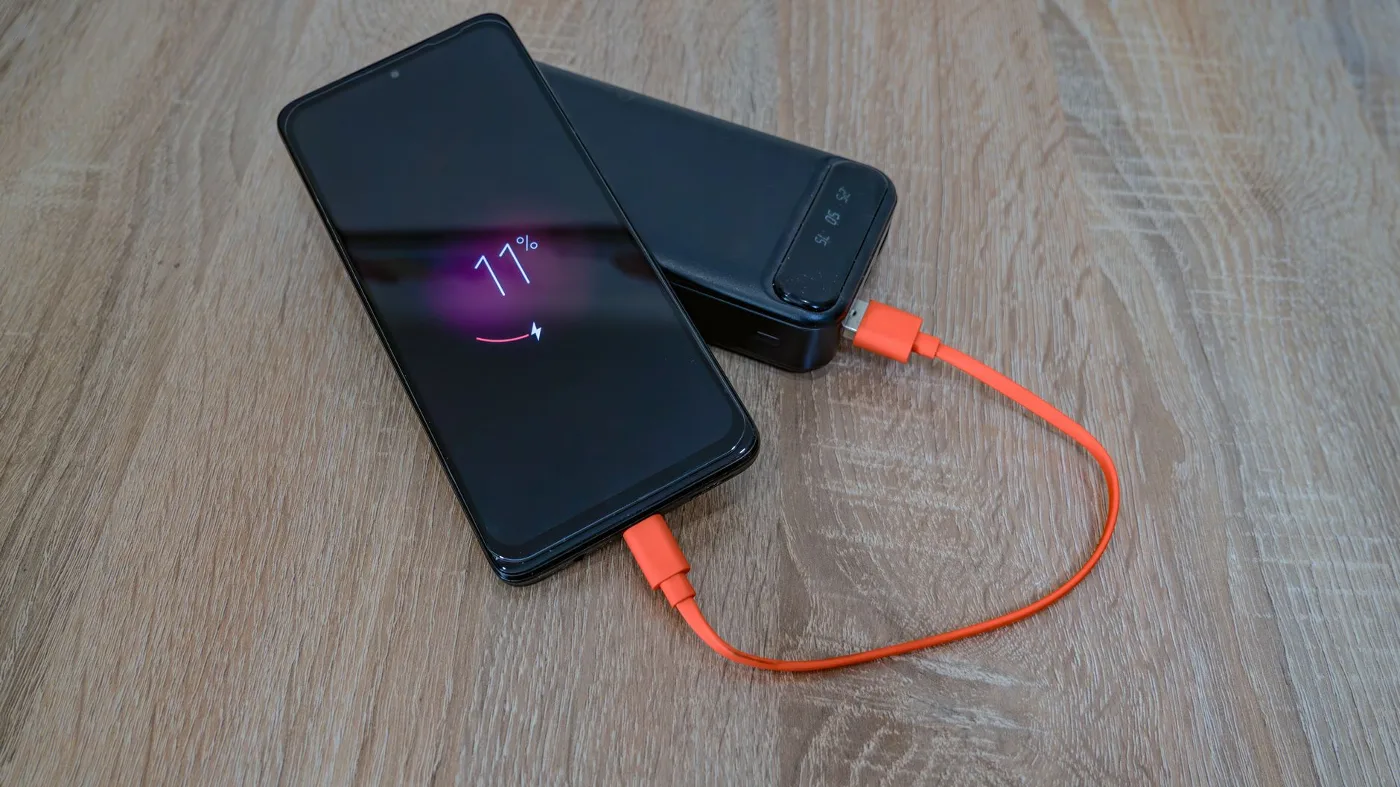
The Rivacase Power Bank 2120 is best approached as a practical charging accessory rather than a feature-driven gadget. If you are considering it, the real question is not just whether it is a power bank, but whether its size, charging ports, and everyday convenience line up with how you use your phone. podoru power bank offers more detail on this point.
For buyers in the United States searching for this model, the decision usually comes down to a few simple priorities: how often you need backup power, whether you carry the charger in a bag or pocket, and what kind of cable setup your phone already uses. Those details matter more than product naming alone.
When the Rivacase Power Bank 2120 makes sense
This kind of power bank is most useful if you want a dependable backup for ordinary phone use rather than a heavy-duty charging station. That often means commuting, day trips, airport layovers, or keeping a phone alive during busy days when wall outlets are not convenient.
It also suits people who prefer a straightforward accessory with a clear role: provide extra charge when the phone battery drops faster than expected. If your phone already lasts all day, the value is in peace of mind. If your battery regularly runs low by midafternoon, a portable charger can be a much better fit than constantly hunting for an outlet.
One overlooked consideration is how you actually carry accessories. A power bank that seems small on a product page may still feel bulky in a slim pocket, but perfectly reasonable in a backpack, tote, or laptop sleeve. That practical difference often determines whether it gets used regularly.
Step-by-step criteria to check before buying
1. Match the power bank to your charging habits
Start with your routine. If you mostly need a quick top-up, you do not need to chase every extra feature. If you expect to recharge your phone more than once between outlets, then capacity and charging speed matter more.
Think about these use cases:
- Short outings: a backup source for low-battery emergencies
- Workdays: enough charge to get through meetings, navigation, and messaging
- Travel days: portable power for flights, transit, and long waits
- Shared use: charging more than one device or helping someone else in a pinch
A common misconception is that every power bank is meant to fully recharge a phone multiple times. That is not always the right buying goal. For many people, a reliable partial recharge is more useful than carrying a larger battery that stays at home because it is inconvenient. Nitecore Power Bank Buying Guide offers more detail on this point.
2. Check device and cable compatibility
The most important compatibility question is not the power bank alone, but the entire charging chain: the battery pack, the cable, and your phone. Modern smartphones may use USB-C, while older devices still rely on Lightning or another connector. Some users also need a cable that supports faster charging behavior, not just basic power delivery.
Before buying, confirm:
- which port types the power bank offers
- which cable your phone requires
- whether you already own the right cable
- if you charge more than one device type
This is where many buyers run into frustration. They choose a power bank first, then discover the cable they need is not included or does not match their phone setup. A quick compatibility check prevents that problem.
3. Decide how portable it needs to be
Portability is one of the biggest decision factors for any phone power bank. A very compact charger is easier to carry daily, but sometimes that convenience comes with trade-offs in total battery reserve or the number of devices it can support comfortably.
Ask yourself where the charger will live most of the time:
- In a pocket: prioritize slimness and low weight
- In a handbag or work bag: portability still matters, but size is less restrictive
- In a travel kit: larger models can make sense if they offer more reserve
If the power bank feels awkward to carry, you may stop bringing it altogether. That is often more important than marginal differences in specifications.
4. Consider charging speed in real use
Charging speed is easy to overstate and easy to misunderstand. A power bank may support faster output, but the actual result depends on the phone, the cable, and the port used. The most practical question is whether it charges quickly enough for your routine.
For many buyers, “fast enough” means the phone gains usable battery while they are moving between tasks. For others, especially travelers, a faster refill can be useful during short stops. If speed matters, make sure the charger, cable, and phone are aligned rather than assuming the power bank alone determines the result. travel-friendly phone power solutions offers more detail on this point.
5. Think about how many devices you need to support
Some users only want to keep one smartphone running. Others want to handle a phone plus earbuds, a smartwatch, or a second device. If your device mix is growing, the power bank should fit that broader setup.
This is not just about port count. It is also about whether you want a simple single-device charger or a more flexible accessory for a fuller mobile kit. For people building a cleaner travel setup, that flexibility can be the difference between carrying one charger and packing several.
What the Rivacase Power Bank 2120 is likely to do well
Without relying on inflated claims, the strongest case for a product like this is usually convenience. A well-chosen power bank offers predictable backup power, lower stress on long days, and fewer interruptions when your phone is needed for maps, payments, messaging, or two-factor authentication.
It can be especially helpful if you:
- use your phone heavily during the day
- travel often or commute long distances
- spend time away from outlets
- want a backup for emergencies
- prefer to keep your main phone use uninterrupted
Another advantage is simplicity. Many buyers do not need a multifunction accessory with every advanced feature. They need a charger that is easy to understand and convenient to keep on hand. That plain utility is often the real value.
Where buyers should be cautious
Every power bank has practical limits, and this category is no exception. The biggest one is that portability and reserve capacity usually work against each other. Smaller units are easier to carry, while larger ones generally store more energy but can be less convenient for daily use.
It is also worth remembering that a power bank is part of a system. Performance depends on battery state, cable quality, and the phone’s own power management. If you expect perfect consistency without checking those variables, you may end up disappointed.
Other limitations to keep in mind:
- Charging performance can vary depending on the device
- Convenience depends on the cable you own
- Heavier units may stay in a drawer instead of a bag
- Some users expect more outputs than they will actually use
The best buying mindset is to choose the smallest, simplest charger that still covers your real-world needs. Oversizing the accessory can make it harder to carry, while undersizing it can leave you short when it matters.
Practical alternatives if this model is not the right fit
If the Rivacase Power Bank 2120 does not line up with your needs, the best alternative depends on what is missing.
- For lighter carry: look for a slimmer compact power bank
- For more backup power: consider a higher-capacity battery pack
- For newer phones: prioritize USB-C output and cable support
- For multiple devices: choose a model with more than one output option
- For travel: focus on portability, safety features, and ease of packing
There is no single best power bank for every phone user. A model that is ideal for daily commuting may be less satisfying for a week of travel. The right answer depends on which limitation you are most willing to accept.
Checklist before you add it to your cart
Use this quick checklist to avoid a mismatch:
- Does it match your phone’s charging port?
- Do you already have the right cable?
- Is the size comfortable for how you carry it?
- Will it cover your typical low-battery window?
- Do you need one device or multiple devices charged?
- Will you actually bring it with you often enough to matter?
If you cannot answer those questions clearly, the product may still be fine, but your buying decision is not finished yet. A useful power bank is one that becomes part of your routine rather than a spare accessory you forget at home.
How to get better long-term value from a power bank
Long-term value is not just about the sticker price. It also comes from how well the charger fits your habits, how easily you can recharge the power bank itself, and whether it remains useful as your devices change.
A few simple habits help:
- keep the right cable with the charger
- store it where you will remember it
- top it up before travel instead of waiting until it is empty
- match it to the devices you use most often
One practical nuance is that a power bank is easiest to value when it solves a repeated annoyance. If you only need it once every few months, flexibility matters more. If you rely on it weekly, convenience and compatibility become the priority.
Who should consider the Rivacase Power Bank 2120
This model makes the most sense for someone who wants a straightforward phone backup solution and cares about portability more than complexity. It is a sensible option for commuters, travelers, students, and anyone whose phone needs to stay usable through a long day.
If you prefer highly technical accessories, multiple advanced outputs, or maximum capacity, you may want to compare other portable chargers before deciding. But if your goal is simple, dependable backup power for everyday phone use, the Rivacase Power Bank 2120 belongs on the shortlist.
The best purchase is the one that fits your routine, your cable setup, and your tolerance for carrying extra gear. That is the real test for any power bank, and it is the test that matters most here.
