
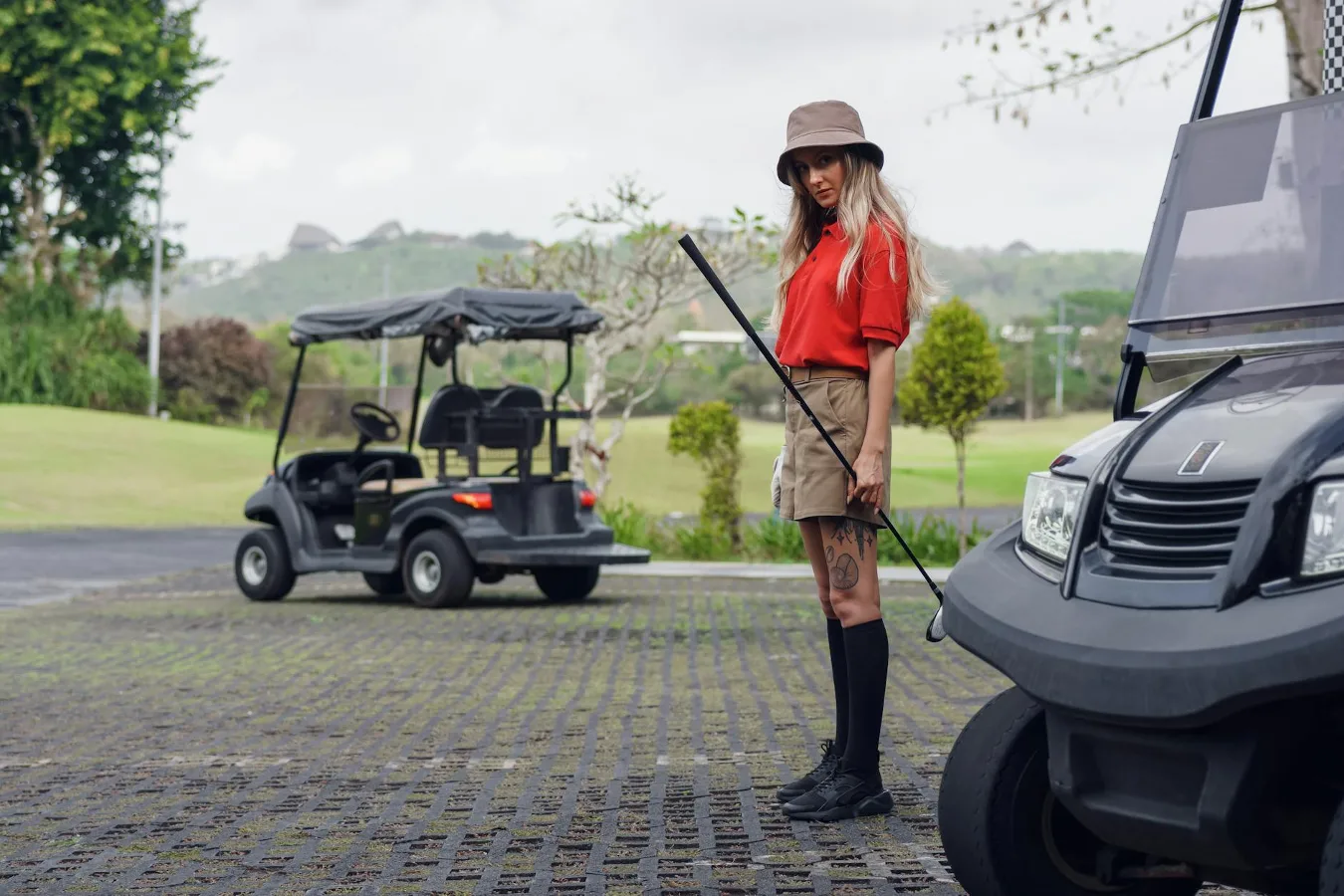
If you want a Bluetooth speaker for a golf cart, the best option is usually a compact, rugged speaker that can handle open-air listening, stay secure over bumps, and run long enough for a full round. The right choice depends less on raw volume and more on a mix of portability, mounting, weather resistance, battery life, and how you actually use your cart. how to choose a Bluetooth speaker offers more detail on this point. bike bluetooth speaker offers more detail on this point.
That may sound straightforward, but golf carts create a few specific challenges. Sound escapes easily in open air, storage space is limited, and a speaker that works well indoors can feel underpowered or awkward on the course. A good cart speaker solves those problems without becoming bulky or fussy.
What matters most in a golf cart speaker
The best Bluetooth speaker for this use case is not always the loudest one. A cart puts audio in a very different environment from a living room or car. You need something that can keep up with wind, movement, and distance without rattling loose or draining too quickly. best audio gear for travel use offers more detail on this point.
Portability and mounting
Portability is often the first filter. Many golfers prefer a speaker that is light enough to carry, easy to move between carts, and simple to place where it will not slide around. Mounting style matters just as much as size.
Look for one of these practical setups:
- Clip-on speakers that attach to a bar, bag, or cart panel
- Strap-mounted speakers that wrap securely around a support rail
- Compact tabletop speakers that sit stably in a storage area or cup-holder-adjacent space
- Magnetic or accessory-mounted models only if the cart structure and speaker design are truly compatible
The main goal is to keep the speaker secure without making placement a chore. If a speaker is annoying to install, it will probably stay home.
Sound in open air
Open-air listening is where many small speakers struggle. In a golf cart, sound disperses quickly, so a speaker that seems plenty loud indoors may feel thin once it is outdoors. Instead of focusing only on wattage or marketing language, pay attention to how the speaker is positioned and how it projects sound.
Directional sound can help, especially if the speaker points toward the riders rather than outward into the fairway. A fuller midrange is also helpful because voices and music can get lost more easily outside. Deep bass is nice, but in a cart setting it is usually less important than clarity and balance.
Battery life and charging convenience
A battery-powered speaker is usually the easiest choice for golf cart use, but battery life should match the length of your outings. If you tend to play multiple rounds, ride with others, or use the speaker before and after the course, charging convenience becomes a real factor.
USB-C charging is a practical plus because it simplifies cable management. If a speaker uses a proprietary charger, that is not necessarily a dealbreaker, but it does add one more thing to keep track of. For frequent use, a speaker that can be topped off easily tends to be less frustrating than one with a higher-capacity battery that is awkward to recharge.
Weather resistance
Golf carts are exposed to sun, dust, moisture, and the occasional splash. Even if you do not plan to use the speaker in rain, some level of weather resistance is worth considering. A water-resistant speaker can better handle damp towels, sudden weather changes, and general outdoor wear.
That said, weather resistance is not the same as being invincible. A water-resistant speaker may still dislike prolonged rain, muddy storage, or direct hose spray. It is best viewed as a buffer against normal outdoor use, not as permission to leave the speaker exposed.
Stability on rough paths
Golf carts move smoothly most of the time, but the ride is not perfectly flat. A speaker that skitters across a hard surface or tips from vibration can become a distraction. Stability is often overlooked until the first time the cart crosses uneven ground.
Rounded, lightweight speakers can be easy to carry but less stable. Speakers with a wider base, grippy feet, or a secure attachment point are usually better suited for cart use. If you keep the speaker in a compartment, make sure it will not bounce against other items.
Choosing the right type of speaker for your cart
There is no single best format for every golfer. The right style depends on how often you use the cart, how much sound you want, and whether you value convenience over richer audio.
Compact portable speaker
This is the most flexible option. A compact Bluetooth speaker is easy to move, easy to store, and usually simple to pair with a phone. It works well for golfers who want casual background music and do not want to install anything permanently.
The trade-off is obvious: the smaller the speaker, the more likely it is to struggle with volume and fullness in open air. For solo riding or quieter listening, that may be perfectly fine. For larger groups or windy conditions, it can feel underpowered.
Rugged outdoor speaker
Rugged models are often a better fit if the speaker will spend a lot of time in a cart. They tend to be built with more durable housings, better splash protection, and a design that suits outdoor environments. That makes them appealing for golfers who use their speaker regularly and want something less delicate.
The trade-off is size. Some rugged speakers are bulkier than a standard portable model, so you may need to plan storage more carefully. If the speaker is too large, it can become inconvenient even if it sounds better.
Mounted or cart-specific speaker
Some speakers are designed with mounting in mind and can make life easier if you like a cleaner setup. A mounted speaker can stay in place more securely and reduce the need to move gear around each time you ride.
This option works best for golfers who use the same cart often or who want a more permanent accessory. The downside is less flexibility. If you switch carts often, a fixed solution may be more hassle than it is worth.
Sound quality trade-offs worth thinking through
Many buyers focus on maximum loudness, but golf-cart listening has its own priorities. A speaker that sounds impressive in a quiet room may not be the most pleasant outdoors.
Clarity usually matters more than heavy bass. If the speaker compresses music too much or gets muddy at higher volume, it may be tiring to listen to for long stretches. A balanced sound profile tends to work better than an aggressively bass-heavy one because it preserves vocals and instruments when the environment gets noisy.
Another overlooked point is where the speaker sits in relation to the riders. Placement can change the experience more than a small difference in specs. A modest speaker placed well may sound better than a more expensive model tucked into a poor location.
Compatibility and ease of use
For golf cart use, convenience is a genuine buying factor. Pairing should be quick, controls should be easy to reach, and the speaker should reconnect without much fuss.
Useful features often include:
- simple Bluetooth pairing
- physical buttons that work with gloves or quick taps
- clear battery indicators
- automatic reconnection to a phone
- an optional auxiliary input for backup use
If multiple people may connect to the speaker, consider how easy it is to switch devices. That can matter on group rounds or at the clubhouse, where more than one person may want to control the music.
Voice assistant support can be convenient, but it is not essential. In a cart setting, practical controls usually matter more than extra software features.
How to match the speaker to your use case
The best choice changes depending on how you actually use the cart. A speaker that is ideal for one golfer may be awkward for another.
For casual solo rounds
If you mostly ride alone and want background music or podcasts, a compact speaker with decent battery life and easy placement is usually enough. You do not need the most powerful option if your main goal is convenience.
For group outings
If your cart often carries several people, prioritize sound dispersion, stability, and a bit more output. You will likely appreciate a speaker that remains clear at moderate volume rather than one that sounds good only when played softly.
For frequent golfers
If the speaker will live in your regular gear rotation, durability and charging convenience become more important. A rugged design and dependable battery behavior are often worth more than extra feature lists.
For occasional use
If you only bring a speaker out once in a while, a simple portable model may be the smartest pick. You can save money and avoid overcomplicating something that is not used every week.
Common mistakes buyers make
One common mistake is buying a speaker that is too large for the cart. Big sound can be appealing, but if the speaker is awkward to store or mount, you may not enjoy using it.
Another mistake is underestimating outdoor noise. Open-air listening changes the equation, so a speaker that seems adequate indoors may disappoint on the course. That is why placement and clarity matter so much.
A third mistake is ignoring weather resistance. Even if the speaker never gets soaked, it will still face heat, dust, and general outdoor wear. A delicate indoor-style speaker may not hold up well over time.
Finally, many buyers overlook controls. Tiny buttons, hard-to-read indicators, or complicated pairing steps can turn a simple accessory into a recurring annoyance.
Practical decision guide
If you want the simplest answer, start with this rule: choose the smallest speaker that still gives you the volume, stability, and battery life you need for a full outing.
Use this quick framework:
- Choose compact if portability and easy storage matter most
- Choose rugged if the speaker will see frequent outdoor use
- Choose mounted if you want a more secure, cart-specific setup
- Choose clearer, balanced sound over hype about booming bass
- Choose easy controls if you want the least hassle on the course
If you are torn between two models, the safer pick is usually the one that is more stable and easier to live with, even if it looks less exciting on paper. In golf cart use, convenience is a feature, not an afterthought.
Alternatives if a Bluetooth speaker is not the right fit
Bluetooth speakers are popular because they are flexible, but they are not the only option. If you want a more permanent setup, a cart audio accessory or a dedicated mounted system may be more convenient. If you prefer private listening, wireless earbuds can work off the cart, though they are not ideal if you need awareness of your surroundings.
Some golfers also keep things simple and skip music entirely on the course. That can be the best choice if you value quiet rounds, group etiquette, or maximum focus. A speaker should improve the experience, not create friction for other players.
What a good choice should feel like
The right Bluetooth speaker for a golf cart should feel easy, not demanding. It should pair quickly, stay put, survive outdoor conditions reasonably well, and deliver clear sound without requiring constant adjustment. If you need to babysit it every time you use it, it is probably the wrong model for this setting.
For most golfers, the sweet spot is a compact outdoor speaker with solid battery life, straightforward controls, and enough durability to handle cart life. That combination usually offers the best balance of convenience and performance without overcomplicating a simple accessory.
