
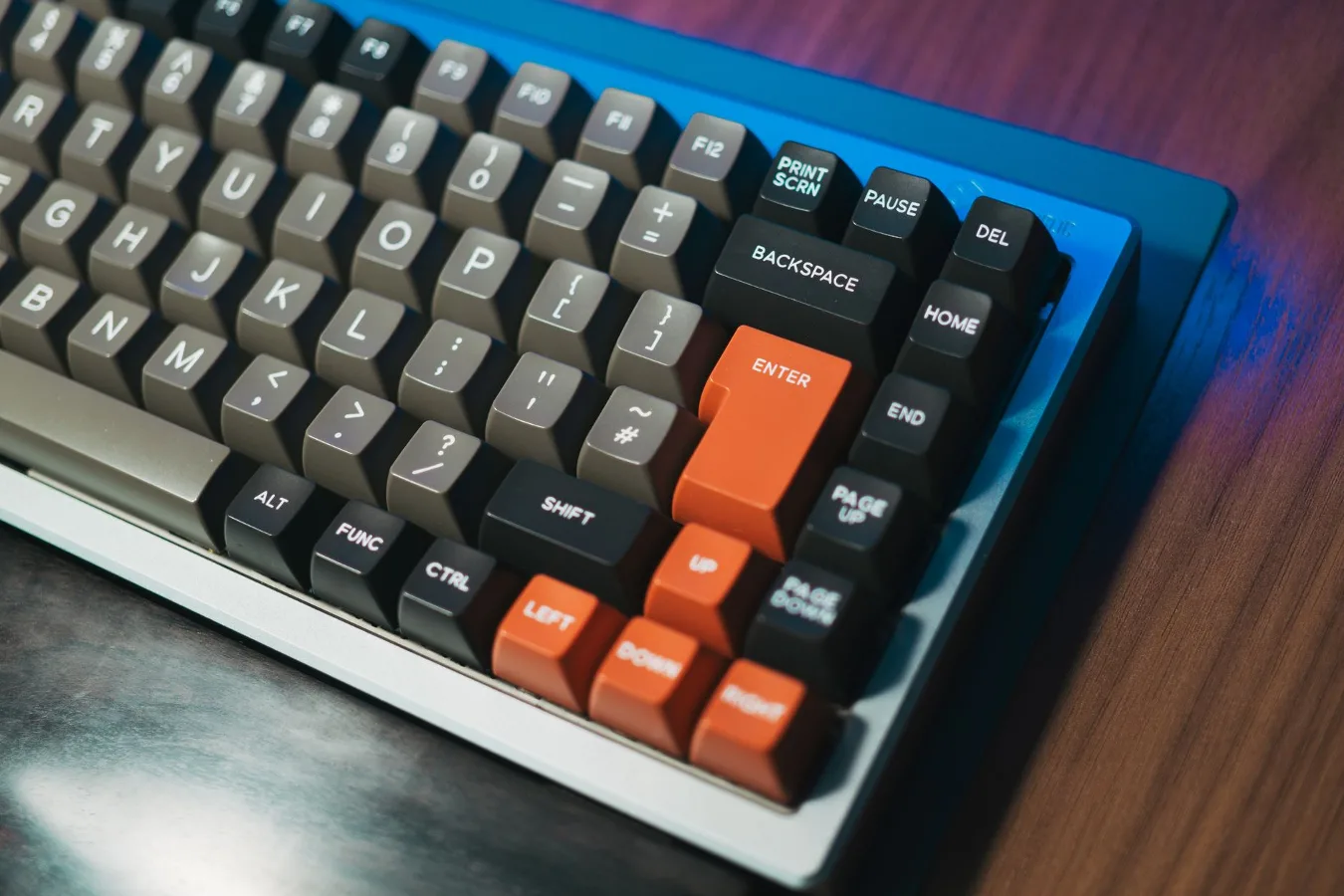
If you are choosing between a mechanical keyboard vs regular keyboard, the short answer is this: mechanical keyboards usually offer a more distinct typing feel, better long-term repair options, and more customization, while regular keyboards are often quieter, simpler, and easier on the budget. The better choice depends less on hype and more on how you type, where you work, and what you value most.
For many buyers, the decision comes down to a few practical trade-offs: noise, comfort, durability, cost, and the feel of the keys under your fingers. A keyboard that feels great in a private office may be annoying in a shared room. A keyboard that is lightweight and inexpensive may be perfectly fine for occasional use, even if it lacks the refined feel of a mechanical model.
Mechanical keyboard vs regular keyboard: the real difference
The biggest difference is the switch mechanism under each key.
Mechanical keyboards use individual mechanical switches for each key. Those switches create the key press feel, sound, and actuation behavior. Many users like them because the typing feedback is clear and consistent.
Regular keyboards usually refers to membrane keyboards, though some people use the term more loosely to mean a standard non-mechanical keyboard. Membrane designs use a pressure-based layer under the keys. They tend to be lighter, quieter, and cheaper to produce.
That basic engineering difference affects almost everything people notice: how the keys feel, how loud they are, how easy they are to clean, and how long they hold up before key feel changes.
How they compare in everyday use
| Factor | Mechanical keyboard | Regular keyboard |
|---|---|---|
| Typing feel | More tactile and defined | Softer and less distinct |
| Noise | Often louder, depending on switches | Usually quieter |
| Durability | Often stronger long-term potential | Typically less repairable |
| Price | Usually higher | Usually lower |
| Customization | High | Limited |
| Portability | Can be heavier and bulkier | Often lighter and simpler |
Typing feel and feedback
Typing feel is the reason many people switch to mechanical keyboards. The keys tend to provide clearer feedback, which can make typing feel more deliberate and precise. That does not automatically mean they are better for everyone. Some users prefer the softer, quieter feel of a membrane keyboard, especially if they type lightly or do not want a highly noticeable key press.
A common misconception is that mechanical keyboards are always better for typing speed or accuracy. In reality, feel is subjective. A keyboard that matches your habits can improve comfort more than a premium switch type that feels wrong to you.
Noise level and shared spaces
Noise matters more than many buyers expect. Mechanical keyboards can be loud, especially models with clicky switches or hollow case designs. That can be fine in a private setup, but it may be distracting in an office, classroom, dorm, or shared living space.
Regular keyboards are usually quieter, which is one of their biggest advantages. If you take notes during meetings, work near other people, or game late at night, noise can matter as much as feel. Even among mechanical keyboards, some switch types are designed to be quieter than others, but they still may not be as discreet as many membrane boards. Mechanical Keyboard vs Magnetic: Which Fits You? offers more detail on this point.
Durability and repairability
Mechanical keyboards are often favored for longevity because the switches and keycaps are generally designed for more demanding use, and many models allow repairs or part replacement. That can make them a stronger long-term value for heavy typists.
Regular keyboards are usually simpler and less expensive, but they are often treated as disposable when a key begins to fail or the typing feel changes. For light use, that may be completely acceptable. For all-day work, the ability to replace parts or clean a mechanical board more thoroughly can be a real advantage.
One overlooked consideration is maintenance access. A keyboard that is easier to open, clean, and service can be more practical over time than one that only looks good on day one.
Cost and value
Regular keyboards usually win on upfront cost. If you only need a basic input device for browsing, schoolwork, or a spare computer, a standard keyboard may be the more sensible purchase.
Mechanical keyboards typically cost more because of the switch mechanism, build options, and customization features. But higher price does not automatically mean better value. If you type every day, the comfort and durability may justify the extra cost. If you use a keyboard occasionally, a regular model may be the smarter purchase.
Customization and upgrade potential
Mechanical keyboards usually offer far more options. Buyers may care about switch type, keycap profiles, hot-swappable sockets, layout, stabilizers, backlighting, or case materials. That flexibility is appealing to enthusiasts and to anyone who wants to fine-tune the feel of their setup.
Regular keyboards are generally limited in this area. You choose the layout and basic style, but you usually cannot meaningfully change the typing feel after purchase. For some people, that simplicity is a benefit rather than a limitation.
Ergonomics and comfort
Neither keyboard type is automatically more ergonomic. Comfort depends on layout, key spacing, wrist position, typing angle, and how hard you press the keys. A well-designed membrane keyboard can be more comfortable than a poorly chosen mechanical one.
If you type for long periods, look at the whole setup rather than the switch type alone. A full-size board, tenkeyless layout, split keyboard, wrist support, or low-profile design may affect comfort as much as the mechanical vs regular decision.
Which keyboard suits which user?
Mechanical keyboards are often a better fit if you:
- type for long periods and want more tactile feedback
- care about customizing switches, keycaps, or layout
- want a keyboard that can feel more premium and responsive
- prefer a model that may be easier to maintain or upgrade
- use your keyboard heavily for work, writing, or gaming
Regular keyboards make more sense if you:
- want a quiet keyboard for shared spaces
- need a simple, low-cost option
- use your computer only occasionally
- prefer a softer and less pronounced key feel
- do not care about customization
For gaming, the right answer is not always mechanical. Some gamers enjoy the distinct actuation and consistent feel, while others prefer the quietness and lighter cost of a regular keyboard. The better choice depends on the games you play, the noise you can tolerate, and how much value you place on key feedback. Ambidextrous Gaming Mouse Guide offers more detail on this point.
For office work, regular keyboards can be excellent if quiet operation and affordability matter most. Mechanical keyboards are often chosen by heavy typists and remote workers who want more satisfying feedback, but they are not automatically the best office choice if noise is an issue. best silent mechanical keyboard offers more detail on this point.
Mistakes to avoid when choosing
- Assuming mechanical always means better. Better for whom, and in what setting, matters more.
- Ignoring noise. A great-feeling keyboard can become a problem in a shared environment.
- Choosing based only on price. The cheapest option may not match your typing habits or comfort needs.
- Overlooking layout. Full-size, tenkeyless, compact, and split layouts affect daily use more than many buyers expect.
- Buying for aesthetics alone. A keyboard can look good and still be tiring or inconvenient to use.
- Forgetting portability. Heavier mechanical boards may be less convenient for commuting or travel.
A practical way to think about the decision is to separate feel from function. If you love the feel of mechanical switches, that may be worth paying for. If you mostly want a dependable keyboard that stays out of the way, a regular keyboard can be the better tool.
Common misconception: mechanical keyboards are for gamers only
Mechanical keyboards are often marketed to gamers, but that is only one use case. Writers, programmers, office workers, and anyone who types heavily may appreciate the consistent key action and easier customization. Likewise, regular keyboards are not just a budget choice; they are often the best fit for casual users, quiet environments, and simple setups.
The real question is not which type is better in theory. It is which one fits your typing habits, workspace, and expectations.
How to decide before you buy
- Think about your environment. If noise matters, prioritize a quieter option.
- Consider how long you type each day. Heavy users usually notice feel and comfort more.
- Decide whether customization matters. If not, you may not need a mechanical board.
- Check the layout. Make sure the size and key placement suit your workflow.
- Balance budget with use. Spend more where you will feel the difference.
If you are unsure, a quieter mechanical keyboard or a well-reviewed regular keyboard with a layout you already like can both be sensible choices. The best value often comes from matching the keyboard to the job, not from chasing the most popular option.
FAQ
Is a mechanical keyboard better than a regular keyboard?
Not always. Mechanical keyboards are often better for users who want stronger key feedback, more durability potential, and customization. Regular keyboards can be better for quiet spaces, simple use, and lower cost.
Why do mechanical keyboards feel different?
They use individual mechanical switches under each key. That design creates a more defined press and, depending on the switch type, a more noticeable sound and feel.
Are regular keyboards quieter?
Usually yes. Membrane-style keyboards tend to be softer and quieter, though build quality and key design can still affect noise.
Which is better for work from home?
It depends on your space. If you work alone and type a lot, a mechanical keyboard may be more comfortable. If you share your space or take frequent calls, a regular or quieter mechanical model may be a better fit.
Do mechanical keyboards last longer?
They often have stronger long-term repair and replacement potential, but lifespan still depends on build quality, use, and maintenance. A well-made regular keyboard can also last a long time with light use.
For most buyers, the best choice is the one that matches your environment and typing habits, not the one with the strongest reputation. Mechanical keyboards reward people who care about feel, feedback, and customization. Regular keyboards reward people who want simplicity, quiet operation, and value.
