
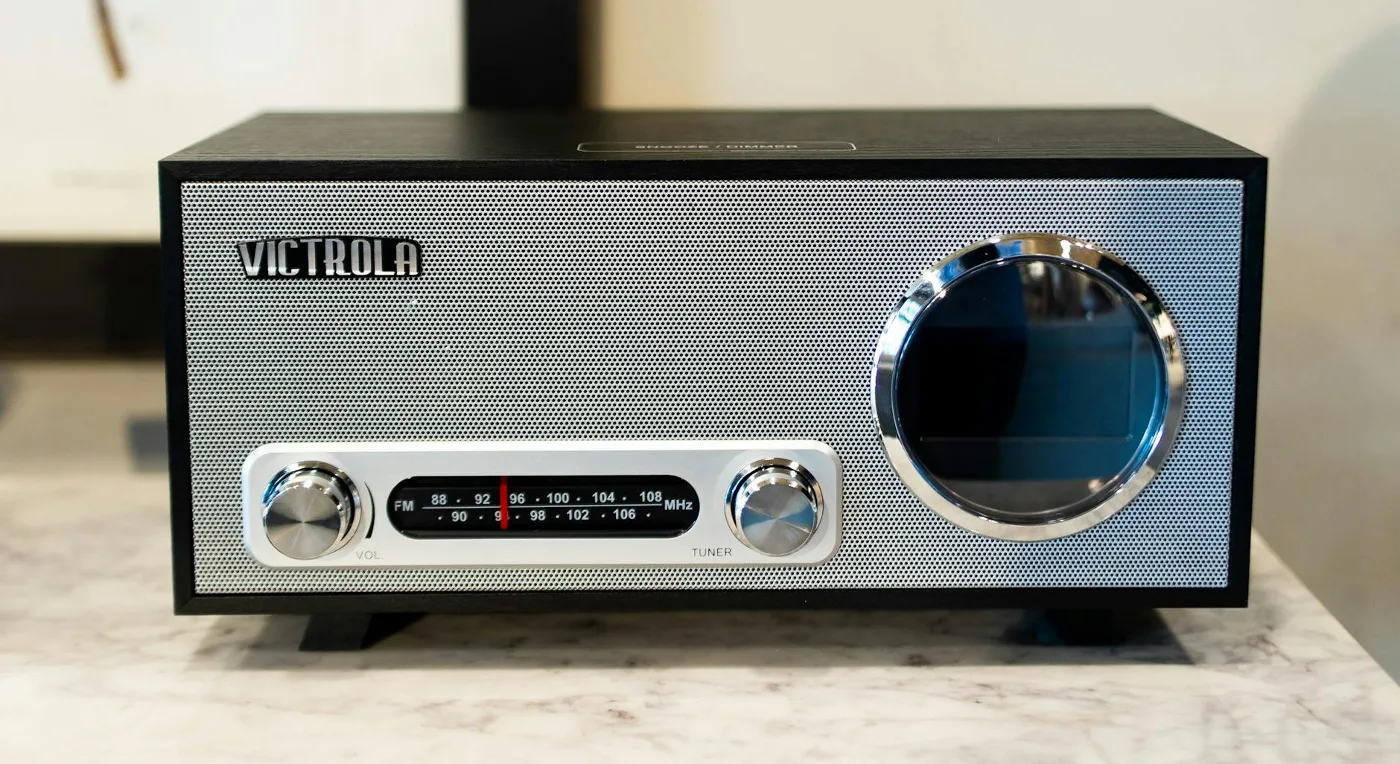
If you want one device for both streaming and local radio, a Bluetooth speaker with FM tuner is a practical choice. It lets you play music from a phone, tablet, or laptop, then switch to FM stations when you want news, sports, talk radio, or a backup listening option without using mobile data.
The best models are not just about adding radio to a wireless speaker. They also need usable controls, decent reception, dependable battery life, and a layout that makes station scanning or Bluetooth pairing simple. If you are comparing options, focus on how you will actually use the speaker: at home, in a kitchen, on a patio, during travel, or as an everyday compact audio device.
What a Bluetooth speaker with FM tuner is best for
This type of speaker combines two listening modes in one enclosure. Bluetooth handles streaming from modern devices, while the FM tuner receives over-the-air broadcasts. For many buyers, that mix is useful because it covers both on-demand audio and live radio.
That flexibility matters in a few common situations:
- Casual home listening: stream playlists most of the time, then tune into radio when you want live programming.
- Kitchen or workshop use: radio is often easier to use than navigating apps with dirty or gloved hands.
- Travel and backup listening: FM can be helpful where cellular coverage is weak or you want a low-friction entertainment option.
- Shared spaces: radio can be convenient when multiple people want a simple, familiar source of audio.
A common misconception is that every Bluetooth speaker with a tuner will behave like a full-featured radio. Some models treat FM as a basic extra, with limited station memory, smaller displays, or less sensitive reception. Others are more radio-focused and may include better scanning, preset buttons, or an antenna that improves usability. The difference matters more than the spec sheet sometimes suggests.
How to compare the right features
For this category, the most useful comparison points are not all audio-related. A speaker can sound fine and still be frustrating if the radio side is awkward to use. These are the features worth weighing carefully.
FM reception quality
FM performance depends on the tuner design, antenna setup, and your environment. Dense buildings, indoor electronics, and distance from local stations can all affect signal quality. If you live in an area with challenging reception, look for a model that makes antenna positioning easy or supports a better external antenna arrangement if the design allows it.
Reception is one of the most overlooked considerations because many shoppers assume FM is universally reliable. In practice, the same speaker can sound very different depending on where it is placed. A device that works well near a window may struggle in a basement, office, or apartment with heavy interference.
Controls and station management
Good controls matter more than flashy extras. A speaker should make it easy to switch between Bluetooth and FM, scan stations, save presets, and adjust volume without confusion. If the buttons are cramped or the labels are hard to read, the radio feature may go unused even if the speaker sounds good. amp bluetooth speaker offers more detail on this point.
Preset memory is especially useful if you listen to the same stations regularly. Without it, scrolling through static or manually tuning every time becomes tedious. For buyers who want simplicity, this is a major convenience factor.
Battery life and power options
Battery life affects how portable the speaker really is. A compact speaker with both Bluetooth and FM can still be inconvenient if it needs frequent charging. Consider whether you will use it mostly near an outlet or take it outside, on trips, or between rooms. how to choose a portable Bluetooth speaker offers more detail on this point.
Also check whether the speaker can run while charging. That can be helpful for desk use or long listening sessions. If the model includes both battery and plug-in operation, it may be more versatile than a battery-only design.
Sound profile
Sound quality is subjective, but the use case should guide your choice. A speaker meant for spoken-word radio does not need the same tuning as one for music-heavy streaming. If you listen to talk shows, news, or sports, clarity in the midrange may matter more than booming bass. If you use it for playlists, a fuller sound balance may be preferable.
Look for a speaker that matches your listening habits instead of chasing oversized sound claims. Small portable units can be perfectly adequate for a desk, bedroom, or kitchen, while larger models may suit shared spaces better.
Portability and build
Portability is not just about size. Weight, handle design, button layout, and durability all affect whether you will actually move the speaker from place to place. A lightweight model is easier to carry, but very small speakers can be harder to control and may offer weaker radio reception if the antenna design is limited.
If you plan to use it outdoors, look for practical features such as protective grilles, stable footing, and controls that are easy to use in bright light. If it will stay in one room, a larger desktop-style speaker with better knobs or a screen may be the better fit.
Inputs and fallback options
Some Bluetooth speaker with FM tuner models also include an aux input, USB playback, or microSD support. These extras are not essential for everyone, but they can make the speaker more flexible if Bluetooth is unavailable or you want a direct wired connection.
That said, more inputs do not automatically make a speaker better. A cluttered feature set can add complexity without improving daily use. It is usually better to prioritize the two or three connection options you will genuinely use.
Quick comparison: which type of buyer needs what
Not every Bluetooth FM speaker is built for the same listener. Matching the design to the use case is the fastest way to avoid disappointment.
| Buyer type | What matters most | What to avoid |
|---|---|---|
| Everyday home listener | Clear controls, stable Bluetooth pairing, easy station presets | Overly small buttons or hidden tuning functions |
| Kitchen or workshop user | Loud enough output, simple switching, durable housing | Fragile build or controls that are hard to operate quickly |
| Travel or outdoor listener | Battery life, portable size, sturdy design | Bulky models with weak portability |
| Radio-first listener | Reception quality, antenna design, preset memory | Speakers that treat FM as a token feature |
| Music-first listener | Balanced sound and reliable Bluetooth performance | Models with poor Bluetooth stability or muddy audio |
This comparison reveals a practical truth: the best speaker for radio use is not always the best speaker for streaming. If your listening habits lean heavily toward FM, make reception and tuner controls the deciding factors. If Bluetooth is your main use case, treat FM as a bonus and focus on sound quality, battery life, and convenience.
Mistakes to avoid before buying
Many buyers focus on the feature list and overlook how the speaker will behave in daily use. These mistakes are common and easy to avoid.
- Assuming FM works equally well everywhere: indoor placement, local signal strength, and interference all matter.
- Ignoring the control layout: tiny buttons or confusing mode switches can make the tuner annoying to use.
- Choosing size over usability: very compact speakers may be portable but less comfortable for frequent radio tuning.
- Overlooking station presets: if you listen to the same stations often, presets save time and reduce frustration.
- Forgetting about power needs: a speaker that sounds good but needs constant charging may not suit travel or outdoor use.
- Buying for specs instead of use case: a long feature list does not help if the speaker is awkward in the room where you will use it most.
A practical nuance worth keeping in mind: FM is often most useful as a backup or convenience feature, not necessarily as the main reason to buy the speaker. If you mainly stream audio, do not sacrifice good Bluetooth performance just to get a radio function you may rarely use.
What to prioritize if radio matters most
If your main reason for buying is local radio, shift your attention away from marketing language and toward usability. A strong FM tuner experience usually depends on a few core details:
- clear indication of the current station
- simple tuning or auto-scan behavior
- easy-to-reach preset buttons
- an antenna or signal-friendly design
- audio that stays intelligible at moderate volume
For talk radio, weather updates, and news, clarity and simplicity can matter more than bass response. A speaker with overly heavy bass may sound impressive with music but less natural for speech. If both uses matter, look for a balanced sound profile rather than a bass-forward one.
What to prioritize if Bluetooth matters most
If your main use is streaming from a phone or tablet, the FM tuner becomes a secondary feature. In that case, prioritize Bluetooth stability, pairing ease, and consistent volume behavior. A speaker that reconnects smoothly and holds a connection well is often more satisfying day to day than one that advertises extra functions you do not need.
It also helps to think about where the speaker will sit. On a nightstand, desk, or kitchen counter, a stable connection and intuitive button layout may matter more than maximum output. If you move the speaker often, fast reconnect behavior can be especially convenient.
Alternatives worth considering
A Bluetooth speaker with FM tuner is not the only way to combine streaming and radio. Depending on your priorities, one of these alternatives may fit better:
- Portable AM/FM radio: better if radio is the primary purpose and Bluetooth is unnecessary.
- Bluetooth speaker without tuner: better if you mainly stream and want a simpler device.
- Table radio with Bluetooth: a stronger choice for home use when size is less important than easier controls and potentially better radio ergonomics.
- Smart speaker with streaming services: useful if you mainly want internet audio rather than over-the-air FM.
These alternatives matter because they reveal the trade-offs of combo devices. A speaker that does two jobs may be more convenient, but it can also be less specialized than a product built around a single listening style.
Final buying guidance
The best Bluetooth speaker with FM tuner is the one that fits your listening habits, not the one with the longest feature list. Start with the basics: how well it handles FM reception, how easy it is to control, whether the battery suits your routine, and whether the sound profile matches music or speech. After that, consider portability, inputs, and build quality.
If you want a simple answer, choose a model with clear station controls, a sensible antenna design, dependable Bluetooth pairing, and enough battery life for the way you actually listen. That combination will usually be more satisfying than chasing extra functions you may never use.
For readers building out a broader audio setup, it also helps to compare this category with other portable speaker types, radio-focused audio devices, and everyday wireless speakers before deciding where a combo model fits in your setup. best features for portable audio speakers offers more detail on this point.
