
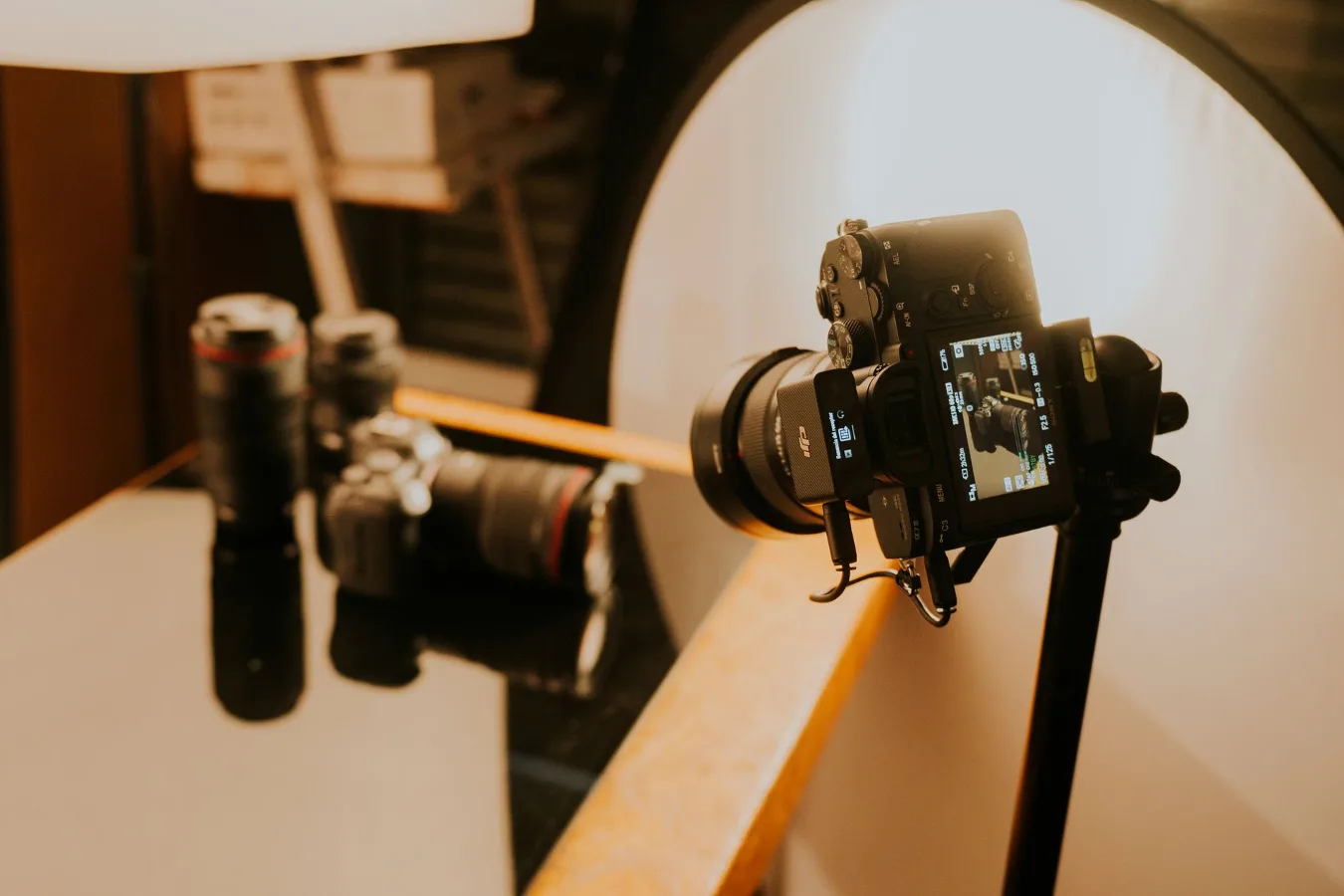
If you’re comparing a point and shoot vs mirrorless camera, the short answer is this: choose a point and shoot if you want maximum simplicity and portability, and choose a mirrorless camera if you want better creative control, stronger upgrade potential, and more room to grow. The right pick depends less on status and more on how you actually take photos. mirrorless vs point and shoot camera offers more detail on this point.
That decision usually comes down to a few practical factors: how much gear you want to carry, whether you care about interchangeable lenses, how often you shoot in low light, and whether you want a camera that can stay useful as your skills improve. guide to interchangeable lens cameras offers more detail on this point.
Why this comparison matters
These two camera types often get compared because they solve the same basic problem in different ways. Both are smaller and easier to carry than a traditional DSLR. Both can produce excellent results. But the experience of using them is very different.
A point and shoot camera is built around convenience. It typically has a fixed lens, simple controls, and a compact body. A mirrorless camera is designed to be more flexible. It uses interchangeable lenses and usually offers more advanced settings, making it more adaptable for different subjects and shooting styles.
The common misconception is that a mirrorless camera is always the better choice. That is not true for everyone. If a camera is too bulky, too complicated, or too tempting to leave at home, its technical advantages may not matter much in real life.
The main differences at a glance
| Category | Point and shoot | Mirrorless |
|---|---|---|
| Portability | Usually smaller and lighter | Still compact, but often larger with a lens attached |
| Lens system | Fixed lens | Interchangeable lenses |
| Ease of use | Generally simpler | Can be simple or advanced depending on settings |
| Image quality potential | Depends on the model, but usually more limited | Typically stronger potential, especially with larger sensors and better lenses |
| Growth potential | Limited | High |
| Best for | Casual snapshots, travel convenience, family use | Serious hobbyists, hybrid shooters, learners who want room to grow |
Portability: where point and shoot still wins
Portability is the strongest argument for a point and shoot camera. A fixed-lens compact camera is often easy to slip into a pocket, small bag, or jacket. That makes it appealing for travel, events, errands, and days when you do not want to think about camera setup. travel-friendly camera options offers more detail on this point.
This is more than a comfort issue. Real-world use often comes down to what you carry consistently. A camera that is always with you can capture more moments than a more capable system that stays on the shelf.
Mirrorless cameras are still portable compared with many older camera systems, but once you add a lens, charger, and spare battery, the kit becomes less effortless. That is not a flaw; it is the trade-off for flexibility.
Image quality: where mirrorless usually pulls ahead
Mirrorless cameras generally have the edge in image quality potential, especially when paired with a good lens. Sensor size, lens quality, and manual control all matter here. A mirrorless body can often produce cleaner files, better dynamic range, and more detail in challenging conditions than a typical point and shoot.
That said, image quality is not just about the camera body. A premium point and shoot with a well-designed lens can look excellent in daylight and for everyday sharing. For many casual users, that may be enough.
The practical nuance is this: if most of your photos are viewed on a phone screen or shared online without heavy editing, the gap may matter less than you expect. If you crop often, print larger, or shoot in mixed lighting, mirrorless usually has the advantage.
Ease of use and learning curve
Point and shoot cameras are built for fast decisions. Turn it on, compose, press the shutter. That makes them appealing for beginners who want less setup and fewer settings to manage.
Mirrorless cameras can be just as approachable in automatic mode, but they invite experimentation. Aperture, shutter speed, ISO, focus modes, and custom buttons are part of the experience. For some buyers, that is exactly the attraction. For others, it becomes unnecessary complexity.
If you want a camera that family members can hand around without explanation, point and shoot has a real advantage. If you want to learn photography more seriously, mirrorless is usually the better classroom.
Lenses change the whole decision
The biggest structural difference is the lens system. A point and shoot camera uses one built-in lens, so you are choosing a camera and lens combination at the same time. That simplifies the purchase, but it also limits flexibility.
Mirrorless cameras let you choose lenses for different situations. You can use a wide-angle lens for landscapes, a fast prime lens for portraits, or a telephoto lens for distant subjects. That flexibility is a major reason mirrorless systems appeal to enthusiasts and content creators.
There is also a cost reality here. Interchangeable lenses can improve results, but they also add expense and decisions. If you do not want to research focal lengths or carry extra glass, a fixed-lens camera may suit you better.
Low light and autofocus: where usage gets more nuanced
Low-light performance often depends on sensor size and lens aperture. Mirrorless cameras typically have an advantage because they can use larger sensors and faster lenses. That helps in indoor scenes, evening street photography, and other dim environments.
Autofocus is more nuanced. Some point and shoot cameras focus quickly enough for casual use, and many modern mirrorless cameras offer very capable autofocus systems. For moving subjects, mirrorless often provides better tracking and more control, but model quality matters more than the category label alone.
A practical mistake is assuming all compact cameras are automatically easier for action shots. If your main subjects are children, pets, or sports, you need to compare autofocus behavior, burst shooting, and lens reach rather than just size.
Travel, family, and everyday use
The right camera often depends on the situations you photograph most.
- Travel: Point and shoot is attractive if you want something lightweight and unobtrusive. Mirrorless makes more sense if you want to photograph landscapes, architecture, food, and people with more control.
- Family photos: Point and shoot is usually the easiest shared camera. Mirrorless can be better for school events, indoor gatherings, and portraits if someone is willing to learn the basics.
- Everyday carry: Point and shoot wins on convenience. Mirrorless wins if you are willing to carry a little more for noticeably more capability.
The overlooked consideration here is battery and attention. A compact camera is often ready for quick use without turning photography into a project. Mirrorless cameras can encourage more deliberate shooting, which is a benefit for some users and a barrier for others.
Cost considerations beyond the sticker price
People often compare only the camera body price, but that can be misleading. Point and shoot cameras are usually simpler to budget for because the lens is built in and the system is complete from day one.
Mirrorless cameras can start with a single lens, but many buyers eventually add another lens, extra batteries, a memory card, or a better bag. That does not make mirrorless a bad value. It just means the long-term cost depends on how far you plan to expand.
If you want the lowest-friction purchase, point and shoot is easier to evaluate. If you want a system that can grow with your needs, mirrorless may offer better long-term value even if the starting cost is higher.
Which camera fits which type of buyer
Choose a point and shoot if you value simplicity
A point and shoot camera is a strong choice if you want:
- the smallest possible kit
- minimal setup and learning
- a camera for casual travel or family moments
- a fixed lens that removes decision-making
- an easy backup camera
This category works well for people who want photos without turning photography into a hobby. It is also useful for users who may find interchangeable lenses unnecessary.
Choose a mirrorless camera if you want flexibility
A mirrorless camera is usually the better fit if you want:
- better control over depth of field and exposure
- interchangeable lenses
- more room to improve over time
- stronger options for portraits, action, or low light
- a system that can support both stills and video
Mirrorless is especially appealing for buyers who know they will want more from their camera later. If you expect your needs to evolve, starting with a system camera can save you from replacing the whole setup later.
Common mistakes buyers make
- Choosing only by size. Small is convenient, but small alone does not guarantee better photos or better usability.
- Ignoring lens limitations. A fixed lens may be perfectly fine, but it cannot be upgraded for a different style of shooting.
- Overestimating how much manual control you will use. Some buyers want advanced features in theory and automatic simplicity in practice.
- Assuming mirrorless is too complicated. Many mirrorless cameras are beginner-friendly if you start in auto or aperture priority mode.
- Forgetting about the total kit. Batteries, memory cards, and lens choices affect the real experience.
Decision guidance: how to choose without second-guessing yourself
If you are still unsure, use the next three questions as a shortcut.
- Do you want the easiest possible camera to carry and use? If yes, point and shoot is probably the cleaner choice.
- Do you want more creative control and better upgrade potential? If yes, mirrorless is the better fit.
- Will this be your main camera for years, or a simple tool for casual use? A long-term main camera usually favors mirrorless. A casual everyday camera often favors point and shoot.
That is the most useful way to think about this comparison. The best camera is not the one with the most features on paper. It is the one that matches your shooting habits, your patience for gear, and the kinds of images you actually want to make.
If you want more camera guidance after this comparison, related topics like sensor size, interchangeable lens systems, autofocus behavior, and travel camera choices are worth exploring next. Those details often matter more than the label on the box.
