
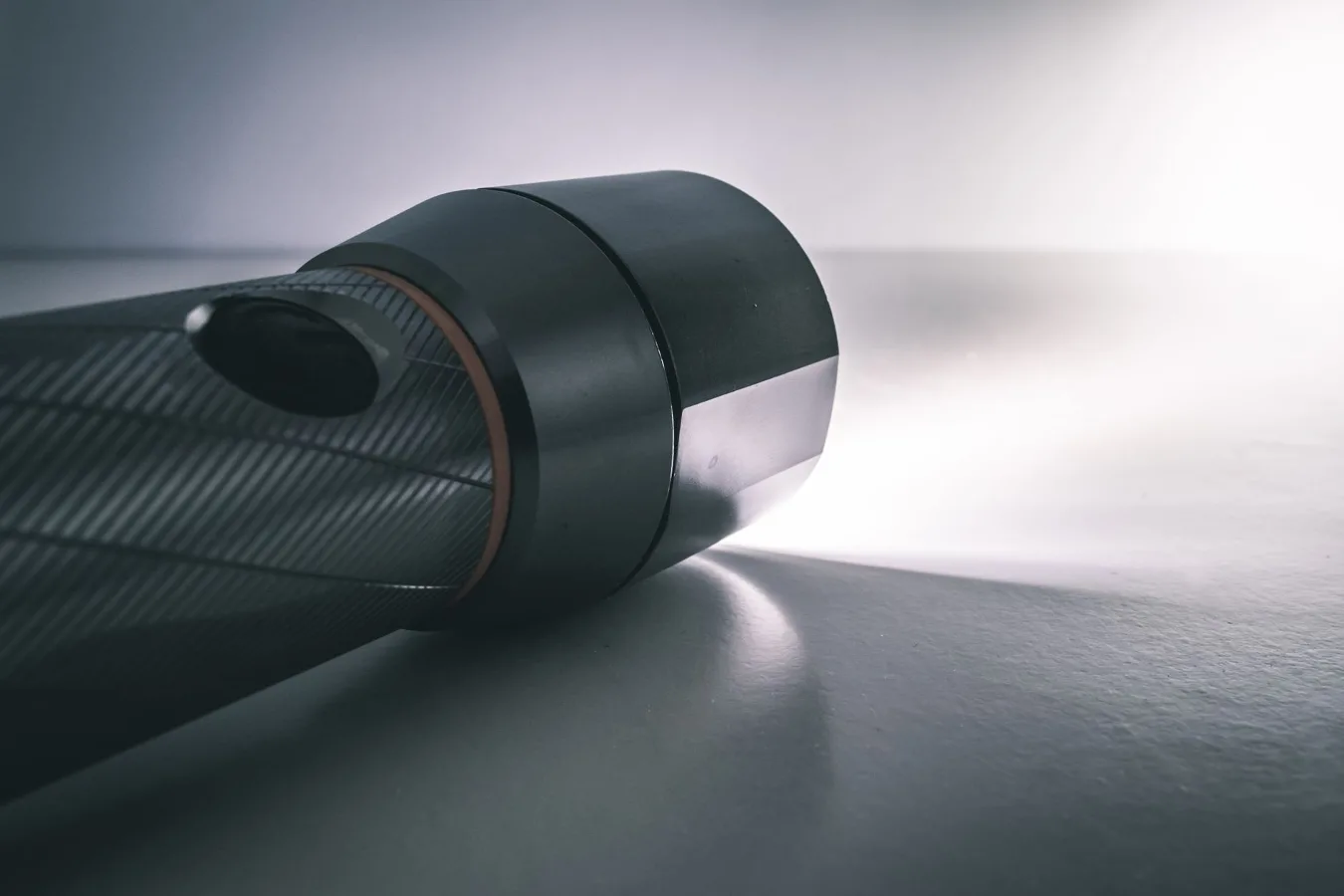
An action camera flashlight is not just a small light you attach to a camera. In practical terms, it is a compact lighting tool that helps an action camera record usable footage when the available light is weak, uneven, or unreliable. That includes night rides, trail walks, indoor movement, dockside recording, dives, camping scenes, and any situation where a built-in camera sensor needs help rendering detail.
For shoppers, the term can point to more than one type of accessory. Some people mean a true camera light made for video work. Others mean a rugged flashlight-style light that can be mounted near an action camera for general illumination. Those two ideas overlap, but they are not identical, and the difference matters when you are deciding what to buy.
This guide is built to help you understand the category before comparing products. It focuses on the decision factors that matter most: mounting, beam pattern, brightness control, battery convenience, waterproofing, color quality, and the limitations people often discover too late.
Explore Camera
Use these supporting guides to go deeper into specific questions, comparisons, and buying decisions.
- Best Compact Full-Frame Mirrorless Cameras
- Action Camera Body Mount Guide
- Action Camera Head Mount Guide
- Action Camera Microphone Attachment Guide
- Luka Doncic Lights Camera Action Guide
- Best Nikon Mirrorless Camera: Buyer’s Guide
- Best Micro Four Thirds Mirrorless Cameras
- How to Choose an Action Camera Mount
- Best Hunting Action Cameras: Buyer’s Guide
- Canon M5 Mirrorless Camera Guide
- Action Camera Mounts: Choose the Right Setup
- Tactacam 6.0 Action Camera Guide
- Action Camera Gimbal Buying Guide
- Monster High Frights Camera Action Dolls Guide
- Tactacam Action Camera Buying Guide
- Medium Format Mirrorless Camera Guide
- VTech Kidizoom Action Cam Guide
- Best Low Light Mirrorless Cameras
- Best Medium Format Mirrorless Cameras
- How to Choose a Mirrorless Camera Pouch
- Mirrorless Camera vs Full Frame: Which Fits You?
- Mirrorless vs Point and Shoot Cameras
- Point and Shoot vs Mirrorless Camera
- Rangefinder-Style Mirrorless Cameras: Buyer Guide
- Action Snap Camera Buying Guide
- Best Cameras for Action Shots: What Matters
- Handlebar Action Camera Mount Guide
- Best Fujifilm Mirrorless Camera: Buying Guide
- How to Choose a Mirrorless Camera Bundle
- Mirrorless Camera With Electronic Viewfinder Guide
- Sony A6000 vs A5100: Which Fits You?
- Sony Mirrorless Camera vs Canon Mirrorless
- Used Sony Mirrorless Camera Buyer Guide
- Used Vlogging Camera Buying Guide
- Dyke’s Camera Action: What It Means
- Best Low Light Mirrorless Cameras
- Best Mirrorless Camera for Sports
- Best Mirrorless Camera for Sports Photography
- Best Mirrorless Camera Under $1000
- Best Second Hand Mirrorless Camera Guide
- Best Travel Mirrorless Camera: How to Choose
- Action Camera Microphone Attachments Guide
- How to Choose an Action Camera Tripod
- Best Action Camera for Fishing: Buyer’s Guide
- Best Head Mounts for Action Cameras
- Best Mounts for GoPro Action Cameras
- Canon Vlogging Camera Flip Screen Guide
- Best Fujifilm Cameras for Vlogging
- Best Microphone for a Vlogging Camera
- Best Action Camera Accessory Bags
- Best Action Camera Car Mounts Explained
- Best Canon Vlogging Cameras: How to Choose
- Best Microphone for a Vlog Camera
- Samsung Vlog Cameras: What to Know Before Buying
- Used Vlogging Camera for Sale: Smart Buying Guide
- Best Camera for Vlogging With Flip Screen
- Portable Power for Vlogging Camera Setups
- Best Action Camera for Hunting
When an action camera flashlight matters
An action camera is designed for movement, durability, and wide-angle capture. It is not naturally strong in low light. That is why lighting becomes important in situations where the camera must capture detail instead of just shapes and motion.
The accessory matters most when you need one or more of the following:
- clearer footage after sunset or indoors
- better visibility in wooded trails, campsites, docks, or garages
- more consistent illumination than ambient light can provide
- extra light for underwater or wet-surface shooting
- support for hands-free recording during sports or travel
Not every scene needs added light. Bright daylight, overcast daylight, and open outdoor settings may not benefit much from a flashlight-style accessory. In those cases, extra lighting can create glare, flatten the scene, or make the image look unnatural. The value appears when the environment stops doing the work for you.
Flashlight vs. video light: the distinction that affects your choice
Many buyers search for an action camera flashlight when they really need a video light. That distinction is worth understanding before you compare options.
Flashlight-style lighting
A flashlight-style light usually concentrates illumination in a narrower beam. It is useful for seeing farther ahead, navigating, or adding a strong central spot of light. For action camera recording, that can help in some scenarios, but it may also create a bright center and darker edges in the frame.
Video-focused lighting
A video light is generally designed to spread light more evenly across a scene. This makes it better for recording faces, nearby subjects, gear setups, and close-range action. It is often the better fit when the goal is cleaner footage rather than simply brighter visibility.
For many buyers, the right answer is not one or the other. It depends on how the light will be used, how far the subject is from the camera, and whether the scene is mostly about visibility or image quality.
Step-by-step criteria for choosing the right light
Because this is a commercial investigation topic, the clearest way to evaluate an action camera flashlight is to work through a decision framework. The order matters: compatibility first, then lighting behavior, then convenience, and finally long-term practicality.
1. Start with mounting compatibility
The first question is not how bright the light is. It is whether you can mount it securely where you need it. Action camera setups vary widely. Some are helmet-mounted, some are chest-mounted, some live on handlebars, and others sit on handheld grips or underwater housings.
Check whether the light can attach through common camera ecosystems, such as standard mounting arms, brackets, cold shoe adapters, or third-party clamps. If the accessory cannot sit securely without awkward adapters, the setup becomes fragile and inconvenient.
Compatibility also matters if you plan to pair the light with a case or housing. A light that looks compact on its own may become bulky once brackets and waterproof enclosures are added.
2. Match the beam to the job
Beam pattern is one of the most overlooked factors. A narrow beam reaches farther, which can be useful for navigation or pointing light into a specific area. A wider beam usually produces more usable footage because it lights the subject and surroundings more evenly.
For action camera use, a narrow beam can be too harsh if the subject is close to the lens. A wide beam can be more forgiving, especially for vlogging, bike rides, kayaking, camping, and close-range motion.
When shopping, think about distance. The farther the subject is from the camera, the more a focused beam may help. The closer the subject, the more likely a soft spread will look better.
3. Consider brightness control, not just output
Raw brightness is only part of the story. A useful light should ideally offer some level of control, whether that means multiple brightness steps, a dimmer, or different modes for close and far shooting.
Why this matters: a light that is too strong can blow out nearby details, create reflections on wet surfaces, and make footage look harsh. A light that is too weak may not move the needle at all. Control helps you adapt to changing environments without changing gear.
4. Look at color quality and color temperature
For video, light quality matters almost as much as brightness. Color temperature affects whether the footage looks warm, cool, or neutral. A camera light that is too cold can make skin tones look unnatural. A very warm light may fit certain scenes better but can look inaccurate in others.
Some shoppers also look for color rendering quality, often described through CRI in lighting discussions. The basic idea is simple: better color rendering generally means the camera captures colors in a more believable way. If the light is for casual visibility, this may be less critical. If you care about image quality, it becomes more important.
5. Check battery behavior and charging convenience
Battery life affects more than runtime. It also affects whether the light fits into your routine. A rechargeable light may be ideal if you shoot often and can charge between outings. Replaceable batteries can make sense if you want flexibility on longer trips or do not want to wait for charging cycles.
Look for practical details such as charging method, battery access, and whether the light can run while charging if you plan stationary use. A convenient power setup is often more valuable than a slightly higher brightness number on paper.
6. Verify water resistance for the actual environment
Many buyers assume any rugged-looking light is safe around water. That is not a safe assumption. A splash-resistant light and a dive-ready light are different tools.
If your use case includes kayaking, surf zones, rain, or underwater recording, the light must be rated appropriately for that environment. The mounting hardware also needs to tolerate moisture, corrosion, and repeated wet-dry cycles. A weak point anywhere in the chain can limit the whole setup.
7. Judge size and weight in context
Compact is not automatically better. A tiny light may be easy to carry, but if it is too small to spread light well or too light to mount securely, it may be frustrating in actual use. On the other hand, a larger light may improve performance but make a helmet rig awkward or a handheld setup tiring.
Think about the entire system: camera, mount, housing, and light. The best choice is the one that balances portability with stability.
Common categories of action camera lighting
The market is easier to understand if you group products by use rather than by marketing language.
Small clip-on or bracket-mounted lights
These are the simplest options. They are useful for close-range fill light and casual low-light improvement. Their advantage is convenience. Their limitation is range and output consistency.
Rugged flashlight-style lights
These resemble traditional flashlights more closely and often emphasize beam intensity, durability, and portability. They can work well for utility use and can sometimes double as a camera-side light, but they are not always ideal for flattering video.
Dedicated video lights
These are often the most balanced choice for users who care about footage quality. They tend to offer more useful beam spread and better control. If your main goal is recording rather than general illumination, this category deserves serious attention.
Underwater and dive-focused lights
These are designed for wet environments and may be used with housings or underwater mounts. They are important for divers, snorkelers, and anyone recording around heavy spray or submersion. Their strengths are environmental resilience and water-specific design.
Where this accessory works best
An action camera flashlight is most useful when the light source needs to travel with the subject. That makes it valuable in active, moving, or hands-free settings.
- Night cycling: helpful for recording trails, streets, or bikepacking scenes where ambient light changes constantly
- Hiking and camping: useful for campsites, trail prep, or documenting gear and surroundings after dark
- Fishing and boating: valuable around docks, decks, and reflective water surfaces
- Motorcycling: can support helmet or bar-mounted filming when paired with a secure setup
- Underwater use: important when water absorbs available light and colors fade quickly
- Indoor action: useful for garages, gyms, workshops, and dim event spaces
Not every setting benefits equally. Fast motion, distant subjects, and reflective surfaces can make lighting more difficult. In those cases, the accessory may still help, but expectations should remain realistic.
What buyers often overlook
People usually start with brightness, but several other factors can determine whether the accessory is actually pleasant to use.
Heat and runtime trade-offs
Smaller lights can warm up during extended use, especially at higher settings. That does not automatically make them bad, but it does mean runtime and thermal behavior deserve attention. A light that is excellent for short bursts may be less appealing for long scenes.
Glare and reflections
Water, glass, polished paint, helmet visors, and glossy gear can all reflect a nearby light source. If the beam is too direct, the footage can become messy rather than clearer. Diffusion, angle, and placement matter more than many shoppers expect.
Mount stability
An accessory that wobbles at speed can ruin the benefit of added light. On action camera setups, mounting stability is part of image quality. A light that shifts position can change the look of every frame.
Ease of operation with gloves or cold hands
Outdoor users often discover that tiny buttons are hard to manage in the real world. If you ride, paddle, or hike in cold conditions, consider whether the controls are easy to reach and understand without removing gear.
A simple way to compare options
If you are narrowing choices, compare candidates using the same lens every time. This keeps the decision grounded in use case instead of marketing language.
| Decision factor | What to look for | Why it matters |
|---|---|---|
| Mounting | Stable fit with your camera setup | Prevents wobble and awkward installations |
| Beam pattern | Wide for video, narrow for utility | Changes how natural the footage looks |
| Brightness control | Multiple levels or dimming | Helps adapt to changing conditions |
| Color quality | Neutral, usable light for your scene | Improves realism and visual consistency |
| Battery system | Rechargeable or replaceable power | Affects convenience and trip length |
| Water resistance | Suitable for rain, splash, or submersion | Protects the light in the intended environment |
| Size and weight | Balanced for the mount you use | Supports comfort and stability |
Examples of matching the light to the user
The same light can be excellent for one person and awkward for another. Use case should guide the purchase more than raw feature counts.
For the casual weekend creator
A compact, easy-to-mount light is often enough. This user usually benefits from straightforward controls, decent beam spread, and a design that does not complicate quick filming sessions.
For the rider or outdoor athlete
Durability, secure attachment, and weather tolerance become more important than styling or extra modes. The light must stay put, survive movement, and be simple to operate on the fly.
For the underwater or water-adjacent user
Water resistance is central, not optional. The mounting system, seals, and any accessories should be appropriate for the environment, not just for dry land with occasional splashes.
For the creator who cares about video quality
Beam softness, color quality, and brightness control are usually more important than pure output. This type of user should treat the light as part of the image-making process, not just a way to “see better.”
Common mistakes to avoid
Most dissatisfaction with action camera lighting comes from a mismatch between the accessory and the task.
- Buying for brightness alone: a strong beam can still produce poor footage if it is too narrow or harsh
- Ignoring the mount: a light that fits poorly becomes annoying fast
- Overlooking waterproof needs: water exposure changes the requirements significantly
- Assuming all small lights are interchangeable: beam spread, battery behavior, and controls vary a lot
- Using the light too close to the lens: this can create glare, hot spots, and flat-looking footage
- Expecting a flashlight to solve every low-light problem: sometimes the better answer is a different angle, a lower shooting speed, or a more suitable lighting layout
How to think about value
Long-term value in this category is usually about fit, not luxury. A more expensive light is not automatically better for every user. A sensible purchase is one that matches the way you actually record.
If you film occasionally, ease of use may matter more than advanced controls. If you shoot frequently in difficult conditions, rugged build and better lighting behavior may justify a more serious option. In both cases, the best value is the light you will continue to carry, mount, and power without hesitation.
It can help to ask three questions before buying:
- Will this light fit the camera setup I already use?
- Will it improve footage in the environments where I actually shoot?
- Will it still be convenient after the novelty wears off?
Practical checklist before you buy
Use this checklist to narrow the field without getting lost in product pages.
- Does the light match your camera mount or can it connect cleanly?
- Is the beam better suited to video or utility use?
- Can you dim or adjust the light as needed?
- Is the battery system convenient for your shooting routine?
- Does the build suit your environment, including rain or water exposure?
- Will the size and weight work with your rig?
- Are the controls easy to use in motion or low light?
- Does the light help the footage look better, or only brighter?
How this topic fits the wider camera category
An action camera flashlight sits at the intersection of lighting, mounting, and rugged accessories. That is why it belongs in a broader camera gear strategy rather than being treated as a one-off impulse purchase. Users who understand the relationship between the light, the camera, and the environment usually end up with better results than users who focus on output numbers alone.
For a camera site, this topic naturally connects to other related subjects such as low-light shooting, action camera mounts, waterproof accessories, video lighting basics, and outdoor recording setups. Those supporting topics can deepen the buyer’s understanding while leaving room for specialized comparisons and use-case guides.
Final perspective
The best action camera flashlight is the one that fits the way you actually shoot. For some users, that means a compact, easy-to-carry light that improves visibility on the move. For others, it means a more controlled video light, a waterproof setup, or a rugged beam intended for harsh conditions.
Start with the environment, then narrow the category, then compare mount compatibility, beam pattern, battery convenience, and water resistance. That order will usually lead to a better purchase than chasing brightness alone.
