
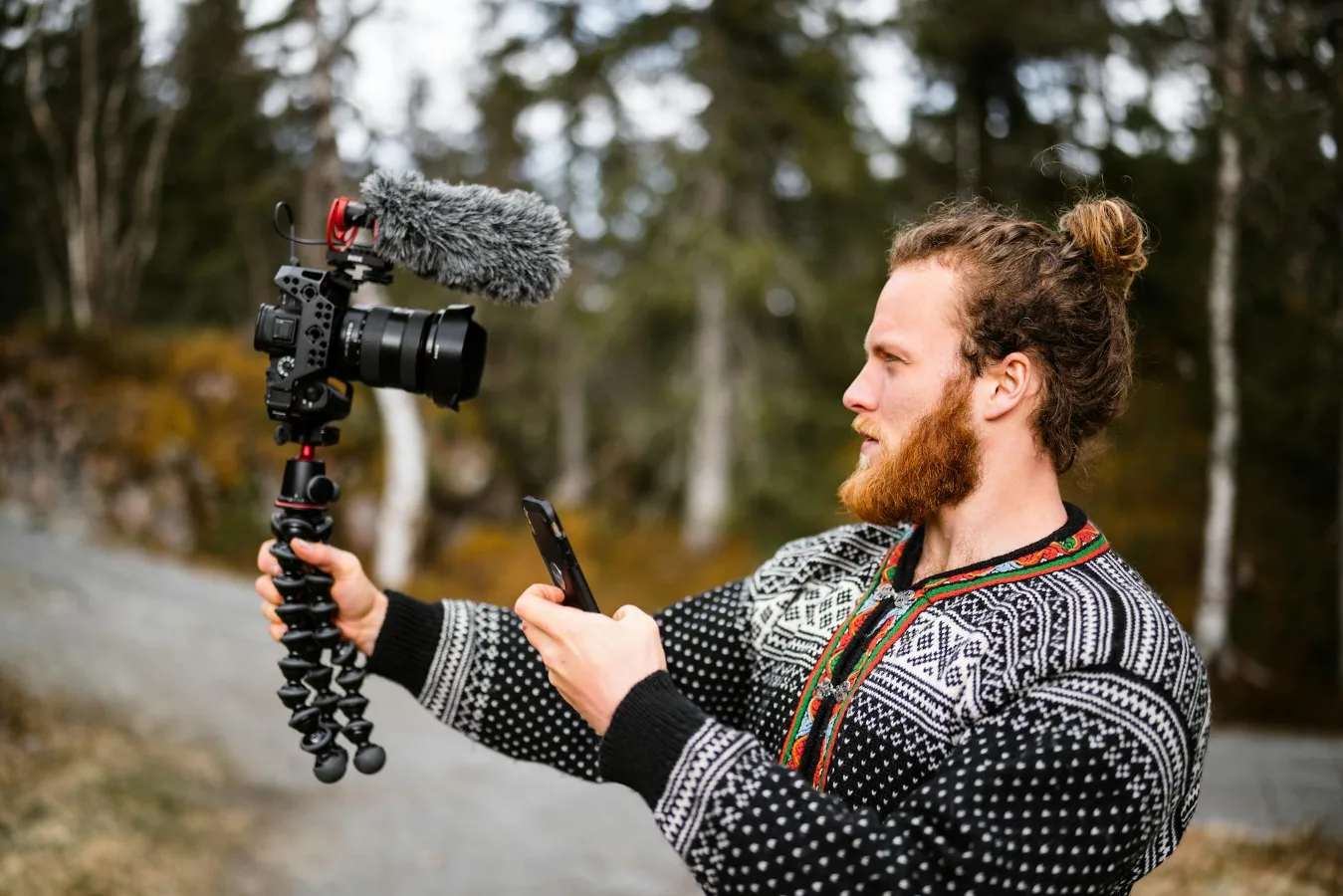
Who needs an action camera microphone attachment?
Action camera microphone attachments make sense for anyone who needs clearer voice recording than the built-in mic can usually provide. That includes vloggers, riders, cyclists, travelers, sports shooters, and creators recording tutorials or interviews with a compact camera.
The main reason to add one is simple: action cameras are built for portability and rugged use first, not for ideal audio pickup. Their internal microphones are convenient, but they are often exposed to wind, handling noise, and distance from the speaker. A microphone attachment gives you more control over where the audio is captured and how it is delivered into the camera. action camera audio basics offers more detail on this point. how to reduce wind noise on action cameras offers more detail on this point.
If your videos rely on spoken commentary, helmet audio, or any situation where the camera is mounted farther from your mouth, an external mic setup is usually worth considering. If you only film fast-paced action clips with little dialogue, the built-in microphone may still be enough. Handlebar Action Camera Mount Guide offers more detail on this point.
What these attachments actually do
Most action camera microphone attachments fall into one of three categories: adapters, mounts, and protective accessories. The attachment may let you plug in a 3.5mm microphone, connect a USB-C mic or adapter, or position a small external microphone closer to the subject.
Some systems are designed for wired microphones. Others support wireless receivers so you can record speech without a cable hanging from the camera. There are also audio adapters that convert the camera’s port into a microphone input while preserving charging or data functions in certain setups. The exact capability depends on the camera model, its port type, and whether the manufacturer supports external audio input.
A common misconception is that any small microphone will work well once attached. In practice, compatibility matters a lot. The attachment may physically connect, but the camera still has to recognize the signal correctly, and the mic has to suit the way you film.
Buyer scenario: choosing the right setup for your use case
The best attachment depends on how you actually record, not just on what fits the camera body.
- Vlogging on the move: A compact external microphone or a wireless receiver setup can help keep speech clear without requiring the camera to be held close.
- Helmet or chest mounting: A small wired mic or a wireless lavalier can be more practical than relying on the camera’s internal mic, especially if wind and distance are issues.
- Travel and casual filming: A simple adapter with a small mic may be easier to pack and manage than a more elaborate rig.
- Sports and outdoor action: Audio quality can still be limited by wind and movement, so the goal may be reducing noise rather than achieving studio-style sound.
- Interviews and sit-down clips: A microphone placed closer to the speaker usually matters more than the brand of the action camera itself.
That buyer-scenario approach helps avoid overspending on features you will not use. For many creators, a modest, compatible setup is more useful than a complicated one that adds bulk without improving the final video enough.
Trade-offs you should expect
Adding a microphone attachment to an action camera improves audio potential, but it usually introduces a few compromises.
More bulk and less weather resistance are the biggest trade-offs. Action cameras are popular because they are small and rugged. Once you add a mic, adapter, receiver, or mounting bracket, the system becomes less compact and may be more exposed to the elements.
Battery and port management can also become more complicated. Some attachments occupy the same port used for charging or data transfer. Others may require an additional power solution, which can be inconvenient during long shoots.
Mounting flexibility may shrink as well. A microphone cable can interfere with stabilization, helmets, cage systems, or waterproof accessories if it is not routed carefully.
Audio quality is improved, but not guaranteed. A better microphone cannot fully overcome poor placement, excessive wind, or a setup that is incompatible with the camera’s input. The attachment is only one part of the chain.
These trade-offs are why buyers often benefit from thinking in terms of recording conditions rather than just product features.
Material and spec factors that matter most
For action camera microphone attachments, the most important factors are usually connector type, physical design, cable quality, and how the accessory fits with the rest of your rig.
Connector compatibility
Check whether your camera uses USB-C, a proprietary port, or a 3.5mm input through an adapter. This is the first filter. If the connector is wrong, the attachment may not function at all, even if the product listing sounds close to what you need.
Mounting footprint
Some accessories keep the camera compact. Others add a cage, arm, or hanging receiver that changes how the camera balances on a helmet, chest mount, or handle. If you film while moving, a bulky setup can become annoying quickly.
Cable length and flexibility
A cable that is too short limits placement. A cable that is too long can snag or create extra movement noise. Flexible cabling and clean routing matter more than many buyers expect.
Mic type and pickup pattern
A lavalier microphone, shotgun-style mic, or wireless transmitter each solves a different problem. Laval mics are useful when you want speech clarity close to the mouth. Directional mics can help focus on a subject, but they still need sensible placement. Wireless systems are convenient, but they add another device to manage and charge.
Wind protection
For outdoor filming, a foam cover or furry windscreen is often not optional. Wind noise is one of the most common reasons action camera audio sounds unusable, especially on bikes, trails, beaches, or open roads. Even a good microphone can struggle without protection.
Build and weather suitability
If you shoot outdoors, look for accessories that can handle vibration, light rain, dust, and repeated mounting. That does not mean every part has to be fully sealed, but the setup should be realistic for the environments where you record.
Compatibility pitfalls that cause most regrets
The biggest mistakes usually happen before the microphone is ever used.
- Assuming every action camera supports external audio input. Some do, some require a special adapter, and some work only with specific accessories.
- Ignoring the camera’s power and port limitations. A port used for audio may also be needed for charging, which affects long recording sessions.
- Overlooking cage and mount clearance. A microphone attachment that looks compact on a desk can interfere with a helmet mount or an underwater housing.
- Forgetting about wind and vibration. Audio problems in action filming are often environmental, not just technical.
- Choosing convenience over placement. A wireless receiver is useful, but if the mic ends up too far from the speaker, sound quality still suffers.
One overlooked consideration is how often you switch between accessory setups. If you use the camera in multiple ways, a microphone attachment should be easy to add and remove without reworking the rest of the rig each time.
Practical alternatives if a microphone attachment is not the right fit
Not every creator needs a direct microphone attachment on the camera itself. Depending on your workflow, these alternatives may make more sense:
- Record audio separately: Useful when the camera setup must stay small or waterproof.
- Use a wireless lav system: Often better for talking-head clips, interviews, and walk-and-talk footage.
- Edit with voiceover later: A good option when the original on-camera sound is mostly for ambiance or reference.
- Rely on the built-in mic for ambient action: Sometimes the point is to capture the atmosphere, not pristine dialogue.
These options are not better in every case, but they can be more practical than forcing a microphone attachment into a setup that was never designed for it.
How to choose the right attachment without overbuying
A sensible decision process starts with three questions: what camera do you use, where do you record, and what kind of audio matters most?
If your camera supports a direct external mic with a simple adapter, that is usually the cleanest path. If you need mobility, a wireless receiver may be worth the extra setup. If you mostly shoot in harsh weather or around water, prioritize durability and mounting simplicity over extra audio features.
It also helps to think about editing. If you are comfortable cleaning up audio afterward, you may not need the most elaborate attachment. If you want better sound straight out of the camera, mic placement and wind protection deserve more attention than accessory aesthetics.
For many buyers, the best option is the one that adds the least friction. The right microphone attachment should improve audio without making the camera awkward to mount, hard to charge, or difficult to use in the field.
Common mistakes to avoid
- Buying before confirming the camera’s input type and accessory support.
- Choosing a microphone with no meaningful wind protection for outdoor use.
- Using a long, loose cable that creates movement noise or snags during activity.
- Expecting waterproof performance after adding an open microphone attachment.
- Prioritizing specs over setup simplicity for a compact camera system.
Next steps before you buy
Before purchasing an action camera microphone attachment, verify the exact camera model, the available ports, and whether you need a direct adapter, a wireless receiver, or a separate microphone altogether. Then match the accessory to your real shooting conditions, not just your ideal ones.
If you film outdoors, pay close attention to wind handling. If you mount the camera on a helmet or chest, check whether the cable route will stay secure. If you move between different shooting styles, choose a system that is easy to remove and reconfigure.
A well-chosen attachment can make spoken video far more usable. A poorly matched one can add clutter without solving the real audio problem.
Frequently asked questions
Do all action cameras support microphone attachments?
No. Support depends on the camera model, port type, and accessory ecosystem. Some cameras accept direct external audio input, while others need a specific adapter.
Is a wireless microphone better than a wired one for action cameras?
Not always. Wireless systems are convenient and reduce cable clutter, but wired microphones can be simpler, lighter, and more reliable in some setups.
Can I use a microphone attachment with a waterproof case?
Usually not in the same way you would with an open setup. Waterproof cases often block or complicate external audio access, so many users choose between protected housing and external sound capture.
What is the biggest cause of poor audio with action cameras?
Wind and distance are two of the most common issues. Even a decent microphone can sound weak if it is too far from the speaker or exposed to airflow.
What should I prioritize first: sound quality or convenience?
For most buyers, compatibility and usability come first. If the attachment is too cumbersome to use regularly, the theoretical sound advantage may never translate into better videos.
