
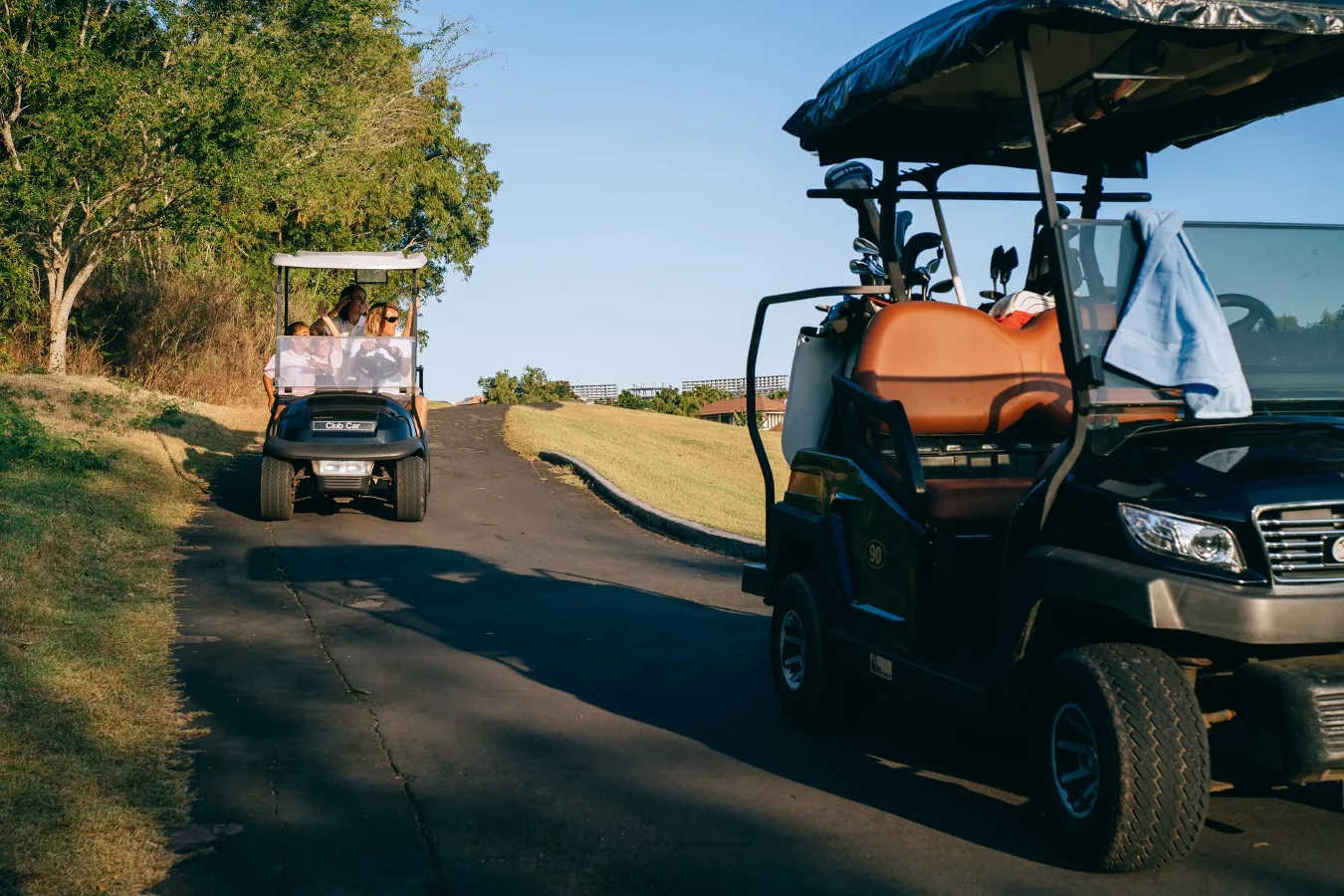
Why a golf cart Bluetooth speaker is different from a regular portable speaker
A golf cart Bluetooth speaker needs to do more than play music. It has to stay stable on a moving cart, remain audible in open air, and survive the mix of sun, dust, and occasional moisture that comes with outdoor use. A small indoor speaker can sound fine on a desk and still feel weak or awkward on a golf cart.
The right choice depends on how you use your cart. Some buyers want simple background music for casual rounds. Others want a louder setup that can be heard over wind and cart noise. Some need a compact unit that mounts securely, while others care more about battery life and easy controls than raw volume.
The key is to match the speaker to the environment, not just the brand or the Bluetooth version. A model that works well on a patio may not be the best fit for a cart that shakes over rough paths or spends long hours outdoors.
For most shoppers, the best golf cart Bluetooth speaker is one that combines clear midrange sound, a secure mounting method, weather resistance, and controls that are simple to use while driving or riding. how to choose a weather-resistant speaker offers more detail on this point.
Key factors that matter most
Mounting and stability
On a golf cart, placement matters as much as sound quality. A speaker that slides around, vibrates, or falls out of a cup holder quickly becomes frustrating. Look for a design that can attach firmly to the cart without blocking driving controls or getting in the way of passengers.
Common mounting styles include clip-on, strap-mounted, magnetic, and cup-holder-friendly designs. Each has trade-offs. Clip-on speakers are convenient but need a secure edge or rail. Magnetic models can be useful on metal surfaces, but they are only practical if your cart has the right mounting area. Strap systems can be versatile, though they may feel less polished. A speaker that simply sits loose is the least suitable option for cart use.
Think about whether you want the speaker to stay in one place or move with you. If you plan to use it on and off the cart, portability may matter more than a fixed mount. If it will live on the cart most of the time, a more secure attachment usually makes sense.
Sound balance for open-air listening
Golf carts are open environments, which changes how audio behaves. Bass that seems strong indoors often disappears outside, while clarity in vocals and mids tends to matter more. That is why a golf cart speaker should be judged by how well it projects, not by bass-heavy marketing language alone.
If you want music that remains easy to hear at moderate volume, look for speakers that emphasize clear output and wide dispersion. A speaker may not need to be huge to work well, but it should be capable enough to stay intelligible over ambient noise. If your group usually listens at low to moderate volume, balance may matter more than maximum loudness. If you expect louder playback, prioritize output and distortion control.
A common misconception is that bigger always means better. In practice, a bulky speaker can be awkward on a cart, especially if it blocks storage space or is difficult to secure. The best option is often the smallest model that still delivers enough volume for outdoor use. best portable audio options for outdoor use offers more detail on this point.
Battery life and charging convenience
Battery life is one of the most practical buying factors for golf cart audio. A speaker that runs out of power halfway through a round or before a long afternoon outing loses much of its appeal. At the same time, published battery claims are not always easy to compare because real-world use depends on volume level, connection quality, and features like lights or extra outputs.
Instead of focusing only on the highest number, think about how long you actually need the speaker to last between charges. For many buyers, a full day of casual use is more helpful than a technical battery figure. Also consider charging method. USB-C is increasingly convenient because it fits modern charging habits, but the right choice depends on what cables and power sources you already use.
Battery indicators are worth paying attention to as well. A clear battery display or status light can prevent surprises, which is especially useful if you use the speaker on frequent outings.
Weather resistance and outdoor durability
A golf cart speaker does not need to be rugged in the same way as a jobsite speaker, but it should be comfortable in an outdoor setting. Light moisture, humidity, and sun exposure are all part of the picture. Weather resistance can also help with dust and unexpected splashes.
Pay attention to the type of protection the speaker offers, but read it carefully. Some products are only splash-resistant, while others are designed for more serious outdoor exposure. A water-resistant speaker is usually a smarter choice than one with no protection at all, even if you do not plan to use it in heavy rain.
Durability is not just about water. Buttons, seams, charging ports, and mounting hardware should all feel solid enough for regular handling. If the speaker will ride around in a cart bag or clip to a rail, its physical design matters just as much as its audio profile.
Controls, pairing, and everyday convenience
Easy control is often overlooked until the speaker is in use. Tiny buttons or a confusing layout can make a simple device annoying. On a golf cart, that frustration grows because you may be dealing with movement, sun glare, and limited space.
Useful controls include straightforward power, play, volume, and pairing buttons. Some speakers also offer phone call handling or voice assistant support. Those extras can be handy, but only if they do not complicate the core experience. The best interface is the one you can use without hunting for buttons or pulling over repeatedly.
Bluetooth pairing should also be reliable. A speaker that reconnects quickly is usually more pleasant than one that needs frequent resets. For shared use, it helps if the speaker is easy to connect and disconnect so different riders can manage it without much hassle.
Practical ways to choose the right speaker
Choose based on your cart setup
Start with the cart itself. A quiet private cart used on smooth paths has different needs from a heavily used cart that sees rough terrain or group outings. If your cart has limited storage, compact size may be more important than extra features. If the cart has a useful mounting point, a secure attachment style may open up more options.
Also consider how you ride. If passengers sit close to the speaker, you may not need as much output. If the speaker needs to project across an open cart or outdoors in windy conditions, you will want stronger sound and a more stable position.
Match the speaker to your listening habits
Some buyers want background music, while others want a more immersive sound. That distinction should guide the purchase. For casual listening, portability, battery life, and ease of use may outweigh advanced sound features. For a more serious audio experience, clarity and output become more important, and you may need to accept a larger or less discreet design.
If you usually keep volume low, prioritize balanced sound and clean vocals. If you often raise the volume outdoors, look for a speaker that can stay clear without sounding strained. A speaker that sounds impressive at low volume but harsh when turned up is not a great fit for outdoor cart use.
Think about storage and transport
One practical detail many shoppers miss is where the speaker goes when the cart is parked. If it will be removed after each use, it should be easy to carry and store. If it stays on the cart, it should not interfere with other items or create a theft risk.
Compactness matters here. A smaller speaker may be easier to secure and less likely to get bumped. A larger speaker may sound fuller but can be awkward to move or stow. That trade-off is central to the decision.
Common mistakes to avoid
- Choosing by size alone. Larger does not automatically mean better outdoor sound, and smaller does not automatically mean weak performance.
- Ignoring mounting needs. A speaker that sounds good but cannot stay put on a cart will be frustrating to use.
- Overlooking weather exposure. Outdoor use creates wear that indoor speakers are not designed to handle.
- Assuming battery claims equal real-world use. Listening volume and feature use can change how long the speaker lasts.
- Forgetting about controls. A difficult interface can be a bigger problem on a cart than at home.
Another common misconception is that any Bluetooth speaker will work equally well if it connects to a phone. Connection is only one part of the experience. Cart use adds movement, vibration, open-air sound loss, and convenience demands that change what makes a speaker good.
Alternatives worth considering
A golf cart Bluetooth speaker is the most flexible option for many shoppers, but it is not the only one. If you want a more permanent setup, a cart audio system may make sense. If you only need occasional music, a small portable speaker with a secure mount may be enough. If your priority is private listening, wireless earbuds can work better in some situations, though they are not ideal if you need to stay aware of your surroundings or communicate with others.
For buyers who move the speaker between a cart, patio, and travel bag, portability may matter more than specialized golf-cart styling. That makes a versatile outdoor speaker a better value than a product designed for a single use case.
How to narrow down the best option
Use a simple decision path. First, decide how the speaker will be mounted or carried. Second, think about the volume and clarity you actually need outdoors. Third, check whether the battery life fits your usual outings. Fourth, confirm that the speaker can handle outdoor conditions and is easy to control. Once those basics are covered, the remaining differences are usually about convenience and personal preference.
If you are comparing several models, the strongest choice is often the one that balances secure placement, dependable battery life, and uncomplicated operation. A speaker with extra features is not necessarily better if those features make it harder to use on the cart.
For many buyers, the smartest purchase is not the loudest speaker or the one with the longest feature list. It is the one that fits the cart, stays secure, and makes outdoor listening easy without adding friction.
FAQ
What makes a golf cart Bluetooth speaker different from a regular Bluetooth speaker?
A golf cart speaker needs to handle movement, open-air listening, and outdoor exposure more effectively. Secure mounting and usable volume matter more than they often do indoors.
How loud should a golf cart speaker be?
There is no universal number that fits every buyer. The right level depends on how open the cart is, how much ambient noise you deal with, and whether you want background music or louder playback.
Is water resistance necessary?
It is a practical advantage for outdoor use. Even if you avoid rain, humidity, splashes, and dust can still affect a speaker over time.
Should I choose a mounted speaker or a portable one?
Choose mounted if you want stable placement and frequent use on the cart. Choose portable if you want flexibility and plan to use the speaker in multiple places.
What is the biggest mistake buyers make?
The most common mistake is ignoring fit and stability. A speaker that cannot stay secure on the cart is usually less useful than one with slightly stronger sound but better mounting.
If you want a golf cart Bluetooth speaker that feels worth using every round, focus on the basics first: secure attachment, clear outdoor sound, dependable battery life, and easy controls. Those factors matter more than flashy extras, and they are the ones most likely to affect daily satisfaction. bluetooth speaker battery life explained offers more detail on this point.
