
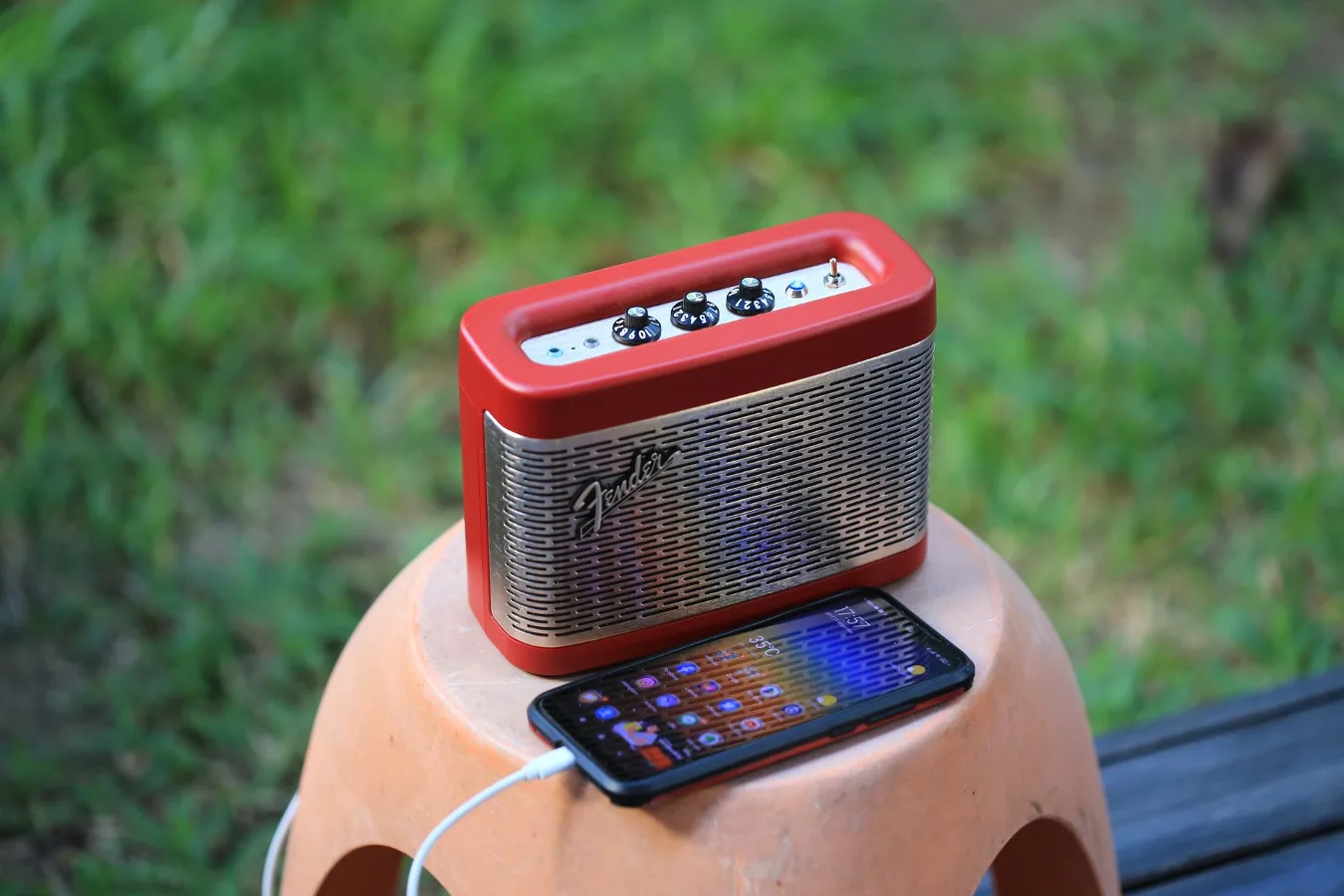
A Bluetooth speaker can be a convenient way to improve television sound, but it is not always the simplest or best solution. Whether it works well depends on your TV’s wireless features, the speaker’s audio behavior, and how sensitive you are to lip-sync delay.
For some people, a Bluetooth speaker is a clean, low-hassle upgrade for casual viewing. For others, especially anyone watching dialogue-heavy shows, sports, or gaming, the trade-offs may outweigh the convenience. The real question is not just whether a Bluetooth speaker can connect to a television, but whether it can do the job well in your room, with your viewing habits, and with your equipment.
This guide breaks down the main use cases, the limitations people often overlook, and the decision factors that matter before you buy, pair, or replace your current TV audio setup.
Explore Audio
Use these supporting guides to go deeper into specific questions, comparisons, and buying decisions.
- Best Golf Bluetooth Speaker Buying Guide
- Vintage Bluetooth Speaker Buying Guide
- Best ATV Bluetooth Speaker: Buyer Guide
- How to Choose Wireless Charging Earbuds
- Best Bike Bluetooth Speaker Guide
- Best Bluetooth Speaker for a Golf Cart
- Custom Bluetooth Speaker Buying Guide
- Klein Bluetooth Speaker Buying Guide
- Best Noise Cancelling Headphones With Mic
- Noise Cancelling Headphones for Sensory Overload
- Amp Bluetooth Speaker Buying Guide
- Best Bluetooth Speakers With FM Tuners
- Best Golf Cart Bluetooth Speaker Guide
- Tzumi Bluetooth Speaker Guide
- Zizo Bluetooth Speaker Buyer’s Guide
- TWS Wireless Earbuds With Case: Buying Guide
- Best Non-Wireless Noise Cancelling Headphones
- Bluetooth Light Bulb Speakers: Buyer Guide
- Best Boat Bluetooth Speaker: What to Look For
- Edison Professional Bluetooth Speaker Guide
- Floating Bluetooth Speaker Buying Guide
- Solar Bluetooth Speaker Buying Guide
- Best Solar Powered Bluetooth Speakers
- Best Noise Cancelling Headphones for Autism
- Vivitar True Wireless Earbuds Buying Guide
- Sades Gaming Headset Buyer Guide
- Coby True Wireless Earbuds Buying Guide
- Noise Cancelling Headphones for ADHD
- Noise Cancelling Headphones for Lawn Mowing
- Best Noise-Cancelling Headphones for the MCAT
- Viper Gaming Headset Buying Guide
- Wired vs Wireless Gaming Headsets
- Altec Lansing Wireless Earbuds Buying Guide
- iLive Truly Wireless Earbuds Guide
- Wireless Earbuds With the Best Bass
- Best Noise Cancelling Headphones for Mowing Lawns
- Noise Cancelling Headphones for ADHD
- Noise Cancelling Headphones for Misophonia
- Best Noise Cancelling Headphones for Sensory Issues
- Plantronics Noise Cancelling Headphones Guide
- Sensory Noise Cancelling Headphones Guide
- Tagry Hybrid ANC Headphones: Buyer’s Guide
- Ant Esports H707 Gaming Headset Review
- Personalized Gaming Headset: Buyer’s Guide
- Best Earbuds With Wireless Charging Case
- Aukey True Wireless Earbuds Buying Guide
- Aukey Wireless Earbuds Buying Guide
- Billboard Wireless Earbuds BB BT EP Guide
- Jesebang Wireless Earbud Buying Guide
- Pureboom Wireless Earbuds Guide
- Wholesale Wireless Earbuds: Buyer Guide
- Wireless Earbuds for TV Viewing: A Practical Guide
- Wireless Walkie Talkie Earbuds: Buying Guide
- Best Gaming Headsets for Big Heads
- Best Gaming Headsets with Removable Mics
- IEM Gaming Headset: Buyer’s Guide
- Wireless Gaming Headset vs Wired: Which Wins?
- HyperGear True Wireless Earbuds Guide
- iFrogz Wireless Earbuds Buying Guide
- Best Wireless Earbuds for Musicians
- Poly Wireless Earbuds: What to Know Before Buying
- Eastvita Gaming Headset Guide
- Gaming Headsets with Removable Mics
- Open Back Gaming Headsets: Buyer’s Guide
- Helix Wireless Earbuds Guide for Buyers
- Leemc S12 Wireless Earbuds Guide
- Icon Wireless Earbuds With Mic: Buyer Guide
- Walla Sound Bluetooth Speaker Guide
Quick answer: is a Bluetooth speaker good for TV?
Sometimes. A Bluetooth speaker can work well with a television if your main goal is easier setup, modest sound improvement, or flexible placement. It is most appealing for smaller rooms, casual viewing, and users who already own a capable speaker.
The main limitation is audio delay. Bluetooth adds wireless processing, and that can create a noticeable gap between what you see on screen and what you hear. Some TVs, speakers, and Bluetooth codecs handle this better than others, but not every setup will stay tightly synchronized.
If you care most about dialogue clarity, low latency, and a consistent home-theater feel, a soundbar or a wired speaker connection is often the safer choice. If you want portability, convenience, or a secondary audio option for late-night TV, Bluetooth can still make sense.
How Bluetooth speaker TV setups usually work
There are two broad ways a TV might send sound to a Bluetooth speaker. The first is native Bluetooth output, where the television itself pairs directly with the speaker. The second uses an external Bluetooth transmitter connected to the TV’s audio output, which then sends the signal wirelessly.
Native Bluetooth support is the cleaner approach because it avoids extra accessories. Many smart TVs include some form of Bluetooth audio output, though the exact implementation varies. Some televisions are designed mainly for remote controls or accessories, not for full-time speaker output, so the feature may be limited or hidden in settings.
External transmitters are often used with older TVs or models without built-in Bluetooth audio. They can be helpful, but they introduce another component to power, connect, and troubleshoot. That is not necessarily a dealbreaker, yet it adds complexity that buyers should understand before starting.
In both cases, the quality of the experience depends on the television, the speaker, the wireless connection, and the audio format being handled. Bluetooth is convenient, but convenience is only part of the story.
Why people try this setup
The appeal is easy to understand. A Bluetooth speaker may already be sitting on a shelf, ready to use, while a soundbar or full speaker system would cost more and take up more space. For apartment living, bedrooms, dorm rooms, and secondary TVs, a portable speaker can seem like a practical middle ground.
Some viewers want a quick improvement over weak built-in TV speakers. Others want a temporary setup for a guest room, vacation property, or occasional movie nights. Bluetooth also offers flexibility: you can move the speaker around the room, take it elsewhere when needed, and avoid running cables across the floor.
That flexibility is real. The challenge is deciding whether it matters more than the drawbacks.
The biggest trade-offs to understand
Audio delay and lip-sync
This is the most important issue. Bluetooth transmission can introduce latency, which means sound arrives slightly after the picture. Even when the delay is small, it can become distracting during speech, live sports, music performances, and fast-paced scenes.
Some TVs include audio delay compensation or lip-sync adjustment, which can help. Some speakers and codecs are more latency-friendly than others. Still, not every combination is predictable, and what works acceptably for one person may feel off to another.
Sound quality versus convenience
Bluetooth speakers vary widely in tonal balance, bass output, stereo width, and speech clarity. A speaker that sounds lively for music may not be ideal for television dialogue. TV use often benefits from clear mids and controlled bass rather than heavy low-end emphasis.
Convenience can be a fair reason to choose Bluetooth, but it should be an informed choice. A small speaker may improve clarity in one room and disappoint in another.
Single-speaker limitations
A lone Bluetooth speaker can improve volume and portability, but it may not create the same sense of space as a stereo pair or soundbar. If you want broader sound dispersion, a dedicated TV audio solution usually has an advantage.
Battery and power management
Portable speakers often depend on battery charging, which is convenient until you forget to charge before a movie night. Some models can stay plugged in, while others are better used as truly portable devices. For TV use, always consider whether the speaker can remain powered reliably for long sessions.
What to check before pairing a Bluetooth speaker with a TV
A good purchase or setup decision starts with compatibility, not marketing language. The following factors matter most.
Does your TV support Bluetooth audio output?
Not every television with Bluetooth can send audio to a speaker. Some sets support only Bluetooth remotes, keyboards, or headphones. Others allow external audio output but require you to enable it manually in the settings menu.
Before buying anything, check the TV’s audio output options and supported wireless features. The owner’s manual or product support page is often more useful than the quick-start guide.
What audio outputs are available?
If your TV lacks Bluetooth audio, look at its physical outputs. HDMI ARC or eARC, optical audio, and sometimes analog outputs can give you other ways to connect an external transmitter or a different speaker system. The available ports matter because they determine your flexibility.
How sensitive are you to delay?
Some people barely notice a small lag. Others find it distracting immediately. If you watch mostly scripted shows, casual streaming, or news, you may tolerate more delay than someone who watches concerts, sports, or action-heavy content.
Where will the speaker sit?
Placement affects both clarity and convenience. A speaker placed too far from the listening position may sound detached. One placed in a corner may exaggerate bass or blur speech. Bluetooth removes cables, but it does not remove acoustic placement concerns.
Will you need one speaker or multiple speakers?
Many users begin with a single speaker and later want better channel separation or fuller room coverage. If you think you may want a broader setup later, choose a system that can grow with you rather than a dead-end option.
Bluetooth speaker versus soundbar
This is the comparison most shoppers eventually make. Both options can improve on basic TV speakers, but they are built for different priorities.
| Factor | Bluetooth Speaker | Soundbar |
|---|---|---|
| Setup simplicity | Often easy, especially with built-in Bluetooth | Usually simple, but may involve HDMI, optical, or power cabling |
| Portability | High | Low |
| Audio delay risk | Higher | Lower |
| Dialogue clarity | Depends heavily on the model | Usually designed with TV speech in mind |
| Room coverage | Can be limited with a single speaker | Typically stronger for TV viewing |
| Best use case | Casual, flexible, secondary setups | Main living room or primary TV audio |
A Bluetooth speaker makes the most sense when portability and simplicity matter more than precision. A soundbar usually wins when the TV is the centerpiece of the room and audio sync is important.
Bluetooth speaker versus wired speaker solutions
Wired connections remain attractive because they avoid the latency issues common with Bluetooth. If your TV and speaker gear support a wired path, that option can offer more stable performance for movies, sports, and gaming.
Wired setups can also be easier to predict. You know where the signal is coming from, and you are less dependent on wireless pairing behavior. The trade-off is less flexibility and more visible cabling.
For some households, that trade-off is worth it. For others, especially renters or people using a TV in a multipurpose room, a wireless option is still the more practical fit.
Speaker features that matter most for TV use
Clear midrange
Dialogue lives in the midrange, so this area matters more for TV than many buyers realize. A speaker with boosted bass and sparkling treble may seem impressive at first, yet still make speech harder to understand.
Low-latency support
Some devices are better suited to video playback than others. Look for explicit support for low-latency modes or video-friendly pairing behavior, but treat any claim carefully and verify compatibility with your TV if possible.
Stable Bluetooth connection
A speaker that drops out, stutters, or renegotiates the connection during use becomes frustrating quickly. Stability matters more than flashy feature lists.
Reasonable volume without distortion
TV use often happens at moderate volume, but a speaker should still stay clean when you turn it up for a noisy room or a group viewing session.
Power options
If the speaker will stay near the TV, a reliable plug-in option can be more practical than a battery-only model. For flexible placement, battery power may be useful, but charging habits need to fit your routine.
Common mistakes people make
- Buying a Bluetooth speaker first and checking TV compatibility later
- Assuming any Bluetooth TV setup will have acceptable lip-sync
- Choosing a speaker for music quality only, then finding dialogue hard to hear
- Ignoring whether the speaker must be recharged during long viewing sessions
- Overlooking the TV’s actual audio output options
- Using a speaker that is too small for the room
- Expecting Bluetooth to perform like a wired home-theater connection
Most of these problems are avoidable with a little planning. The best setups begin with the room, the viewing habits, and the TV’s output options, not with the speaker’s packaging claims.
Good use cases for a Bluetooth speaker with a TV
Some scenarios fit this approach especially well.
Bedrooms and small spaces
In a smaller room, a compact speaker can be enough to improve clarity without requiring a larger system. When the listening distance is short, the lack of stereo spread matters less.
Secondary TVs
Guest rooms, offices, and occasional-use televisions are good candidates for flexible audio solutions. The priority is usually convenience, not a full theater experience.
Late-night viewing
A portable speaker can be helpful when you want to keep sound localized and avoid using a louder system. Depending on the room and the speaker, this may be a practical way to watch without disturbing others.
Temporary or movable setups
If the TV environment changes often, such as in multipurpose rooms or rentals, a wireless speaker may be easier to reposition than a fixed sound system.
Where a Bluetooth speaker is usually the wrong fit
Some situations call for a different solution from the start.
Gaming
Fast response matters in gaming, and even a little audio delay can be distracting. If you plan to use the same setup for console or PC gaming, latency should weigh heavily in your decision.
Sports and live programming
Live content is where sync problems stand out most. Crowd noise, commentary, and rapid visual action can make delay easier to notice.
Home theater priority
If the television is the main entertainment hub and you want richer sound, a Bluetooth speaker is often too limited. A soundbar or more traditional speaker system usually makes more sense.
Shared living spaces
In a larger room with multiple listeners, a single portable speaker may not provide even coverage. Some people hear plenty; others hear too little. That unevenness becomes more obvious as the room size increases.
How to think about Bluetooth codecs and compatibility
Bluetooth codecs affect how audio is encoded and transmitted. For TV viewing, codec behavior can matter because it influences latency and sometimes sound quality. That said, codec support is only one part of the picture. The TV and the speaker both have to support compatible modes for any benefit to show up.
Users often focus on codec names and overlook simpler compatibility issues, such as whether the TV can even send audio over Bluetooth in the first place. For most shoppers, practical compatibility matters more than chasing a technical spec sheet.
If you are comparing equipment, look for clear documentation from the TV and speaker manufacturers. If the information is vague, assume the experience may be more variable than the product page suggests.
How to reduce common problems
Check audio settings on the TV
Many sync or pairing issues can be improved by exploring the TV’s audio menu. Options may include delay adjustment, digital audio output settings, or speaker routing choices.
Keep the speaker within a sensible range
Bluetooth is wireless, but range still matters. Walls, furniture, and other electronics can interfere with stability. A closer, clearer path usually works better than a distant one.
Use the right speaker mode if available
Some speakers offer modes that change latency or tuning. If a video-friendly mode exists, it may be worth testing. Just keep expectations realistic and verify how it behaves with your own TV.
Test with dialogue before settling in
It is easier to evaluate a setup with spoken content than with background music alone. Dialogue exposes lip-sync and clarity issues quickly.
Maintenance and day-to-day care
Bluetooth speakers do not demand much upkeep, but a few habits help them stay dependable for TV use.
- Keep the battery charged if the speaker is used regularly near the television
- Update firmware when the manufacturer provides it
- Recheck pairing after TV software updates
- Keep the speaker free of dust around buttons, ports, and grilles
- Store portable models safely when not in use to protect the battery and cabinet
For a speaker that lives near the TV, the biggest maintenance issue is often consistency. A setup that works well once should continue working the same way the next time you turn it on.
How to choose the right setup for your situation
A useful decision framework is to start with your viewing habits, then match the audio solution to them.
Choose a Bluetooth speaker if you want portability, a simple setup, and a modest upgrade for casual viewing in a small or secondary space.
Choose a soundbar if the TV is your main entertainment system, dialogue clarity matters, and you want less concern about lip-sync.
Choose a wired speaker or AV-based solution if you prioritize stable audio timing and more controlled sound.
Choose a Bluetooth transmitter only if needed when your TV lacks built-in wireless audio output, and be prepared for extra setup steps.
The right answer depends less on the phrase “Bluetooth speaker” and more on how the room, TV, and viewing habits interact.
Related topics that naturally follow from this guide
This subject connects to several other audio decisions that are worth exploring in more detail. Shoppers often need help understanding TV soundbar basics, Bluetooth transmitter compatibility, latency troubleshooting, speaker placement, and how different TV audio outputs compare. Those topics deserve their own deep dives because each one can change the result as much as the speaker itself.
For broader home audio planning, it also helps to compare portable speakers, bookshelf speakers, compact soundbars, and other external TV audio options in the context of room size, content type, and ease of use.
A practical final perspective
A Bluetooth speaker for television is best seen as a flexible tool, not a universal replacement for a proper TV audio system. In the right room, with the right expectations, it can be a smart and convenient solution. In the wrong setup, it can become a compromise you notice every time someone speaks on screen.
If you are evaluating one now, focus on compatibility first, delay second, and sound character third. That order prevents the most common disappointment. A little planning goes a long way, especially when the goal is better TV audio without adding unnecessary complexity.
